


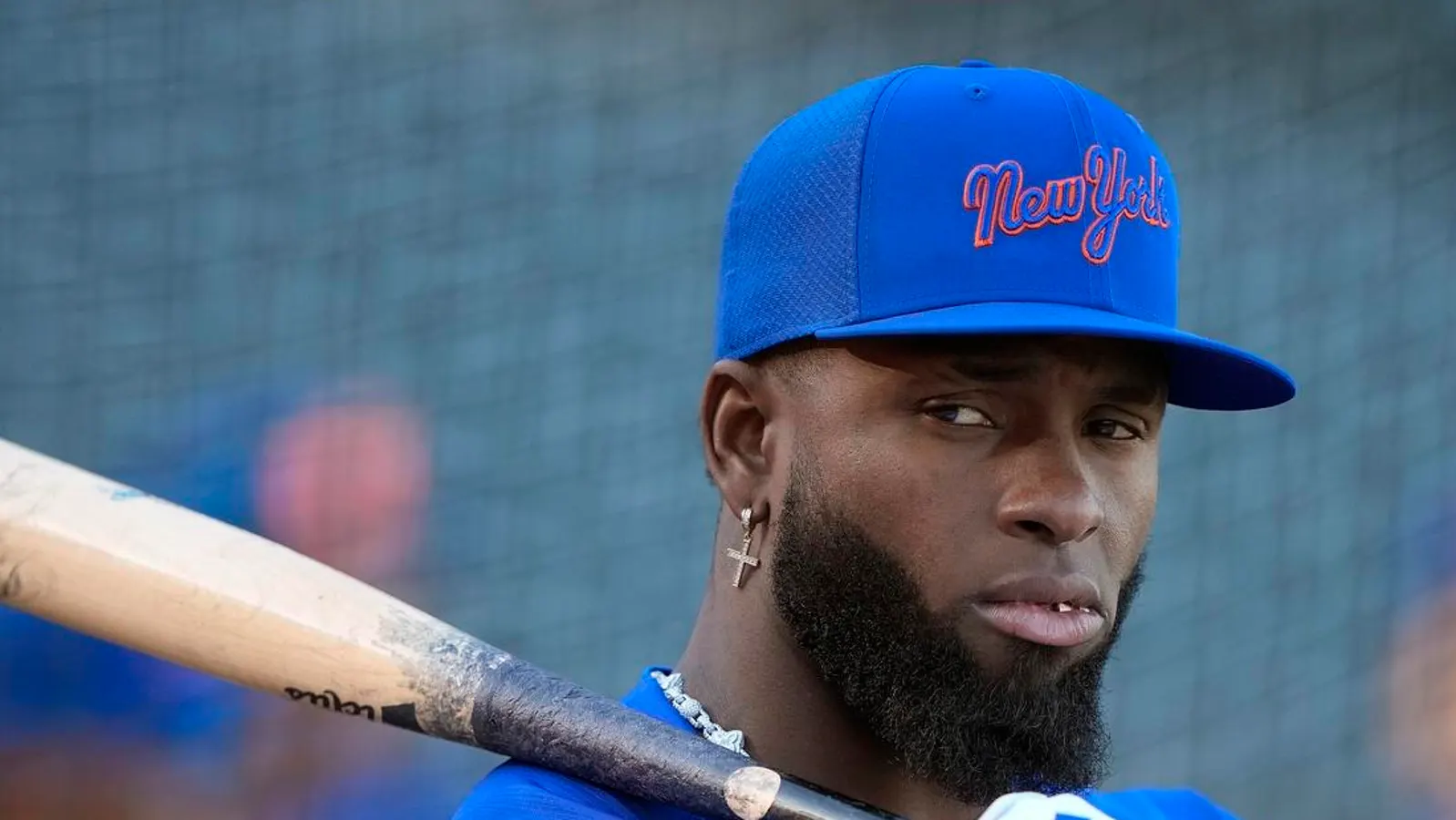

SAN FRANCISCO, CALIFORNIA – APRIL 02: Luis Robert Jr. #88 of the New York Mets looks on during batting practice prior to the start of the game against the San Francisco Giants at Oracle Park on April 02, 2026 in San Francisco, California. (Photo by Thearon W. Henderson/Getty Images)
Getty Images
The New York Mets entered 2026 expecting several new additions to replace departing stars like Pete Alonso and Edwin Diaz.
Instead, the season has been a high-priced disappointment marked by underperformance and injury. And perhaps no single failed Mets experiment is more exemplary of that disappointment than outfield slugger Luis Robert Jr.
The Mets acquired the former Silver Slugger from the Chicago White Sox during the offseason, hoping a change of scenery could unlock the All-Star-caliber player who once looked like one of baseball’s most dynamic young outfielders. But Robert’s health remained an issue, and his brief time in Queens never developed as the Mets had hoped.
“Of all the parts of the 2026 season that went sideways for the Mets, perhaps the most predictable was Luis Robert Jr. having another injury-filled season after being acquired from the White Sox in the offseason,” Dan Martin wrote for the New York Post. “Robert’s brief Mets tenure included a carefully planned schedule designed to help him avoid the leg injuries that affected him the previous two seasons in Chicago, followed by a rocky first month of the regular season.”
Robert ultimately appeared in just 58 games for the Mets, batting .223 with 10 home runs and 23 RBI before New York placed him on waivers in late August, effectively cutting him from the roster in hopes of saving some payroll.
The Baltimore Orioles claimed him, ending a frustrating experiment for a Mets team that had hoped his talent would translate into more consistent production.
New York Mets’ Former All-Star Offers 3-Word Response On Roster Cut
Robert’s Mets tenure was interrupted by a lumbar spine disc herniation that sidelined him for nearly three months. By the time he returned and began producing, A.J. Ewing had established himself as New York’s everyday center fielder, leaving Robert without an obvious long-term role.
By cutting him, the Mets were able to recoup some of the financial commitment they made in the winter.
“Baltimore will assume the $3 million remaining on Robert’s $20 million salary,” ESPN’s Jorge Castillo reported. “Factoring in the 110% luxury tax the Mets must pay this season and the $2 million buyout on Robert’s $20 million club option for next season, New York will save about $8 million with the move.”
For Robert, the end of his Mets tenure was understandably disappointing. He had hoped to return from his injury sooner, contribute during the second half and establish himself as a productive piece for a team with postseason aspirations.
Asked about the move to Baltimore, Robert offered a remarkably concise response.
“What happened, happened,’’ Robert said, per Martin. “You can’t control that.”
New York Mets Move Forward Without Former All-Star
Robert’s departure also reflects how quickly circumstances changed around the Mets’ outfield. His prolonged absence created an opportunity for Ewing, whose emergence gave New York another reason to look toward the future rather than continue forcing a fit for Robert.
The Orioles, meanwhile, inherited a talented player who remains capable of changing a game when healthy — though he quickly returned to the injured list after being picked up.














Leave a comment