


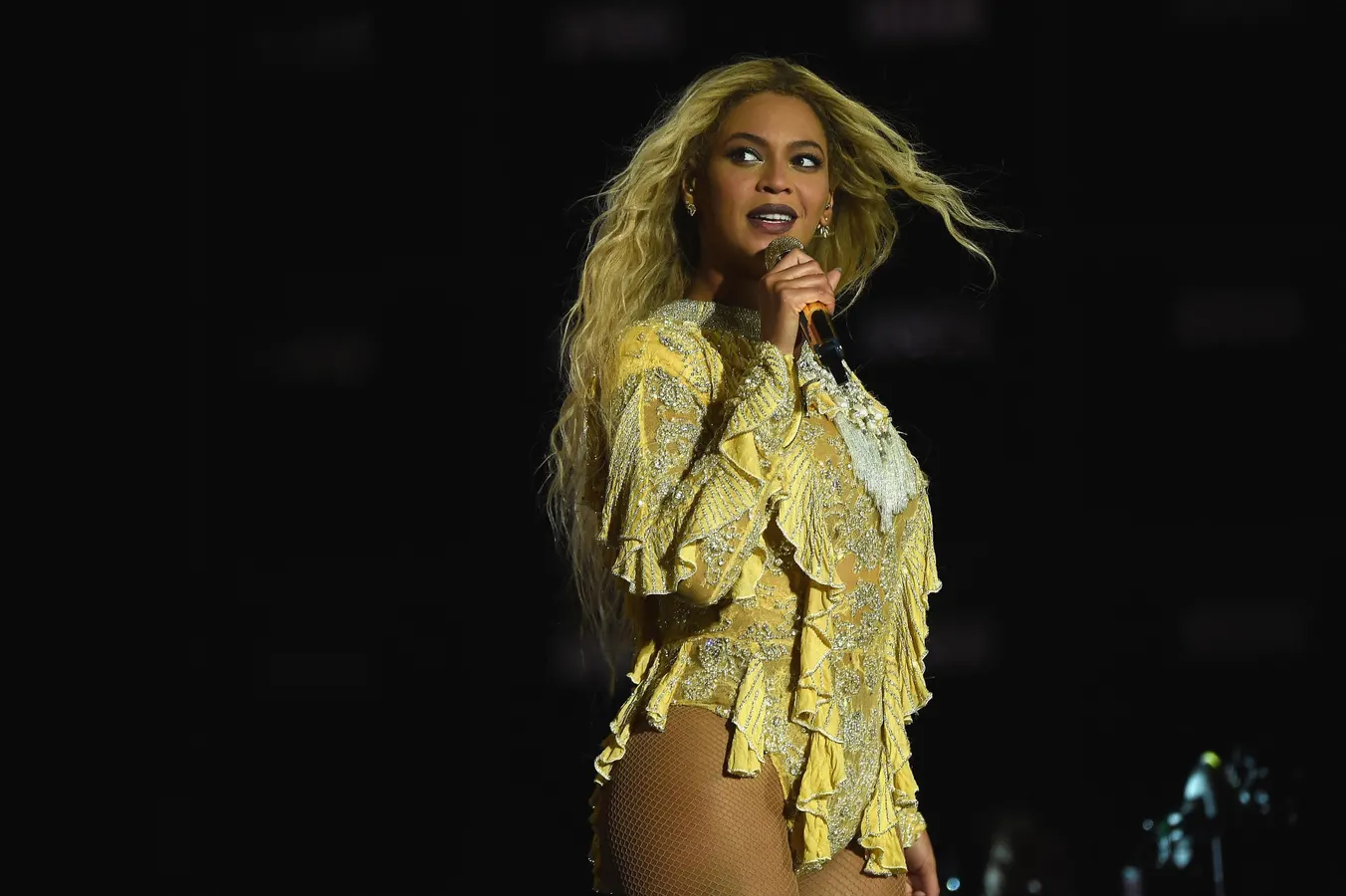

EAST RUTHERFORD, NJ – OCTOBER 07: Entertainer Beyonce performs on stage during closing night of “The Formation World Tour” at MetLife Stadium on October 7, 2016 in East Rutherford, New Jersey. (Photo by Larry Busacca/PW/WireImage)
WireImage
Ten years after its release, Lemonade still resists the tidy framing of an “album.” It arrived in April 2016 not simply as a collection of songs, but as a fully realized cultural text—visual, literary and sonic—through which Beyoncé reframed personal narrative as collective inheritance. What could have been consumed as celebrity confession instead became something rarer: a work that translated private rupture into public language, and in doing so, altered the terms of how pain circulates in popular culture.
At its core, Lemonade is seemingly about betrayal, but it is not confined to it. The album moves through suspicion, rage, apathy, reconciliation and, ultimately, a kind of radical acceptance. Yet its emotional arc is only one layer. By weaving in the poetry of Warsan Shire and grounding its imagery in the lived textures of Black Southern life, Beyoncé constructed a framework where personal grief was inseparable from historical memory. The result was a project that spoke in multiple registers at once: intimate and ancestral, commercial and uncompromisingly artistic.
NEW YORK, NY – AUGUST 28: Beyonce accepts the awrad for Video of the Year onstage during the 2016 MTV Video Music Awards at Madison Square Garden on August 28, 2016 in New York City. (Photo by Larry Busacca/MTV1617/Getty Images for MTV)
Getty Images for MTV
From Scarcity To Cultural Coronation Within Beyoncé’s Lemonade Era
From a business standpoint, Lemonade marked a pivotal shift. Released initially as a surprise exclusive on Tidal, it demonstrated the power of controlled scarcity in an era dominated by algorithmic abundance. It also underscored Beyoncé’s evolution from artist to architect—someone capable of designing not just music, but ecosystems of attention. The accompanying film, which premiered on HBO, expanded the album’s reach while preserving its sense of event. Together, they formed a blueprint for the kind of multimedia rollouts that have since become industry standard.
The Sound Of Vulnerability As Value In Beyoncé’s Vision
But the album’s most enduring innovation lies in how it reframed vulnerability as value. In a marketplace that often commodifies image over substance, Beyoncé monetized emotional transparency without diluting its complexity. Songs like “Formation” and “Hold Up” functioned as both cultural statements and commercial successes, proving that specificity—particularly Black specificity—could drive global resonance rather than limit it. Pain, in this context, was not just expressed; it was structured, distributed and, crucially, owned.
That alchemy was also technical. Speaking on the making of “Sorry,” co-producer HAZE shared via DM that he recalled receiving a demo recorded by Diana Gordon via Hit-Boy through Beyoncé’s team. “I knew it was for [Beyoncé] when I started working on it. I just wanted to add onto the record what I thought would catch peoples ear and lock them in instantly. I already knew it was gonna be hit when it came out, it had too much swag to ignore.” The instinct proved correct: the track’s minimalist bounce and unapologetic tone became one of the album’s defining signatures, distilling its ethos into a few indelible minutes.
Such ownership extended to representation. Lemonade foregrounded Black women not as archetypes, but as a spectrum of identities—tender, defiant, wounded and whole. The casting of figures like Serena Williams within the visual narrative reinforced this multiplicity, situating personal storytelling within a broader cultural continuum. It was a reminder that visibility, when wielded with intention, can function as both mirror and intervention.
EAST RUTHERFORD, NJ – OCTOBER 07: Entertainer Beyonce and tennis player Serena Williams perform on stage during closing night of “The Formation World Tour” at MetLife Stadium on October 7, 2016 in East Rutherford, New Jersey. (Photo by Larry Busacca/PW/WireImage)
WireImage
How Beyoncé’s Lemonade Opened The Door To Genre Reclamation
Following the release of Lemonade, Beyoncé continued to expand the album’s genre-blurring reach, most notably through its country-leaning track “Daddy Lessons.” In a surprise performance at the 2016 CMA Awards, she joined The Chicks (formerly Dixie Chicks) for a rendition that placed the song squarely within the country music spotlight.
The moment was widely discussed as culturally seismic—both for its visibility and its backlash—drawing praise from some audiences while prompting intense criticism from segments of country traditionalists, including accusations that the performance was not “country enough.” The controversy underscored the genre’s long-standing boundaries around race and belonging, while also signaling Beyoncé’s willingness to test and disrupt them.
THE 50th ANNUAL CMA AWARDS – The 50th Annual CMA Awards, hosted by Brad Paisley and Carrie Underwood, broadcasts live from the Bridgestone Arena in Nashville, Wednesday, November 2 (8:00-11:00 p.m. EDT), on the Disney General Entertainment Content via Getty Images Television Network. (Image Group LA/Disney General Entertainment Content via Getty Images) DIXIE CHICKS, BEYONCE
Disney General Entertainment Content via Getty Images
In hindsight, Lemonade did more than amplify Beyoncé’s artistic envelope—it set the foundation for a broader reclamation of space within country music itself. The genre experimentation embedded in the album ultimately became part of a longer creative arc that culminated in her later work, where she more explicitly engaged with country traditions on Cowboy Carter. That trajectory reflected how Lemonade functioned not only as a personal and cultural statement, but as a launching point for genre expansion that would later see her achieve a historic milestone: becoming the first Black woman to win a Grammy Award for Best Country Album.
The Enduring Language Of Beyoncé’s Lemonade
A decade on, the album’s influence is visible across industries. Artists now routinely pair releases with visual components; brands seek the kind of narrative cohesion that Lemonade made feel essential; audiences, in turn, have come to expect more than just music—they expect meaning. Yet few have managed to replicate its balance of intimacy and scale. That tension—between what is revealed and what is withheld—remains central to its mystique.
If Lemonade made pain profitable, it was because Beyoncé refused to cheapen it. Instead, it elevated emotional labor into a form of cultural capital, one that could be shared without being exhausted. In that sense, the album did more than reshape a career; it recalibrated an industry. Ten years later, its legacy is not just that it was felt, but that it changed what feeling, in public, could be worth.
LOS ANGELES, CA – JUNE 26: Recording artist Beyonce (C) performs onstage during the 2016 BET Awards at the Microsoft Theater on June 26, 2016 in Los Angeles, California. (Photo by Kevin Winter/BET/Getty Images for BET)
Getty Images for BET














Leave a comment