


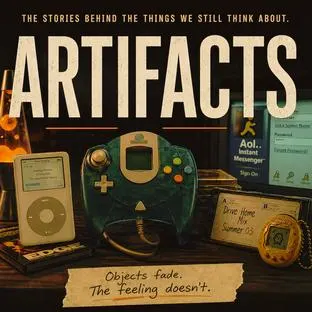

Artifacts (hosted by award-winning podcaster Danny Brown) is a storytelling show about the emotional history of the internet generation. It explores forgotten tech, dead platforms, and internet culture to examine how these early digital spaces helped shape our modern creativity, identity, and communities. It is a show that is discovered via social media.
Danny Brown
Measurement in any media is always a tricky business, fraught with persistent mythologies, assumptions over data, and guesstimates instead of data-driven insights.
Television has been the sole province of Nielsen TV ratings, with its odd combination of hard and soft data. The advent of streaming was supposed to unleash TV metrics, yet streaming services like Netflix protect and shield that information as if it were the secret formula to Coke.
Radio has always had a measurement problem, relying on listener self reporting. In mid-June, iHeartMedia unveiled AudioGraph, a new suite of advertising capabilities built by its Triton Digital subsidiary that aims to bring digital-style targeting, planning, and measurement to broadcast radio for the first time. Terrestrial radio, despite attracting a substantially larger audience than streaming audio, has historically been limited in its appeal to marketers because of its outdated infrastructure, a drawback AudioGraph claims to address.
Music streaming has a high degree of numerical accuracy even though fake content is still a chronic problem and, according to Music Business Worldwide, Spotify commissions musicians, producers, and AI companies to create instrumental and mood-based tracks to populate highly streamed playlists.
For all of podcasting’s impressive metrics – from downloads to listens/views to completion rate – the industry still suffers from data looseness when it comes to how listeners discover podcasts. After all, there are about 40,000 podcasts in varying degrees of activity. How an audience discovers that needle in the haystack requires research rigor requiring access to a multiplicity of data streams. In other words, it’s hard.
The Latest Research
Thankfully, the podcasting industry has its own version of M.I.T. and Harvard for research called Sounds Profitable. The organization is a prominent research, advocacy, and trade organization founded by Bryan Barletta and featuring industry experts like Tom Webster. The platform functions as an educational resource to help publishers, content creators, and advertisers maximize listenership and revenue.
The organization partnered with JAR Podcast Solutions to release new study findings on podcast discovery. Here is a summary of those findings:
YouTube has become both podcasting’s leading discovery platform and most-used listening destination.
- YouTube outperforms every tested channel for podcast discovery and consumption
- Among listeners who discovered a favorite podcast through social media, 60% found it through content shared by someone they follow
- Of the nearly two-thirds of podcast listeners receive recommendations from friends, family members, or colleagues, while 72% say they are likely to act on those recommendations
- Listeners are more receptive to branded podcasts than many marketers assume, with brand-produced shows driving a +27-point net lift in trial intent.
Data needs interpretation
Sounds Profitable conducts and publishes extensive, open-access studies (such as The Creators and The Podcast Atlas) to chart trends in listener behavior, advertising effectiveness, and creator demographics.
Sounds Profitable
Tom Webster, partner at Sounds Profitable interprets the results this way: “According to the results, YouTube has become both the leading discovery platform and the most-used platform for podcast consumption. Forty percent of listeners said they discovered their favorite podcast on YouTube, more than double any other source. Additionally, 40% identified YouTube as their most-used podcast platform, surpassing both Spotify (18%) and Apple Podcasts (11%).”
When social platforms including Facebook, TikTok, and Instagram are added to the equation, 61% of listeners attribute discovering their favorite podcast to either YouTube or social media.
The research also found that discovery is increasingly driven by organic content rather than paid promotion. Among listeners who discovered a favorite podcast through social media, 60% found it through content shared by someone they follow, compared to 33% who discovered it through sponsored content.
The research revealed that TikTok skews much younger for favorite podcast discovery, with Spotify also in that younger cohort. Predictably, TV and radio skew older.
Sounds Profitable
“Podcasting has spent years optimizing for podcast apps while audience behavior has been shifting elsewhere,” said Tom Webster, Partner at Sounds Profitable. “What this research makes clear is that discovery is happening where people already spend their time. YouTube, social feeds, search, and personal recommendations have become the front door to podcasting. If you’re relying primarily on trailers, chart positions, or cross-promotion within podcast apps, you’re missing where most new listeners are actually entering the medium.”
The study also revealed significant differences between discovery channels, demonstrating that platforms function not only as distribution channels but also as audience segments.
Among the findings:
TikTok discovery is nearly seven times more common among listeners ages 18–34 than among those 55 and older.
Spotify-discovered listeners represent one of podcasting’s most engaged and brand-responsive audiences, with 61% listening weekly.
Apple Podcasts browsing remains a key discovery mechanism among affluent, audio-first listeners, particularly in news and technology categories.
In just a few hours, YouTube has supplanted Apple Podcasts and Spotify as the most-used entry point for podcast viewing/ listening.
Sounds Profitable
Host recommendations continue to deliver highly engaged “super-fan” audiences, despite representing a smaller share of overall discovery.
The report also revealed the powerful role that personal recommendations continue to play in podcasting. Nearly two-thirds (64%) of podcast listeners receive recommendations from friends, family members, or colleagues, while 72% say they are likely to act on those recommendations.
“Discovery isn’t one challenge anymore, it’s many different challenges depending on who you’re trying to reach,” said Roger Nairn, Co-Founder and CEO of JAR Podcast Solutions. “What excites us about these findings is that they give brands and creators a much clearer roadmap. The audience discovering podcasts on TikTok behaves differently than the audience discovering them through Apple Podcasts, YouTube search, or host recommendations. Understanding those differences allows marketers to build smarter strategies and invest in the channels that actually align with their goals.”
For advertisers, the study found that listeners are increasingly receptive to branded podcast content. Brand-produced podcasts generated a 27-point net lift in trial intent overall, with significantly higher performance among highly engaged podcast audiences.
Sounds Profitable and JAR Research has built a customized channel mix based on a multiplicity of factors.
Sounds Profitable
The full report explores how discovery channels shape audience behavior, which platforms deliver scale versus engagement, and what publishers, creators, and brands should prioritize when launching and growing podcasts in today’s fragmented media environment.
One size does not fit all
What this recent research on podcast discovery by Sounds Profitable / JAR Research punctuates is that the avenues of finding new podcasts aren’t formalized and rigid, but dependent on age, income, background, and lifestyle.
Sounds Profitable Head Of Communications Molly DeMellier running in a marathon. Podcast listening is her secret training tool.
Molly DeMellier
For example, Sounds Profitable Head Of Communications Molly DeMellier is an experienced marathon runner and love to listen to podcasts while training.
Davey Cortes watches video podcasts on YouTube on his daily commute from central New Jersey into Manhattan.
Avni Chauhan catches his sports podcasts on YouTube via his Smart TV after a long day at work.
When podcasting began approximately 20 years, people listened by manually downloading audio files to their desktop computers using feed readers or dedicated catchers like iPodder. They would then physically connect their MP3 players to their computers via USB and sync the episodes to take the audio on the go. Today, options continue to expand on how to consume podcasts.
For podcasters, this expansion of access options enables the industry to attract a wider spectrum of people who find and enjoy podcasts in video and audio formats and on devices from smartphones to smart TVs.














Leave a comment