


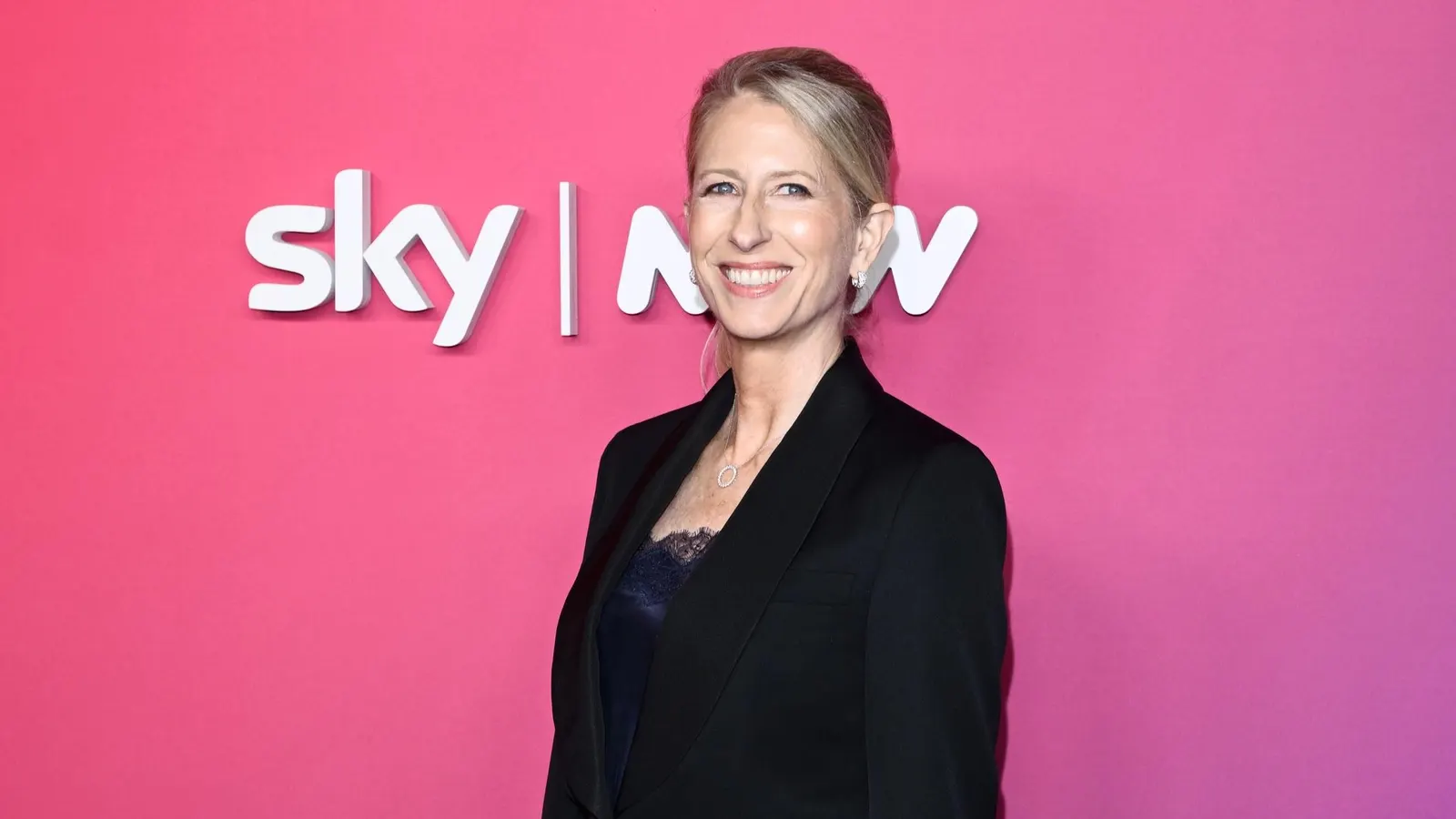

LONDON, ENGLAND: Dana Strong, CEO Sky set to acquire ITV Media & Entertainment Division. 2026 in London, England. (Photo by Eamonn McCormack/Getty Images)
Getty Images
Sky has agreed to acquire ITV Media & Entertainment—the ITV channels, the ITVX streaming service and the advertising business that funds them—for up to £1.6 billion. The deal, announced Monday, would fold the UK’s biggest commercial broadcaster into the UK’s biggest pay-TV operator.
The price is the story. ITV’s own announcement values the division at roughly six times its 2025 earnings. That is what the market now pays for the whole of flagship commercial British television: its mass reach, its news operation and the Channel 3 licenses that run to 2034.
For ITV, this was less a choice than a conclusion. For Sky, it is a bet that reach is the last scarce asset in British broadcasting.
What Sky Is Actually Buying
The asset is audiences. ITV reaches around 40 million people every week, and ITVX has grown to 16.5 million monthly active users. Combined with Sky, the two account for roughly 20% of all in-home video viewing in the UK—second only to the BBC and ahead of YouTube.
That reach comes with the advertising machine attached. A single sales house spanning free-to-air, pay TV and two streaming services is a scale proposition Sky could not build alone, plus around £200 million in annual cost synergies by year three. The channels stay free-to-air with public service obligations intact. Completion, expected in the second half of 2027, still depends on regulatory approval.
What ITV Keeps And What Sky Gives Up
ITV is not selling the family silver. ITV Studios—the production business behind its biggest dramas and formats—stays with shareholders as a standalone listed company, underpinned by a content supply agreement guaranteeing a minimum £2.1 billion of spend from the combined Sky-ITV business between 2028 and 2032.
Sky surrenders something too. Love Productions, its in-house producer valued at £200 million, crosses to ITV Studios as part of the consideration. And ITV plans to return approximately £950 million of the proceeds to shareholders, around 25p per share.
A Sale Born Of Necessity
The harder question is whether ITV still had a credible standalone answer for broadcasting. A decade of declining linear audiences and a share price that never recovered its mid-2010s levels left the company subscale against competitors that outspend ITV many times over.
The realistic options were three: shrink and manage decline, merge with another subscale European broadcaster or separate the growing business from the declining one. Only separation returned cash to shareholders and gave Studios a global stage. The six-times multiple is the cost of waiting this long to choose.
A Champion Assembled Inside A Spinoff
There is one more wrinkle. A week before signing, Comcast announced it would spin off Sky together with NBCUniversal into a standalone media company—a separation that follows a familiar playbook. The UK’s new commercial television champion is being assembled inside a business its own parent has already decided should stand apart.
ITV concluded that reach and content are worth more apart. Comcast reached the same verdict about media and the pipes that carry it. Sky is betting the opposite: in a fragmented market, aggregated reach is still worth buying.







Leave a comment