


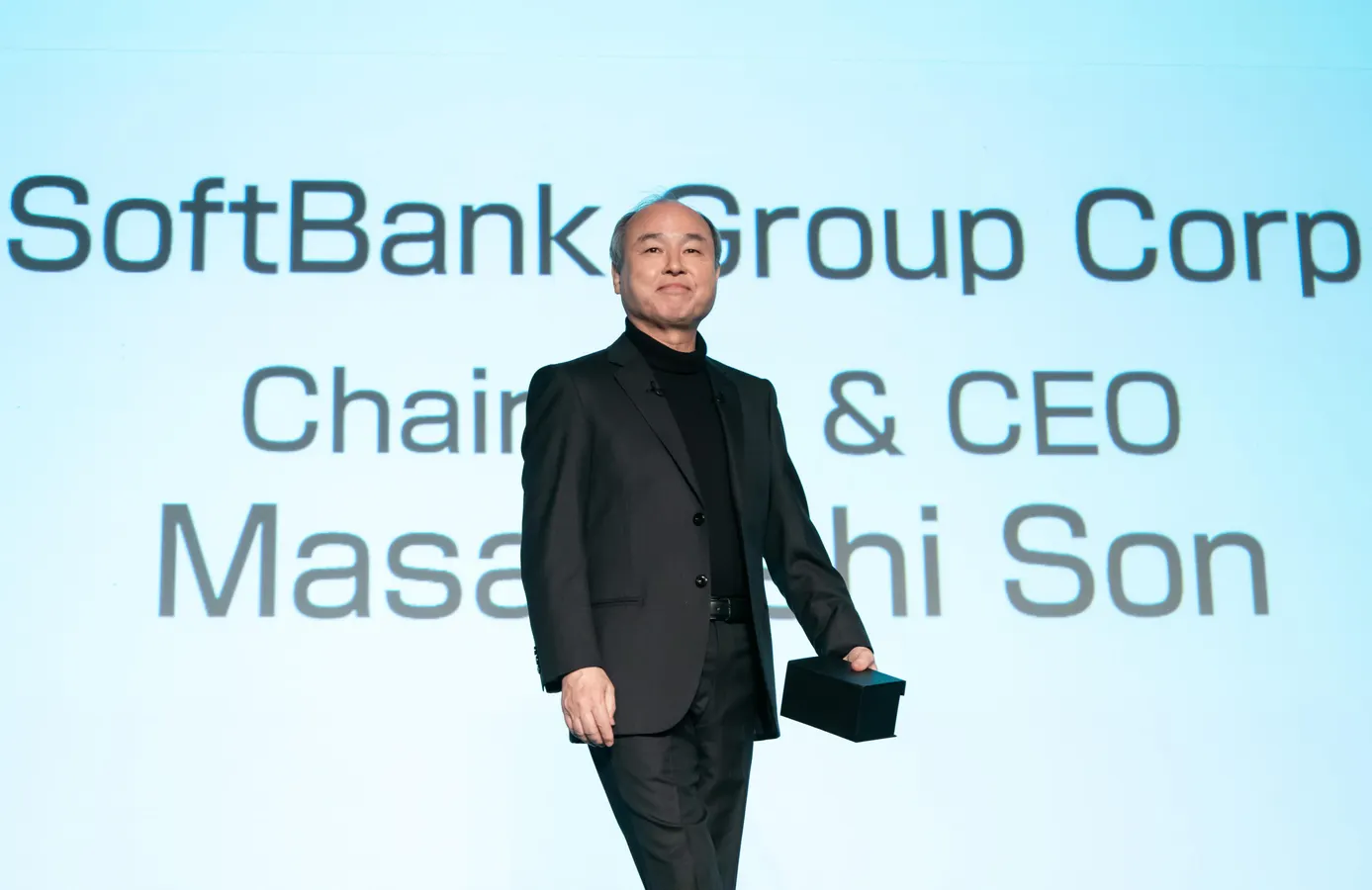
SoftBank Group’s Masayoshi Son.
Tomohiro Ohsumi/Getty Images
SoftBank Group’s Masayoshi Son has become the richest person in Asia amid the AI boom. Market euphoria has propelled shares of the Tokyo-listed investment giant to a record high, making it Japan’s most valuable company by market capitalization on Monday, overtaking automaker Toyota Motor.
The 68-year-old mogul now has a net worth of $97 billion, largely derived from his SoftBank stake, according to Forbes estimates. He has surged past Reliance Industries Chairman Mukesh Ambani, whose fortune stands at $90 billion, to become the richest person in Asia, according to Forbes’ Real-Time Billionaires List.
With a market cap now sitting at $298 billion, SoftBank shares have rallied over 80% this year as Son’s AI-related investments boost market sentiment. During a Monday interview with CNBC, the mogul said the AI revolution was likely 50 times greater than opportunities in the dot-com era.
“I think this is like more than 10x, probably 50x bigger than dot-com,” Son was quoted as saying. The previous day, he announced an up-to-€75 billion ($87 billion) investment in AI infrastructure such as data centers across France.
And as AI-related demand is expected to increase further, SoftBank’s portfolio companies are also surging to lift the share price of the parent company. The primary catalyst for the rally is Nasdaq-listed chip maker Arm Holdings, where the Japanese conglomerate owns an almost 90% stake, according to Dan Baker, senior equity analyst at research firm Morningstar.
The British firm, whose own shares went up by over 250% this year, forecasted on Tuesday that the company may achieve its $15 billion chip sales target ahead of schedule. In March, when Arm unveiled its first in-house chip that marks a shift from just licensing chipmaking technologies, the company also predicted that it would sell that many self-made chips in about five years. And total annual revenues would reach $25 billion by then, according to Arm’s own predictions, representing a more than six-fold increase from what it earned in 2025.
Meanwhile, investors are betting that OpenAI, the ChatGPT creator in which SoftBank has invested over $30 billion, might become even more richly valued. Led by billionaire Sam Altman, OpenAI was valued at $852 billion in late March after raising $122 billion from investors including Amazon, Nvidia and the Japanese conglomerate.
The American AI giant may now be in an arms race with fast-growing rival Anthropic to go public, as each seeks to attract more capital by leveraging early mover advantages. SoftBank, which has committed to invest at least another $20 billion in OpenAI by October, stands to benefit if the value of the American behemoth rises further. OpenAI might reach a valuation of about $1 trillion in a public debut, amid market exuberance over mega offerings such as the forthcoming listing of billionaire Elon Musk’s SpaceX, which is reportedly seeking to raise $75 billion, according to Hironori Akizawa, Tokyo-based senior fund manager at Tokio Marine Asset Management.
And Son, despite his AI commitments, has so far managed to maintain financial discipline. SoftBank’s leverage, as measured by loan to asset value, has decreased to 17% from 18% during the fiscal fourth quarter, according to a May research note from Morningstar. The company has a self-imposed leverage limit of 25%, as its heavy borrowing once caused significant market concerns.
But Deutsche Bank analyst Peter Milliken cautions in a Tuesday research note that it won’t entirely be smooth sailing. OpenAI faces stiff competition from Anthropic, which has surpassed OpenAI to reach a valuation of $965 billion following a May funding round. Cheaper, open-source AI models are also gaining popularity globally, potentially hurting OpenAI’s sales growth.
“[SoftBank’s] been a great run, based mainly on savvy investing, and partly on a bull market that has increasingly shown signals of entering a mania,” the analyst wrote. “Analysts and investors appear to us to have become fixated on short-term momentum, and less interested, or unable, to map out the long-term trajectory with detailed assumptions.”
















Leave a comment