


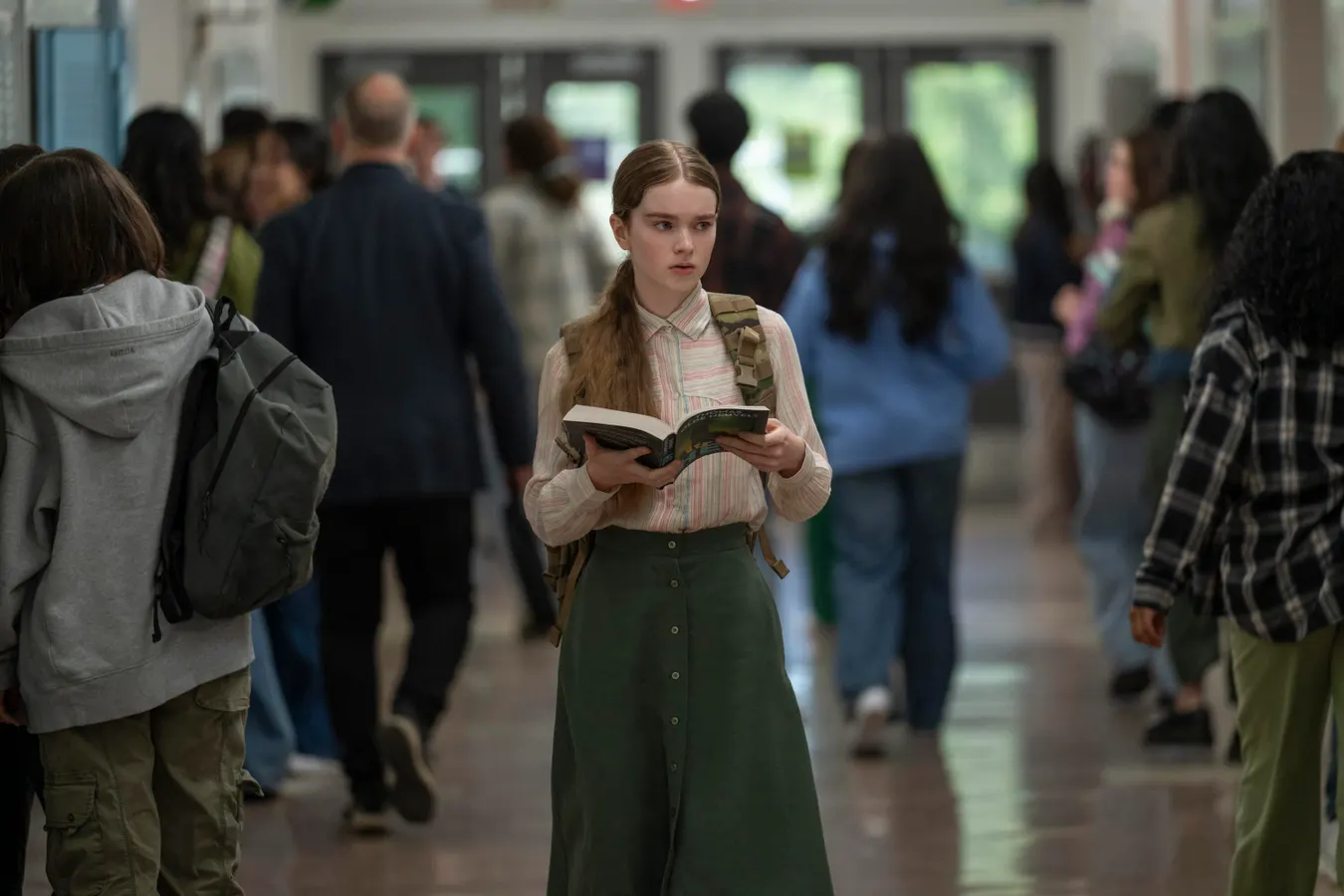

Summer H. Howell
Robert Falconer/Prime
There is something almost perversely appropriate about turning Carrie into an eight-hour television series, because the whole modern world seems determined to turn every simple human catastrophe into content. A girl gets her first period in a high-school shower and is humiliated beyond the limits of ordinary human cruelty; forty-eight years ago that horror required a bucket of blood and Brian De Palma’s camera. Today it also requires a phone, a meme account, an algorithm and approximately six million strangers who suddenly have an opinion about Carrie White. Mike Flanagan’s Carrie, streaming on Amazon, understands this perfectly. It also understands Stephen King so well that sometimes you wish it would stop understanding him and just let the poor bastard’s story breathe.
That’s the fundamental contradiction of this new Carrie. Flanagan has taken one of King’s leanest, meanest books and given it the full prestige-TV treatment: eight episodes, a widened mythology, secondary characters with histories, adults with interior lives, additional victims and perpetrators, and enough thematic scaffolding to support a small municipal government. The original novel is almost freakishly compact by King standards. Carrie is an adolescent girl trapped between an insane religious mother and the social meat grinder of high school, and something inside her can move things. Then comes the prom. Then comes the blood. Then comes the fire. It’s practically a rock single: two and a half minutes, one killer riff, no bridge necessary.
Flanagan hears the riff and decides to make a concept album.
The most interesting expansion concerns Margaret White, played by Samantha Sloyan with a kind of frightening maternal voltage. In earlier versions, Margaret could seem like a fundamentalist monster delivered from Central Casting’s Department of Religious Psychosis. Here she is still terrifying, but she has been given history, motive and a whole diseased ecosystem of belief. Her dead husband Ralph hangs over the household like a bad smell, and her fanaticism becomes partly an attempt to protect Carrie from the world that damaged her. This doesn’t excuse Margaret’s cruelty; it makes it more recognizable. She isn’t merely some horror-movie Bible-thumper screaming about sin. She’s the sort of person who might show up at a school-board meeting armed with Facebook posts, certainty and a profound conviction that everyone who disagrees with her is endangering children.
And then there’s Carrie herself, played by Summer H. Howell, who is terrific. Howell avoids the trap of making Carrie merely pathetic, which is crucial. This Carrie arrives at school with an almost painfully sincere eagerness to participate in the world. She likes books. She wants friends. She quotes Anne of Green Gables. She has no idea how the social machinery works because she’s never been permitted to enter the building. Watching Howell discover that machinery—and then discover that she can smash it—is the show’s most consistently compelling pleasure. When Carrie’s confidence begins to grow alongside her telekinetic abilities, Howell makes the transformation feel less like a superhero origin story than a young woman discovering, for the first time, that she possesses an instrument of self-defense.
Flanagan also understands that being a teenager in 2026 can be a horror story without anybody possessing supernatural powers. The shower humiliation becomes a viral spectacle through Chris Hargensen’s “CarrieRed” meme account, and suddenly Carrie isn’t merely being bullied by the girls in the locker room. She’s being bullied by the entire invisible architecture of the internet. The original Carrie understood the special cruelty of adolescence; this version asks what happens when adolescence gets a distribution network.
That’s smart. Sometimes it’s almost painfully smart.
Because the show can also be so eager to explain itself that you want to grab it by the shoulders and yell, “WE GET IT!” There are historical excursions concerning other women and girls with extraordinary abilities, and these passages expand King’s mythology while making Carrie part of something larger. The trouble is that the larger something often feels less like discovery than homework. At one point the series practically seems to have turned Wikipedia’s telekinesis page into a dramatic monologue. Flanagan is at his best when he’s letting character and atmosphere do the talking; when he starts putting neon arrows around his themes, the spell breaks.
The same problem afflicts some of the new characters. Emaline, introduced as another student who encourages Carrie to fight back, never quite escapes the feeling of being a narrative appliance. There are stretches when the series wanders away from Carrie and toward a generalized portrait of Teen America, complete with adults trying valiantly to help and failing because institutions are institutions. Amber Midthunder’s Rita, Matthew Lillard’s Principal Grayle and Tim Bagley’s counselor Peter are appealing precisely because they feel like people rather than functions, but their decency can’t change the fact that we are watching a freight train approach in slow motion.
And that’s where the eight-episode format finally starts charging interest on its debt. The original Carrie has momentum because everything is hurtling toward one terrible night. This series keeps stopping to inspect the luggage. By the time the prom arrives, the audience has been informed, contextualized and psychologically briefed so thoroughly that the catastrophe doesn’t hit with the force it should. Flanagan has always been a superb builder of dread, but dread isn’t the same thing as terror. He can make you stare at the dark hallway for ten minutes. He’s less reliable at making something leap out of it and actually scare you.
There are plenty of good things here, sometimes great things. The performances are strong. The modernization is often genuinely insightful. Sloyan’s Margaret is a substantial reinvention, and Howell gives Carrie a warmth and volatility that belong entirely to her. Flanagan’s affection for King is obvious in every frame, even when the show starts borrowing the flavor of Firestarter, Needful Things and the broader King universe. But affection can become overfeeding. Sometimes the best thing you can do for a great story is not give it more story.
So here we have Carrie in the age of social media, school-shooting drills, viral humiliation and permanent surveillance: a Carrie for a culture that has somehow managed to make high school even more horrifying than it was in 1976. It’s thoughtful, ambitious, beautifully acted and frequently fascinating. It is also less strange, less concentrated and less frightening than the story it expands. Flanagan has built a very good television series out of Carrie. The nagging question is whether Carrie ever needed to become a very good television series.
Sometimes a song is a song because it ends before you have time to explain it.













Leave a comment