


Topline
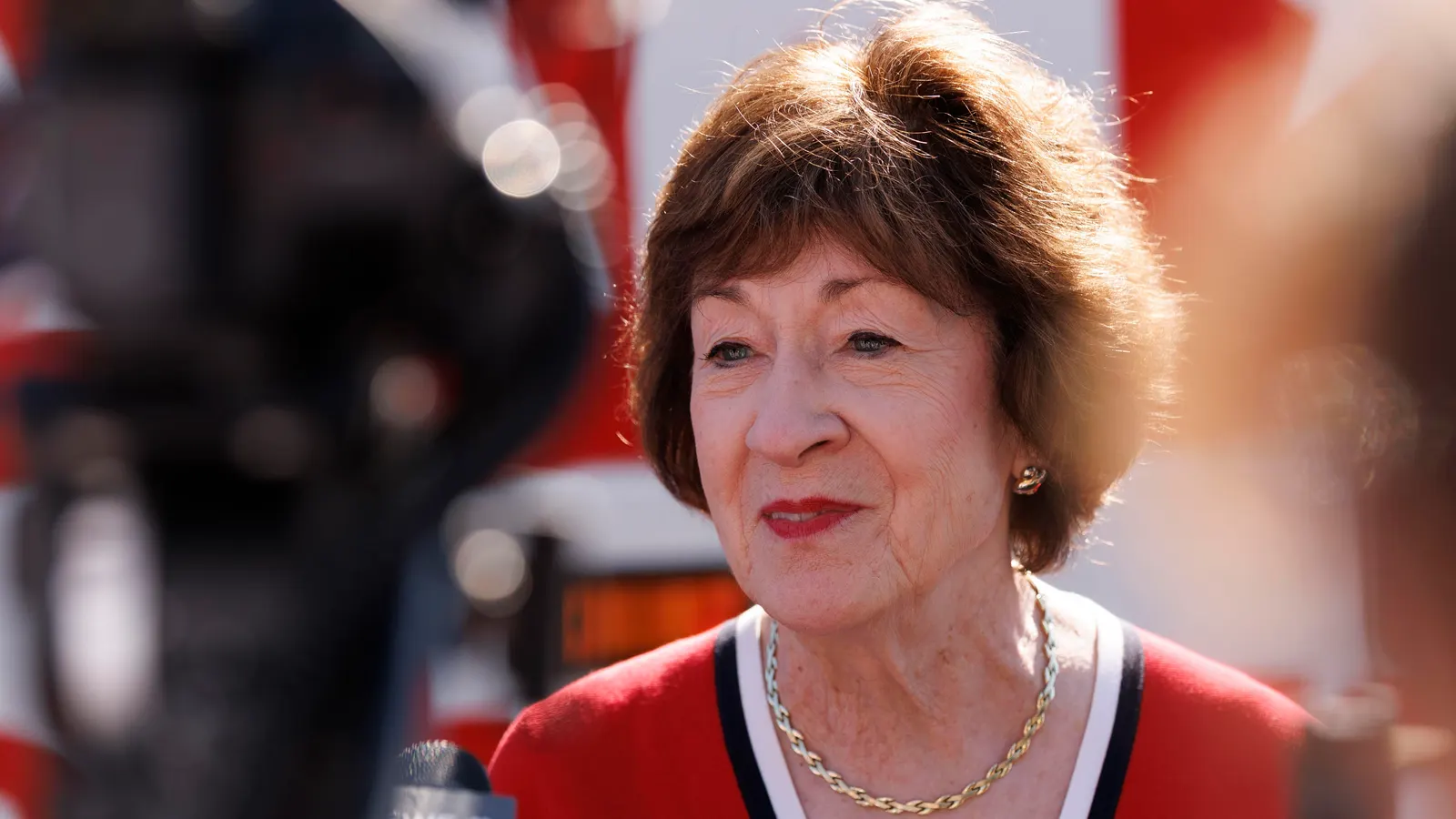
Sen. Susan Collins, R-Maine, faces a new wrinkle in her already tight Senate race against Democrat Troy Jackson, as ProPublica reports the FBI was looking into her potential involvement in an alleged “pay-to-play” scheme before President Donald Trump’s reelection cut the probe short—with Collins’ team “vigorously” denying the report Tuesday as Jackson slammed her alleged “corruption.”
Sen. Susan Collins, R-Maine, speaks with reporters on August 14 in Kittery, Maine.
Getty Images
Key Facts
The FBI has looked into allegations made by Martin Kao, the former CEO of naval technology manufacturer Navatek, that he donated money to lawmakers in exchange for them funneling defense contracts to his company, ProPublica reported Tuesday, describing Collins as the most “important” lawmaker who was named in the alleged scheme.
Citing interviews and documents from the FBI, Collins’ staff and Navatek, ProPublica reports Kao—who has since been indicted and convicted on campaign finance charges—gave a $150,000 donation to Collins’ super PAC through a shell company right after meeting with its top official, allegedly in exchange for Collins securing Navatek $32 million in naval contracts.
Collins, who chairs the Senate Appropriations Committee, steered millions in defense contracts to Navatek “while her campaign was pumping Kao and his network for donations,” ProPublica reports, and allegedly met directly with Kao and told him she expected his financial support in return for the contracts he was receiving.
Collins’ deputy chief of staff Annie Clark “vigorously” denied the allegations to ProPublica and called them “outlandish,” and Scott Reed, who leads Collins’ super PAC and allegedly met with Kao, told ProPublica he “never had any communications with Senator Collins [or] her staff about Martin Kao and/or Navatek.”
Kao detailed his alleged political “pay-to-play” scheme to FBI investigators after being indicted in an effort to lessen his sentence, ProPublica reports, and the FBI was preparing to launch an investigation into the allegations when Trump took office—at which point the FBI abandoned many of its anti-corruption efforts and officials conducting the investigation were either laid off from the bureau or resigned.
FBI spokesperson Ben Williamson told ProPublica the bureau investigated Collins “years ago” and “ultimately found nothing implicating Senator Collins or Senator Collins’ campaign,” but did not comment on the more recent alleged 2024 investigation based on Kao’s cooperation with the FBI.
Chief Critic
Jackson commented on ProPublica’s reporting Tuesday, calling Collins’ alleged actions “corruption of the highest order.” The public “deserve[s] answers about every contract and every conversation that Collins and her team facilitated on the backs of taxpayers,” Jackson said. “The jig is up.”
What To Watch For
Collins and Jackson are neck-and-neck in the polls ahead of the November election, meaning that any unfavorable news like ProPublica’s reporting could have a significant impact. Jackson is currently polling less than two percentage points ahead of Collins on average, according to RealClearPolitics—with 47.2% support to Collins’ 45.4%—and most recent polls have given Jackson a narrow lead. That being said, Collins has historically tended to outperform the polls in past elections, defeating opponent Sara Gideon in 2020 with 51% of the vote to Gideon’s 42% even as polls before the election showed the Democratic candidate with a clear edge.
What Has Collins’ Office Said?
“The seven-year-old allegations made against Senator Collins and her staff in this piece are categorically false. There have never been any allegations of wrongdoing by the Collins for Senator campaign, and the campaign was never the target of the FBI investigation,” Clark said in a statement Tuesday morning, following the publication of ProPublica’s report. Clark said the DOJ “thoroughly investigated the Navatek matter” under the Biden administration and argued Collins’ office “cooperated fully with the FBI throughout the investigation, producing all of the documents it requested and serving as fact witnesses in official settings.” The FBI has not contacted Collins’ office since 2021, before Kao’s 2022 indictment, Clark said. The deputy chief of staff also noted in her previous comment to ProPublica that Collins’ campaign had “disgorged the illegal contributions that Martin Kao had made without our knowledge.”
Big Number
Nearly $900,000. That’s how much Kao allegedly gave to politicians in total, including Collins, as part of his alleged pay-for-play scheme, according to ProPublica. That allegedly resulted in Navatek—which has since rebranded to PacMar—receiving some $40 million in government contracts. ProPublica did not name other lawmakers allegedly embroiled in the scheme in its piece Tuesday, though it promised future stories based on its reporting into Kao—and noted FBI investigators inquired about a dinner Kao had with the late Sen. Lindsey Graham, R-S.C.
What Are The Allegations Against Susan Collins?
Kao first met Collins in 2018, he alleged to the FBI, meeting the senator only after donating to her and allegedly asking her to help him secure an $8 million for Navatek with the University of Maine. Collins, through lobbyist Glen Mandigo, allegedly asked Kao to throw her a fundraiser and bundle thousands in donations for her reelection campaign, ProPublica alleges, though Mandigo told the outlet he “did not advise Navatek officials, nor would I advise any client, that support from Sen. Collins was contingent on campaign donations.” Kao hosted a publicity event for Collins in August 2019 and allegedly donated $40,000 to Collins through his family members, telling Collins’ staffers in emails to reallocate funds that were initially in his name to be from his father. “This is perfect,” Amy Abbott, Collins’ campaign finance director, emailed Kao in response, ProPublica reports. Collins allegedly met with Kao before that event—during which, Kao told the FBI, the senator said he’d “seen me deliver” as she asked for more campaign donations. Shortly after the event, ProPublica reports, the Senate released draft legislation that would award $21.5 million to Navatek’s projects in Maine, and Kao emailed a Collins fundraising employee, writing, “Thanks again for all the support from Sen Collins.”
Disgraced CEO Allegedly Makes A Deal With Collins’ Super PAC
After he was already connected with Collins’ office, Kao then met with Reed, of Collins’ super PAC, in 2019 about donating to the PAC in exchange for further funding. He told Reed in a follow-up email he was advised to use a new LLC called the Society of Young Women Scientists and Engineers to “facilitate” the donation, noting such a shell company would be “super vague and very difficult to get any background information on” while insisting the practice was legal. “Very smart and glad your counsel understands,” Reed responded. Kao and his team met with Collins’ office and secured additional funding weeks after the $150,000 donation, which the Navatek CEO told his team in an email was an “excellent meeting.” Emails show a Collins super PAC staffer also asked a Navatek lobbyist for Kao’s phone number after the donation was made, writing, “Senator Collins would like to call Martin to thank him.”
Kao’s Donations Raise Suspicion
Kao came under fire after the Campaign Legal Center flagged the shell company’s donation to the Federal Election Commission in 2020, taking notice of the donation because the LLC’s name had a typo in it, declaring itself the “Society of Young Women Scientist and Engineers,” rather than “Scientists.” After the Honolulu Civic Beat connected that donation to Kao, he allegedly went into “damage-control mode” and, in conjunction with PAC attorney Cleta Mitchell, made a series of other donations through the LLC to make it appear legitimate. Kao was ultimately indicted by federal authorities for both his campaign finance infractions and defrauding the government through its COVID-era Paycheck Protection Program. He was turned in to authorities by Steven Loui, the founder of Navatek who has since retaken control of the company from Kao. The indictment against Kao references donations made to Collins in his family members’ names, but investigators did not accuse the lawmaker or her staff of wrongdoing, and did not charge anyone connected to her as part of its probe. Kao pleaded guilty to the crimes against him, at which point he started talking to FBI officials about his alleged political “pay-to-play” scheme in a bid for leniency. He is now serving an 87-month prison sentence. FBI investigators launched an investigation based on that testimony, but the top officials behind it left in the early days of the Trump administration, as reports suggest the FBI’s anti-corruption unit has been decimated by the bureau’s new leadership.
Contra
ProPublica acknowledges there are fundamental issues with relying on what Kao told the FBI, given his position as a criminal defendant eager to provide information that would get him leniency from the government. The outlet notes it was able to independently corroborate much of Kao’s testimony, however, and much of its reporting on Collins relies on emails and other documents viewed directly by the publication.
Further Reading
The FBI Anti-Corruption Squad Was Circling Susan Collins — Until Trump Got in the Way (ProPublica)
Hottest 2026 Midterm Races—Democrats Lead In Texas, Michigan, Iowa (Updated Daily) (Forbes)















Leave a comment