


Topline
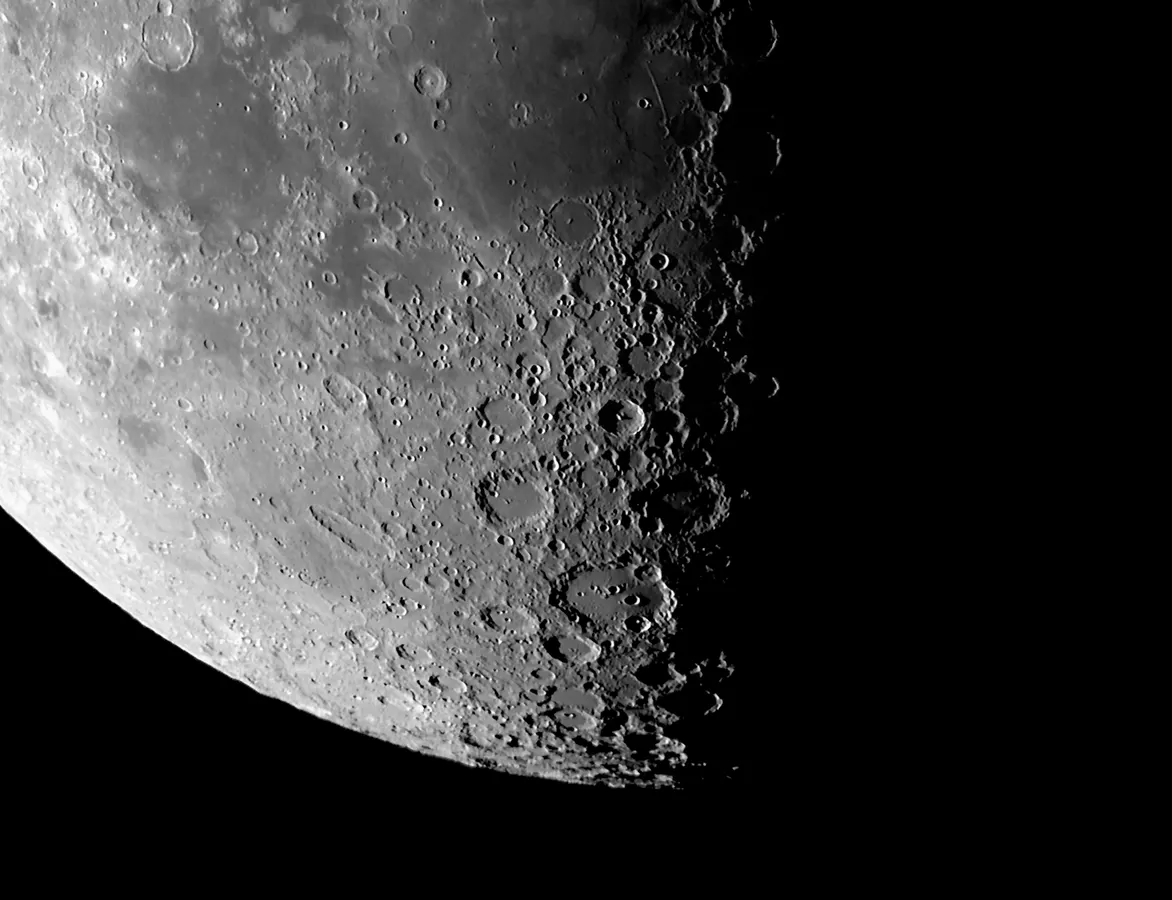
A new research paper published in the Frontiers in Space Technologies journal found that the water present on the moon is only capable of sustaining a large city there for about 100 years—casting doubt on Elon Musk’s plans for building a “self-growing” city of millions of lunar settlers.
The water on the moon could likely support a small village or town, but not a large “metropolis,” a recent paper found.
SSPL via Getty Images
Key Facts
A city of over 1 million people would exhaust the amount of known water on the moon within just 2.4 years, the study found—assuming water would be used for personal use, agriculture and planned heavy industries and data centers.
Any sort of moon settlement would therefore have to rely on strict recycling standards for water, such as the extremely efficient standards on the International Space Station.
The ISS has a 98% recycling efficiency, and using that standard, a city of 1 million would be able to sustain itself for about 100 years, according to the study, while a smaller city of about 100,000 could sustain itself for another 1,000 years.
The authors speculate a “Moon Village” of just about 1,000 people—similar to the population of researchers on Antarctica—would be more sustainable and allow “carefree” water use.
However, the researchers also noted several possible solutions to the water shortage—moon settlements could try to recycle water more efficiently, reduce water use using techniques like vertical farming, import water from nearby asteroids or discover more water on the moon itself.
Where Is Water On The Moon?
Researchers estimate about 34 million tons of water exist on the moon. Ice can be found in massive craters around its poles, according to researchers. These craters contain what are sometimes referred to as the “pits of eternal darkness,” as they have not had sunlight in about 4 billion years. They form “cold traps,” which never reach temperatures higher than -261.67 degrees Fahrenheit. NASA’s planned Moon Base will be located on the moon’s south pole, according to the space agency.
Power Is Less of a Concern
The paper also examined how challenging it would be to set up power generation for a permanent settlement on the moon. Solar power would likely not be a problem, according to the researchers. Solar panels could be placed on the peaks of craters, which permanently face the sun. These panels could also likely be manufactured on the moon, which has lots of silicon, according to a news release published by the researchers on Monday. However, supporting several million people on the moon would require nuclear fission power, the study found, although this too would only be a “weak constraint on the lunar population.” Forbes has reached out to the researchers for further information about these constraints.
Surprising Fact
It’s unclear how possible it would be for a city of over 1 million people to reach a 98% recycling efficiency like the ISS, which has a population of just seven researchers. The research paper noted a permanent city would require more sanitation facilities that would likely “degrade” its water recycling efficiency, including showers, laundry and toilets that function on the moon’s low gravity environment.
Key Background
Plans for building cities and industries on the moon have rapidly advanced. NASA announced plans for a permanent Moon Base in March, and the space agency plans to start building habitats for human settlements in 2032. Musk, however, has been more ambitious and more optimistic about his plans for a permanent settlement. In February, the billionaire SpaceX CEO said he planned to prioritize building a “self-growing city” on the moon within the next five to seven years. He was even more bullish in an interview in July, when he claimed he was hoping to send “tens of thousands” of people to a “full blown, self-sustaining city on the moon, like an actual metropolis.” Musk and other space billionaires, including Blue Origin owner and Amazon founder Jeff Bezos, have advocated for shifting heavy industry and data centers into space in the near future.
Forbes Valuation
We estimate Musk’s net worth at $931.7 billion, making him the wealthiest person in the world by a wide margin. Bezos is the third-wealthiest person in the world, with an estimated net worth of about $270.4 billion as of Monday.












Leave a comment