




BENGALURU, INDIA – APRIL 05: Auto drivers push their auto rickshaw uphill to join a queue for liquefied petroleum gas (LPG) at a filling station on April 05, 2026 in Bengaluru, India. The shortage of auto liquefied petroleum gas (LPG) in India, caused by supply uncertainties due to the ongoing geopolitical crisis in West Asia, is disrupting urban transport networks that millions rely on daily. As refuelling queues grow and supplies tighten, thousands of LPG-powered auto rickshaws and taxi fleets are being forced off the roads, worsening public mobility challenges across several Indian cities. (Photo by Abhishek Chinnappa/Getty Images)
Getty Images
When a major oil shock hits, most Americans notice it first at the pump.
That’s exactly what’s happening now. Since the February 28 attack on Iran and the subsequent disruption of tanker traffic through the Strait of Hormuz, U.S. gasoline and diesel prices have moved sharply higher. Grocery prices are beginning to follow, as transportation costs ripple through the system. The March inflation report came in much hotter than expected.
For many Americans, that’s where the story seems to end. We are experiencing higher prices, but so far, the supply chains are still working.
Yet globally, this isn’t just a price story. It’s already becoming a supply story.
A Global Chokepoint Under Strain
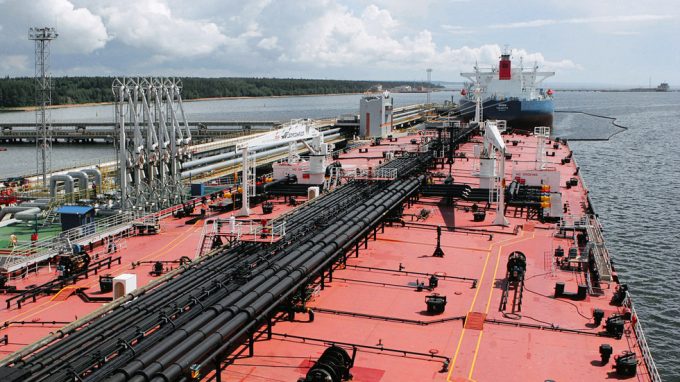
The Strait of Hormuz is the most critical energy artery in the world. Roughly one-fifth of global oil consumption, about 20 million barrels per day, normally flows through this narrow passage. It is also a key route for liquefied natural gas exports, particularly from Qatar.
When flows through Hormuz are disrupted, the impact is immediate. Not just because of the volume, but because there are few viable alternatives. Tankers can’t simply reroute without adding time, cost, and logistical complexity. In some cases, they can’t reroute at all.
The result is what we are seeing now: a sharp repricing of risk in global energy markets, followed by tightening physical supply.
Outside the U.S., The Impact Is Already More Severe
The United States has a degree of insulation thanks to its status as a major oil producer and its relatively limited reliance on Persian Gulf imports. But much of the rest of the world does not share that buffer.
In import-dependent economies, strains are already emerging.
In South and Southeast Asia, delays in fuel shipments and higher import costs are beginning to affect availability. Roughly 90% of India’s LPG imports, which millions of households rely on for cooking, transit the Strait of Hormuz. The current blockade has already triggered a domestic supply crunch, forcing the government to implement rationed delivery for households.
Agriculture is another pressure point. Fertilizer production and trade are closely tied to natural gas and petrochemical inputs. Around 30% of the global fertilizer trade and a significant portion of the sulfur and ammonia used in phosphate fertilizers normally transits the Strait of Hormuz.
Over 40% of India’s fertilizer imports come from the Middle East. With the monsoon planting season approaching, panic buying has broken out among farmers in the Punjab and Haryana regions. If fertilizer supply does not stabilize by May, the IEA warns of a direct threat to crop yields.
Europe’s vulnerability looks different, but no less real. While the continent has reduced its reliance on Russian crude since 2022, it remains dependent on global markets for refined products. Roughly half of European jet fuel imports previously came from the Middle East.
The IEA recently warned that Europe could face a critical jet fuel shortage by June. Several major carriers have already begun prioritizing certain international routes while canceling frequent domestic and regional flights to conserve dwindling stockpiles.
In Northeast Asia, the issue is scale and dependence. Recent data confirms that Japan receives nearly 11% and South Korea receives 12% of all oil shipments that pass through the Strait. The reliance on Gulf crude and LNG remains extremely high for both nations. Companies in these countries have moved to secure alternative supplies and draw on reserves, but those measures come at a cost, and they underscore how little redundancy exists in the system.
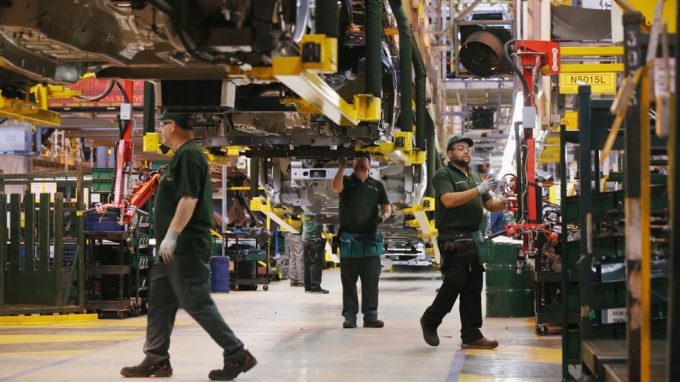
Further down the value chain, the effects are spreading into manufacturing. Petrochemical feedstocks derived from oil and natural gas are becoming more expensive, pressuring industries from plastics to textiles. In export-driven economies, that translates into slower production, tighter margins, and rising costs for global buyers.
For developing economies, the risks are more acute. Many lack the financial flexibility, reserves, or infrastructure to absorb prolonged disruptions. Higher energy costs can quickly spill over into currency pressure, reduced industrial output, and, in some cases, outright shortages.
Why The U.S. Has Been Spared—So Far
The relative calm in the U.S. comes down to two factors: production and geography.
Domestic oil production remains near record levels, and the U.S. imports a smaller share of its crude from the Persian Gulf than many other countries. That provides a buffer against physical supply disruptions.
In addition, the U.S. has one of the most complex and extensive refining systems in the world, allowing it to meet much of its own demand for gasoline and diesel.
But “buffer” is not the same as “immunity.”
Oil is priced globally. When a disruption removes—or even threatens to remove—millions of barrels per day from the market, prices adjust everywhere.
That’s why U.S. consumers are already seeing higher fuel costs. And within that, diesel is rising faster than gasoline for structural reasons. Diesel underpins freight, agriculture, and industry, and supply is typically tighter. When diesel moves, the rest of the economy follows.
The Next Phase Hasn’t Hit Yet
What the U.S. is experiencing now, higher fuel prices and early-stage inflation, is typically the first phase of a supply shock.
Globally, we are already seeing the second phase: tightening availability and operational disruption.
As the crisis continues, the next phase is more difficult to avoid. Refiners will begin to cut runs as margins compress and crude becomes harder to source. Product markets tighten further. Strategic reserves can help, but only temporarily.
Eventually, the system adjusts through demand destruction. High prices force consumers and businesses to cut back. Economic activity slows. That brings prices down, but not without consequences.
The Big Picture
It’s easy to view the current situation through a domestic lens. Gas prices are higher, there’s a bit more pressure at the grocery store, and there is a general sense that things are getting more expensive.
But that perspective misses the broader reality.
In many parts of the world, this is already more than an inflation story. It’s a supply chain disruption affecting fuel, food production, manufacturing, and transportation.
The United States has been insulated so far. History suggests that won’t last indefinitely. More consequences are likely incoming.
Energy shocks rarely stay contained. They move through global trade, pricing, and supply chains before showing up more fully at home.
What Americans are experiencing today is the early stage. The rest of the world is already further along.












Leave a comment