


Topline
Attorney General Todd Blanche will have to explain the Justice Department’s refusal to release and unredact some Epstein files in court Thursday, after the judge overseeing the case argued Blanche has not properly explained why the DOJ will not uncover some redactions and refuses to release notes involving allegations against President Donald Trump.
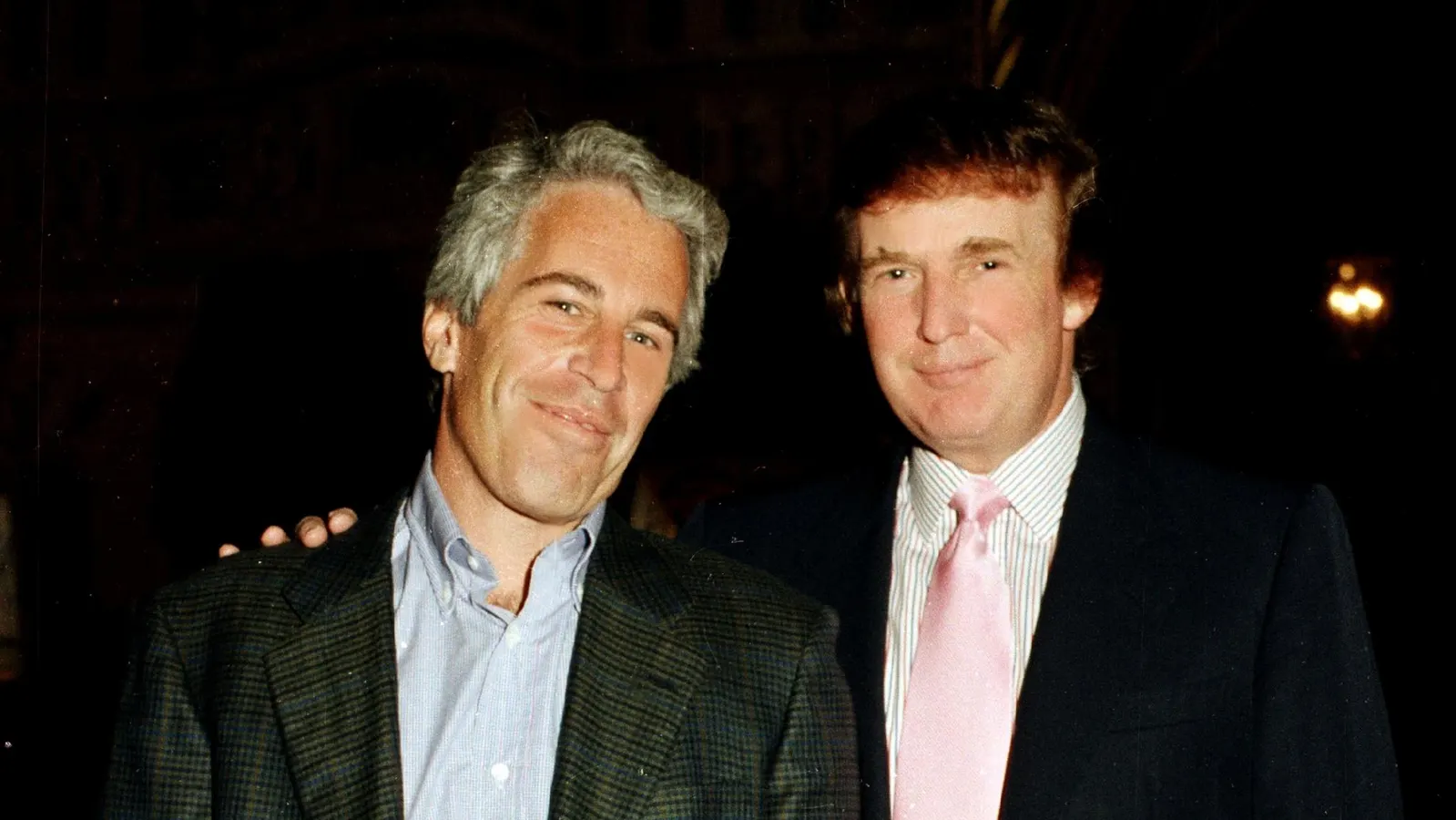
Jeffrey Epstein and now-President Donald Trump pose together at Mar-a-Lago in Palm Beach, Florida, in 1997.
Getty Images
Key Facts
A hearing will take place at 1 p.m. EDT on Thursday as part of journalist Katie Phang’s lawsuit against Blanche and the DOJ, in which Phang is asking the court to force the government to release a set of documents on Jeffrey Epstein that have so far been withheld or had key information redacted.
The DOJ has so far refused Phang’s request, claiming the redactions are meant to protect victims’ identities and there are other logistical issues that prevent other documents’ release.
Judge Emmet G. Sullivan ordered the hearing after privately reviewing the full documents, saying he now wants the DOJ to address several outstanding issues that Blanche has failed to properly explain.
Sullivan has directed the government to provide documentation proving victims’ identities are being protected by the redactions—noting the previous claims Blanche has made “do not comply with the court’s order” to provide that documentation—and explain why the DOJ is unable to redact handwritten notes from an FBI interview with a witness making allegations against Trump.
Blanche also needs to provide a timeline for providing a log of all the redactions in the Epstein files, Sullivan ordered, which the Epstein Files Transparency Act that ordered their release requires the government to produce.
Will More Epstein Files Be Released?
It’s unclear what orders Sullivan could issue during or after Thursday’s hearing, and whether he’ll accept the DOJ’s arguments for why some documents can’t be released. If he rules in Phang’s favor and doesn’t accept the DOJ’s arguments, it’s also likely the government would try to appeal the ruling before any documents are made public. Phang has asked the court to fine Blanche $1,000 per day for each day the government does not turn over the files she’s requested, but there’s so far no indication Sullivan will order that punishment.
Which Epstein Files Could Be Unredacted?
The lawsuit specifically asks the DOJ to uncover names from eight emails ranging from 2009 to 2018, which all appear to discuss women and could shed more light on Epstein’s alleged abuse. Names of both the sender and recipient were redacted in a 2013 email saying, “New Brazilian just arrived, sexy and cute, 19yo,” for instance, while in a 2014 email, an unnamed sender told Epstein, “Thank you for a fun night… Your littlest girl was a little naughty.” In 2015, a sender whose name is redacted wrote, “The key are the 14 to 15 year old girls—i am a sexual pervert because i say they are now of a reproductive age?” In 2018, one year before the financier’s arrest, an unnamed sender told Epstein, “I found at least 3 very good young poor but we was so tired. I will cover up this week. Meet this one, not the beauty queen but we both likes her a lot.” In September of that year, an anonymous person then told the financier, “My favorite from Lithuania, [REDACTED], 19. Will meet when I am there.” The DOJ has defended the redactions by claiming they protect victims’ identities or private email addresses, also arguing an email in which Epstein told an unnamed recipient, “I loved the torture video,” should not be unredacted because the recipient was already reported in the media to be Emerati billionaire Sultan Ahmed bin Sulayem. In addition to the emails, Phang also wants the government to uncover names of alleged Epstein “co-conspirators” in the draft indictment against the financier that was thrown out after he reached a non-prosecution agreement in 2007. The government has similarly defended those redactions by claiming they protect victims’ identities.
What Other Epstein Files Could Be Released?
Phang’s lawsuit asks the DOJ to release some other documents that have been previously withheld entirely, including files that are in languages other than English and a full log of every single redaction made in the Epstein files. She has also asked for the FBI’s underlying notes with an anonymous woman who alleged she met Trump through Epstein in the 1980s and was forced to perform oral sex on the now-president. Trump has strongly denied the allegations, which are uncorroborated. The DOJ has released the FBI’s report on its interview with the accuser—though only after a public outcry over the documents being initially withheld—but not the notes taken during the interview that were used to create the report. Blanche claimed the notes don’t have to be released because they’re “substantially similar” to the report that was released and would be difficult to redact, and has claimed the foreign language documents can be withheld because the DOJ had already told Congress “it was not practicable for a first-level reviewer to determine the responsiveness of a foreign language document.”
Key Background
Phang sued Blanche and the DOJ in April, arguing the agency has not complied with the Epstein Files Transparency Act by continuing to withhold some documents, and those withheld and redacted documents hindered her ability to report on them as a journalist. The Trump administration released thousands of Epstein files in January in response to the Transparency Act, after the DOJ previously said it would not release any materials voluntarily and sparked a public outcry. The agency has continued to face criticism for how it handled the document release, however, as some victims’ information was not properly redacted while the government instead appeared to cover up some names of Epstein’s allies. Sullivan ruled in June the DOJ had to release files under the terms of the Epstein Files Transparency Act, giving the government a July 2 deadline to either release the files or explain why it couldn’t. The DOJ responded to the order by arguing it could not release the full files, due to protecting the victims’ identities and the other various alleged issues. Rather than fully buying the government’s argument, the judge instead asked for the DOJ to just turn over documents to him privately, paving the way for Thursday’s hearing.
Further Reading
Could More Epstein Files Be Released Soon? Redacted Docs Will Be Reviewed By Judge This Week (Forbes)
Could More Epstein Files Be Released Today? DOJ Faces Court-Ordered Deadline To Unredact Names (Forbes)
Justice Dept. Ordered To Unredact Some Details From Epstein Files (Forbes)













Leave a comment