


Topline
President Donald Trump, senior U.S. officials and Iranian officials gave conflicting statements Monday about key aspects of the deal to end the war—as details of the agreement, including the futures of Iran’s nuclear program, the Strait of Hormuz and U.S. sanctions remain secret.
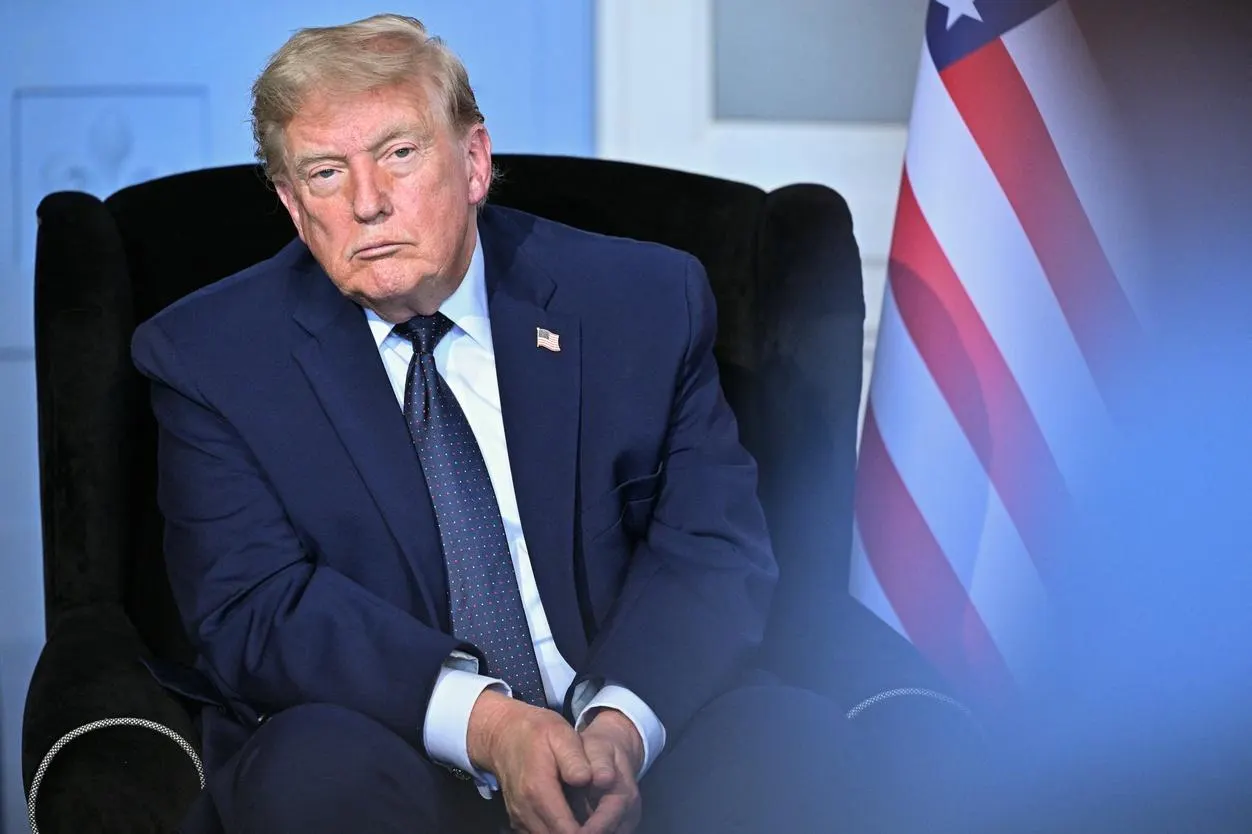
President Donald Trump speaks during a bilateral meeting with France’s President on the sidelines of the G7 summit, in Evian, central-eastern France on June 15, 2026. (Photo by Mandel NGAN / AFP via Getty Images)
AFP via Getty Images
Key Facts
U.S. and Iranian officials are scheduled to formalize the agreement at a signing Friday in Geneva, Trump said Monday after U.S. officials said the deal was signed electronically by both sides on Sunday.
Trump said the text of the so-called “memorandum of understanding” will be released publicly after the signing, though a senior administration official told reporters the agreement would be released within the next 24 to 48 hours.
The deal is likely to leave discussions on Iran’s nuclear program and the fate of U.S. sanctions for the second phase of negotiations over a 60-day period after the initial agreement is signed Friday.
Meanwhile, when and how the Strait of Hormuz will reopen remains unclear.
Trump is likely to face heavy criticism that the deal favors Iran if it relieves U.S. sanctions on Tehran and allows Iran to toll ships in the Strait of Hormuz without any new controls on its nuclear program—his justification for starting the war in the first place.
Iran’s nuclear program
Iranian Foreign Minister Abbas Araghchi suggested the agreement doesn’t include any new assurances about Iran’s nuclear program, other than a promise to discuss them in the next phase of negotiations, Iranian state media reported. “Issues related to the nuclear program and sanctions relief will be discussed, and may become the subject of a final agreement,” he reportedly said, noting the process will be complicated by “a history of broken promises.” Trump claimed Monday on the sidelines of the G7 summit that the Iranians “fully agree” they won’t ever develop a nuclear weapon and will allow “strong policing powers” over its nuclear program. Iran has said repeatedly for years that its nuclear program is designed for civilian purposes, and not to develop a weapon, and it’s unlikely they agree to cease developing nuclear material altogether. Trump has acknowledged he could allow for some level of uranium enrichment as long as it remains at a level that “could never be used by the military,” he told The New York Times in an interview on Sunday. He declined to say how it would compare to the 3.67% purity level Iran agreed to in its deal with the Obama administration. Trump told The Times his deal would ensure a threshold below weapon-grade “forever.” He also maintained that the U.S. would work with Iran to extract its enriched uranium buried underground, but didn’t give a clear timeline for the removal process. Vice President JD Vance told CNBC in an interview Monday Iran “has committed to destroy and dispose of their stockpile of highly enriched material.”
Strait Of Hormuz
Trump claimed Monday the key oil passage was partially open and “ships are starting to go out now,” though Iran’s state broadcaster IRIB said there is “zero passage through the Strait of Hormuz” and it would be “closed until further notice.” Trump said some mines Iran placed there when it effectively took over the strait were still being removed, and the strait would fully reopen by Friday. An unnamed senior U.S. official told reporters traffic would not return to normal for two weeks, according to The New York Times. Trump told The Times on Sunday the Strait would be “permanently toll-free,” as it was before the war in accordance with international law, though Iran’s Foreign Ministry spokesperson Esmail Baghaei left open the possibility of charging fees “in exchange for the services that are provided.” Some shipping company executives said they needed more assurances before resuming operations in the strait and removing ships that have been stranded since the start of the war, the Times reported. Jakob P. Larson, chief security officer at Bimco, the world’s largest shipping association, said a neutral intermediary, such as the International Maritime Organization, should identify safe routes: “If they all go in one big pile, there’s a really big risk of navigational incidents, collisions, things like that,” he told The Times.
U.S. sanctions on Iran
Vance said Iran would have to prove it’s upholding its end of the nuclear agreement in order for the U.S. to ease sanctions. “We say to the Iranians, ‘you are welcome to have access to an unsanctioned economy, you’re welcome to be re-invited into the world economy, but only if you honor the commitments that you make in this agreement.’” Araghchi said Monday that “sanctions relief will be discussed” in the next phase of the agreement, state media reported. It’s unclear what the sanctions relief would entail, but it’s likely to incorporate the unfreezing of more than $20 billion in Iranian assets held in foreign accounts. Trump insisted Monday his deal with Iran would be better than Obama’s, calling the 2015 agreement known as the Joint Comprehensive Plan of Action (JCPOA) “a horrible deal for the United States . . . where billions of dollars was given to Iran,” referring to the $1.7 billion the U.S. paid Iran to settle a decades-old weapons dispute as part of the nuclear agreement. The payment has been a lightning rod for criticism of the deal from Republicans.
What else could be in the deal
Though few details are concrete, the memorandum of understanding could require the U.S. and its allies to give Iran access to a $300 billion fund to rebuild from the devastation caused by the war. The U.S. would also likely lift its naval blockade of ships coming in and out of Iran in exchange for the reopening of the Strait of Hormuz. Trump, Iranian officials and Pakistani negotiators have said fighting in Lebanon between Israel and Hezbollah would also cease as part of the agreement, though Israeli Prime Minister Benjamin Netanyahu distanced Israel from the agreement on Monday and said he doesn’t know the details and Israeli forces would remain “in the Lebanon security buffer zone for as long as necessary.”
further reading
Trump Might Lift Sanctions On Iran—After Blasting Obama For Doing It (Forbes)
Trump And Vance Angrily Deny Peace Deal Favors Iran (Forbes)
U.S.-Iran Peace Deal Expected To Be Signed Sunday, Trump Says (Forbes)













Leave a comment