


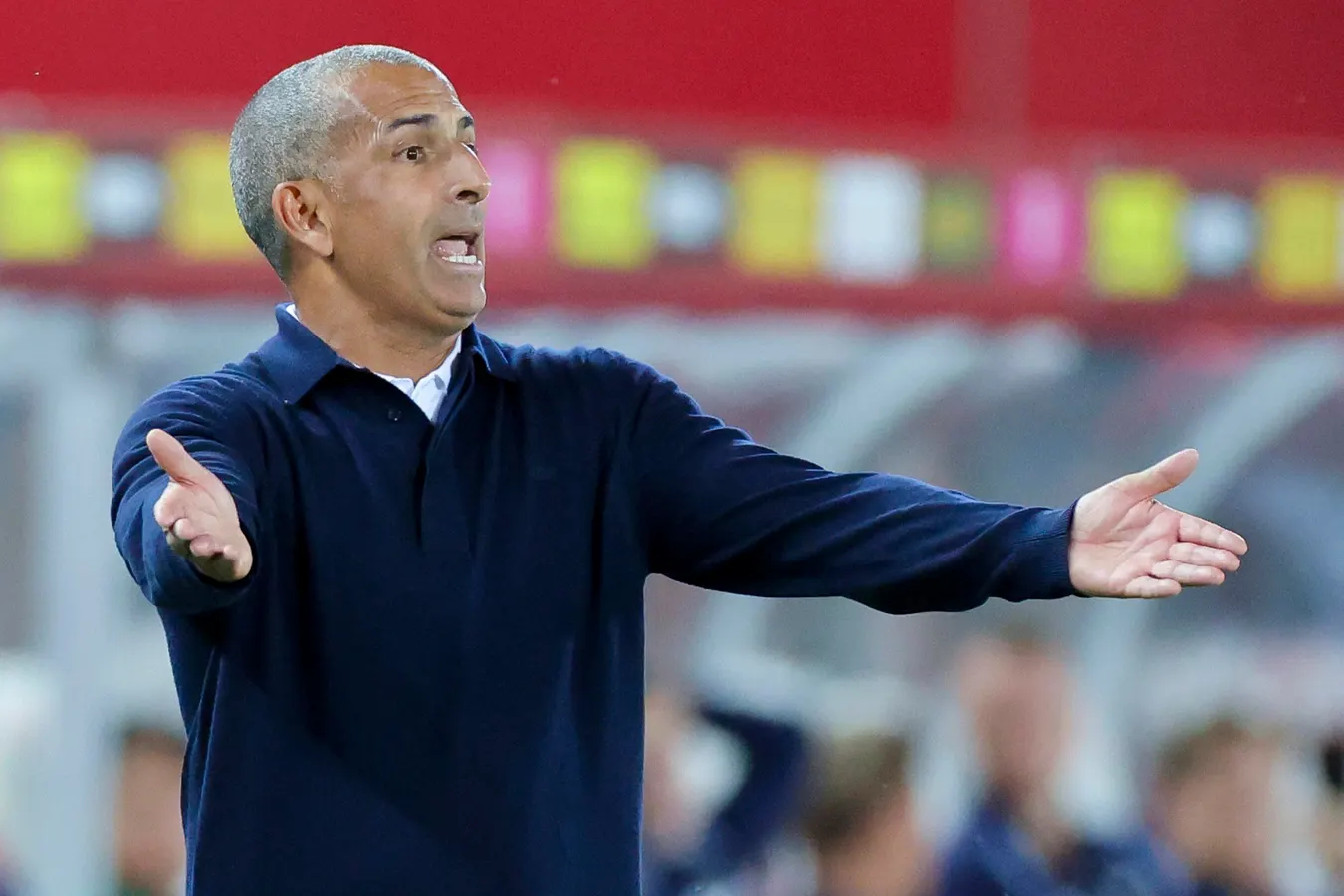

Vienna, Austria – June 1: Sabri Lamouchi of Tunisia gestures during the international friendly match between Austria and Tunisia at Ernst Happel Stadion on June 1, 2026 in Vienna, Austria. (Photo by Marco Steinbrenner/DeFodi Images/DeFodi via Getty Images)
DeFodi Images via Getty Images
Football managers are never truly safe from losing their job. One bad defeat and you’re out of the door – even during the World Cup.
As Sabri Lamouchi’s dismissal as Tunisia boss following the 5-1 loss to Sweden shows, even a coach leading a side into a major tournament can’t guarantee they’ll get at least three matches at the helm.
The heavy defeat leaves the Eagles of Carthage already facing an uphill battle to qualify out of a group also containing Japan and the Netherlands, even in a competition when eight of 12 third-placed sides will progress beyond the group stage.
Although it might just be that an expanded tournament opens managers up to the prospect of a quickfire change because there’s more chance of recovering from a disastrous opening-day defeat.
Even so, pulling the trigger on Lamouchi after only one match is an extreme reaction. Especially given his replacement, Herve Renard, had not previously worked with the squad.
The sacking is the first in World Cup history to happen after only one match and before a nation has been knocked out of the tournament. Previously discarded bosses given their marching orders after elimination was confirmed – leaving their replacements to see out a final fixture with no hope of recovery.
Have other managers been sacked during a World Cup?
Even that is a rare situation, with Scotland’s Andy Beattie agreeing to stay on for the final group match in 1954 after announcing his resignation after defeat to Austria, and the likes of Carlos Alberto Parreira, Cha Bum-kun and Henryk Kasperczak – who were all ousted during France 98 – replaced by coaches already close to the FA.
For Renard, this is a different challenge entirely. This is the Frenchman’s seventh international posting for a men’s national team, but while most of his experience has been with African sides, he’s never worked for Tunisia at any level previously.
He inherits a squad with scant prior relationship with any players, in a high-pressure environment that makes having a positive impact difficult. Even with a few days between matches, time on the training ground is likely to be limited due to travel times from Tunisia’s training camp base in Santiago to their remaining matches.
The only small consolation is that international football rewards pragmatism more than attacking play. So if Renard can quickly instil an organised base that fills the gaps Sweden so readily found in Tunisia’s backline in their tournament opener, he could make them more competitive in their final two matches and give them a chance.
Could Herve Renard make Tunisia World Cup a success?
There will be little time to do much else. When Spain sacked Julen Lopetegui two days before the 2018 World Cup began, they replaced him with Fernando Hierro, who was already working on the Spanish coaching team because it had to be “someone who knew the players, who knew this house”.
“We know how the next match has been prepared for and we’re very close to it, so we have to be coherent and follow the plan,” said Hierro in his first press conference. “From now until the end of the World Cup, we don’t have the ability to change much and we need to follow the same work.”
It didn’t work. A talented La Roja side only managed to win of four matches in Russia – a turgid 1-0 victory over Iran – as they were knocked out by the hosts on penalties in the round of 16, highlighting the challenges of making a managerial change once a tournament camp has begun.
Tunisia will be hoping that their experience with Renard in charge will follow a similar pattern to when Ivory Coast replaced Jean-Louis Gasset with Emerse Fae in the 2023 African Cup of Nations.
The Elephants had lost two of their three group games under Gasset – including a humiliating 4-0 defeat to Equatorial Guinea – but had sneaked into the knockouts with only three points. Under-23 boss Fae was given the salvage mission, not only restoring some pride in the Ivorians’ performance, but winning the entire tournament.
Fae was at an advantage having been working with the squad already and it’s a luxury Renard doesn’t have. It’s unlikely his remit is quite as ambitious, but he’ll need something special if Tunisia’s record-breaking managerial change is going to become anything more than another example of World Cup chaos.















Leave a comment