


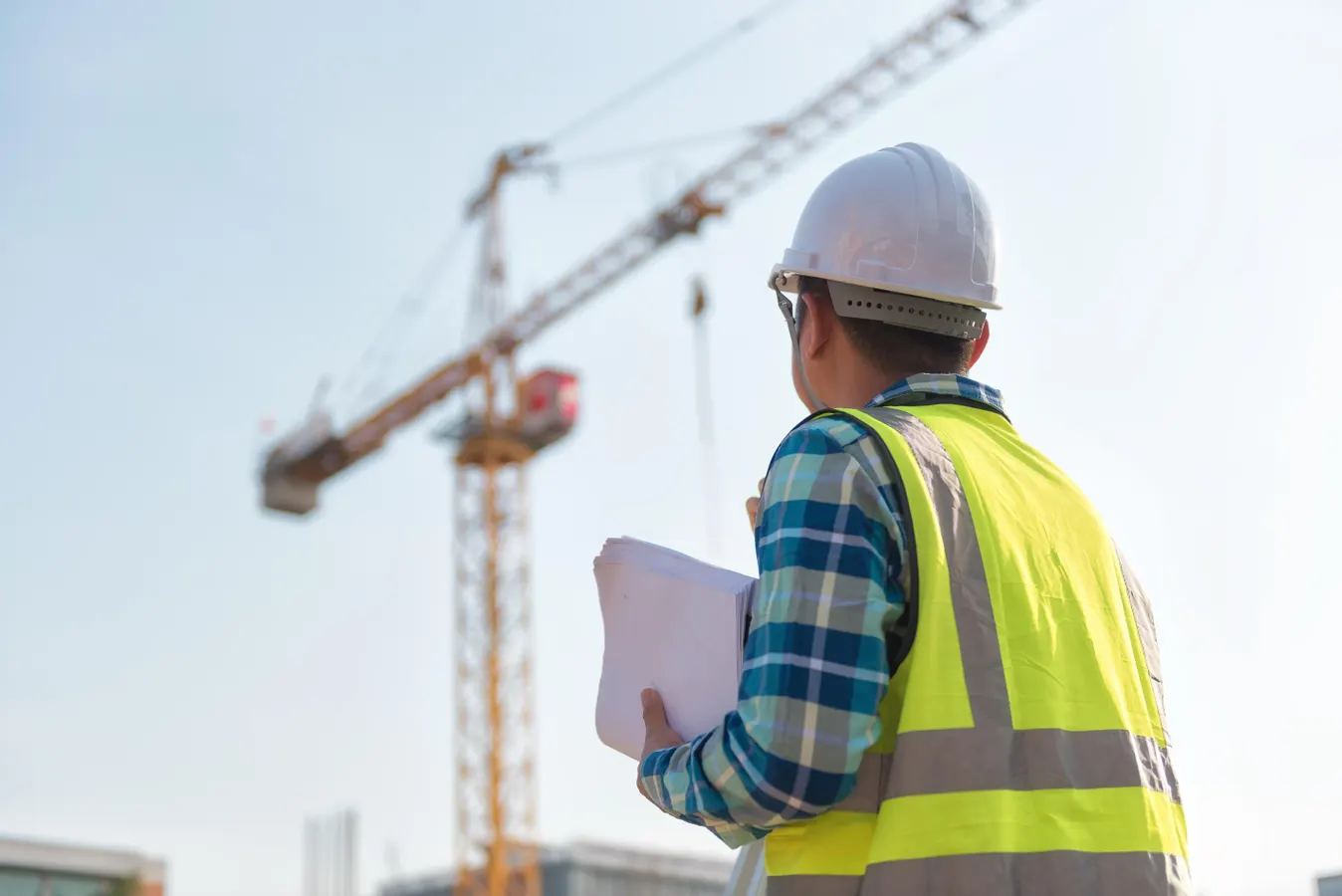

Photo: Getty Creatives
getty
The United States is embarking on its biggest energy buildout in a generation. One that will likely need all participants in the country’s infrastructure development ecosystem to not just collaborate and but ‘co-innovate.’
From offshore oil and gas exploration to utility-scale renewables, nuclear to the country’s much talked about liquefied natural gas terminals – a wave of energy projects are either in development or potentially on the horizon.
This need not come as a surprise. With the proliferation of hyperscale data centers – a space where the U.S. is leading the world in numbers and size – expected demand for power (and related water and cooling solutions) is growing exponentially.
The American Society of Civil Engineers reckons that of the $10 trillion or so needed stateside over the next 10 years, a fifth ought to be allocated to energy infrastructure, with a keen a focus on building resilience into the nation’s power grids.
Much of this would require additional natural gas and micro as well as macro nuclear energy projects alongside renewables. Under president Donald Trump, the U.S. Department of Energy also deems brownfield coal-fired power sustenance to be a part of the solution.
Energy secretary Chris Wright routinely emphasizes that taking sources of “generation off the grid that compromise energy reliability and needlessly raise energy costs for Americans” is simply not going to happen under the Trump administration. That’s why in 2025, sites totalling more than 17 gigawatts of coal-fired electricity generation were not just saved and but strengthened.
Under this new pressure to build resilience across the U.S. energy landscape and ensure resource adequacy, experts say the industry can no longer rely on legacy delivery and operating models to service an economy premised on digitization and automation. These twin facets are in turn underpinned by electrification.
‘Co-Innovation’ Needed
Energy project sponsors, engineering, procurement and construction firms, and their industrial and software vendor partners are calling for blueprints to build smart, agile and resilient foundations to meet this growing challenge.
Less than a decade ago, typically a project concept was devised by a sponsor, an EPC firm mandated to build it to a specific remit with a ‘bolt on’ solutions philosophy in concert with industrial and software solutions vendors.
But in the digital age, faced with rising pressures of building energy resilience, the old way of doing things needs to change, according to a range of industry voices at the Energy Projects Conference and Expo 2026 held earlier this month in Houston, America’s energy capital.
The wider industry thinking increasingly happens to be that digital and autonomous tools at the sector’s disposal ought to be brought to bear. Such a move would also help de-risk investments in this changed but exciting landscape and help address the one constant that’s always been there – delivering energy projects on budget and on time.
William Barrett, vice president of product development at Oxy subsidiary 1PointFive, believes building resilience must move further up buildout chain. “Essentially, co-designing electrification and automation, deploying digital intelligence as a single integrated system at the front end of every project, not bolted on after commissioning, is what the industry should be, and in many ways already is, heading to.”
Such co-innovation between industrial automation and software vendors, EPC firms and the ultimate owners/operators of the energy greenfield build or brownfield redevelopment creates an optimized asset from the onset, said André Marino, senior vice president, industrial automation division (North America) at Schneider Electric.
“It’s an approach that the current high pressure climate demands. We live in an inescapable reality in which AI data centers, electrification of manufacturing, and domestic energy policy are driving this unprecedented power buildout in U.S. Meeting this challenge is not necessarily constrained by technology or less steel or capital — it’s more the delivery and operating model itself,” he added.
Major U.S. energy projects routinely run 15–20% over budget. That gap is a design problem before it is a procurement or labor problem. “Open, software-defined automation, virtual commissioning via digital twins, deploying industrial artificial intelligence and open standards-based integration are the levers that compress schedules and de-risk operations,” Marino noted further
“We believe this is best achieved when designed on the front end of an energy project. Time-to-power and reliability-in-operations are not competing priorities; the same architecture enables both.”
Technology is indeed coming to the fore where it has been deployed at project sites around the U.S. Generative engineering – the industry’s preferred mantra these days has been slashing design-to-groundbreaking cycles by 50% through automated layout optimisation and AI-driven simulation.
Reality And Regulations
No matter how far the technology has progressed, much depends on its adoption and the regulatory climate. On the former point, Chris Scheefer, executive vice preside of global AI, energy and chemicals, at Capgemini, said there is a disconnect between what companies say they are doing, and what they are actually doing.
“Today’s challenging reality is the ambition to execution gap. We believe the industry has moved past experimentation, but most projects have not moved to scaled digital execution. This must be embedded in every aspect of the project life-cycle and its ecosystem, even the physical aspects at the job site,” Scheefer added.
As for the regulatory climate, many in the industry noted it has never been more conducive than it presently is. There is wider understanding that the industry’s challenge is no longer simply building more assets; but building holistically with a system level approach for faster, intelligent, and more resilient energy infrastructure.
Lindsay See, commissioner, US Federal Energy Regulatory Commission, said the authority was working toward fair and predictable permitting as project sponsors and regulators confront grid infrastructure and supply costs.
The White House increasingly sees the U.S. economy shaped by electrification, hyperscale data centers, LNG growth, renewables, grid expansion and modular construction – cue the National Energy Dominance Council.
It’s why both policymakers and builders both hope the U.S. energy and infrastructure sector is moving into a new delivery era powered by AI and automation. How this turns out over the upcoming decade remains to be seen, but with trillions at stake current signs do appear to be encouraging.
Disclaimer: The above commentary is meant to stimulate discussion based on the author’s opinion and analysis offered in a personal capacity. It is not solicitation, recommendation or investment advice to trade energy stocks, futures, options or products. Energy markets can be highly volatile and opinions in the sector may change instantaneously and without notice.













Leave a comment