



Many humans aren’t fully alive. Doing what’s uncomfortable is a needed skill in uncertain times.
Deposit Photos
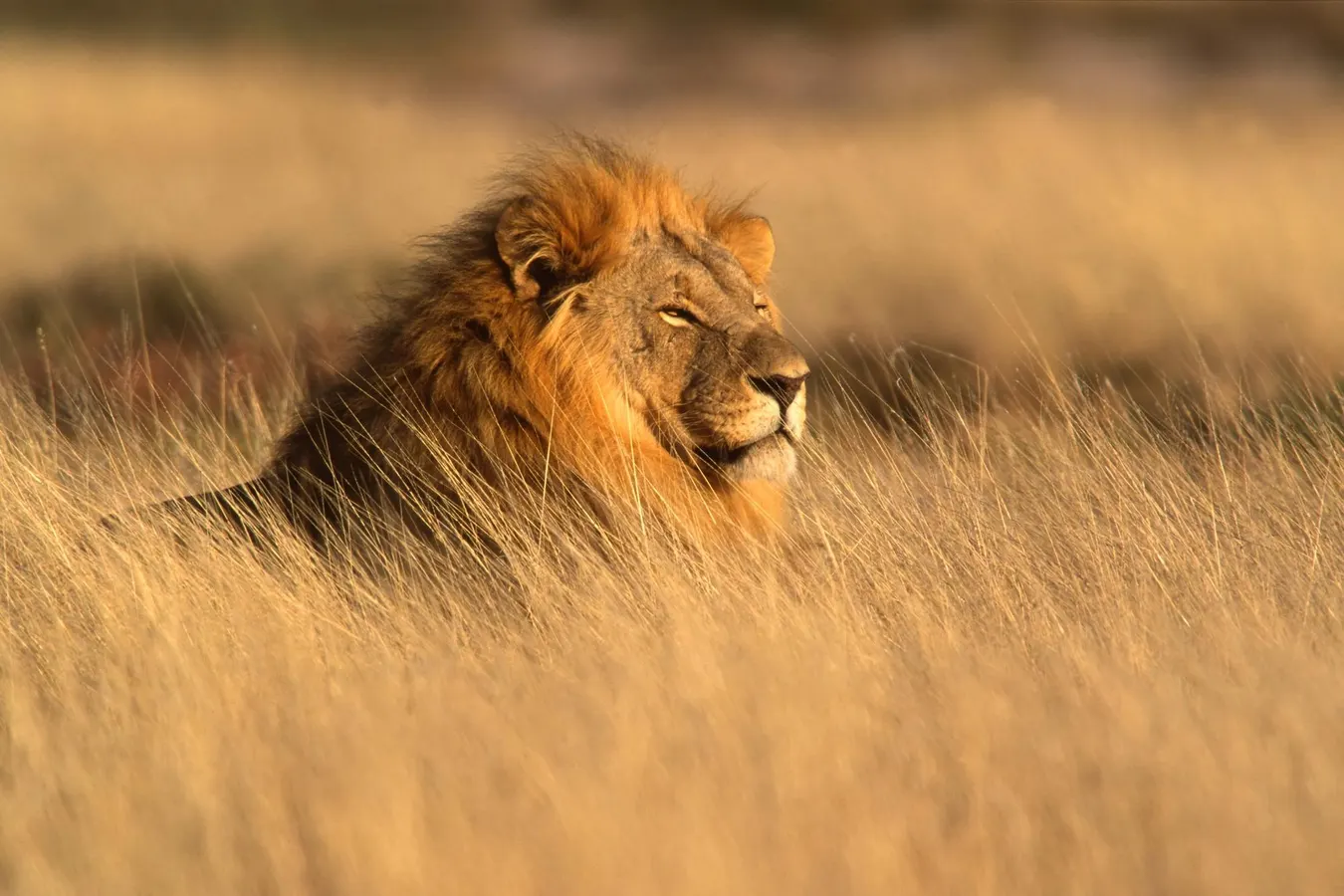
You’re in the middle of the African bush when a lion leaps out of nowhere. No buildup, no warning, the 250-pound beast charges at you at fifty miles per hour. Ears pinned flat, teeth bared, it’s terrifying.
What do you do?
Before giving you the correct answer, let’s acknowledge the other animal in the room: the proverbial elephant. Many humans aren’t fully alive in 2026. Thanks to our endless screens, we process the world through glass interfaces: glass laptops, glass phones, glass car displays. We even have glass-based smartwatches to alert us to health risks like not getting enough sleep.
In fact, our reliance on computer-mediated reality is so profound that Nielsen reports Americans now spend 70 hours a week on screens spread across televisions, tablets, and computers. That’s roughly 10 hours a day.
In other words, modern existence is losing an embodied aspect. Yes, we are stimulating our brains. Maybe too much. As for our bodies? Not really. That’s the problem author David Gerber sought to address in his new book, The Lion Is You: Lessons from the Wild on Coming Alive Again (Copper Books/ Simon & Schuster) charting his own journey from crisis to reinvention.
An executive coach at Novus Global, Gerber works with top achievers, including NHL players, CEOs, and business founders. He sat down for an interview on what happens when we put the screen down and allow our bodies to do what they were meant to: partake in visceral experiences. “For me, lion tracking through South Africa’s Kruger National Park was the activity that reset everything. Facing down a lion forces you into a ‘flow state’ where everything else disappears and you are 100% present.”
That kind of presence is how you face down a charging lion. If you move, you die. Instead, you must stay still and stand your ground. “‘Lions are actually afraid of your courage,’ our instructor Renias told us. They’re not used to other creatures staring them down,” Gerber said.
Side note: Renias doesn’t lead such tours for Gerber and the clients he brings with him to hunt the endangered species. These aren’t safaris that end with an American bagging a pelt as a trophy to their hunting prowess. Gerber and company participate in such trips to observe nature in all its primordial rawness where one wrong step could end in death or dismemberment.
The risk required pertains to “1-to-10 living”; what Gerber characterizes as an extension of modern life’s quantization. “We’re so used to rating everything, from Uber rides to Airbnb stays. But on a scale of 1-10, ask yourself: how alive do you feel in any given moment?”
If we are being honest, the answer might be closer to zero than ten. Though Mark Zuckerberg’s prophesied Metaverse has yet to fully materialize, the virtual reality environment underlying it is slowly forming around us, pushing us further away from nature and into the realms of code. Using cutting-edge AI, headsets such as Meta Quest 3 now enable us to experience fully immersive virtual reality. Instead of boxing at a gym or taking on an opponent in a ring, we can safely and conveniently practice at home with sophisticated fitness apps like Supernatural.
Even modern driving has lost its former grittiness. Once, car purists who wanted a punchier ride went the Steve McQueen route, opting for a stick shift so they could feel the gears shift as the engine growled. Nowadays? “Manual vehicles make up 3.7% of the total registered vehicles in America,” according to LookUpAPlate.com.
Not only that, many would-be motorists, especially young people, are opting out of driving altogether or delaying getting their license. Jean M. Twenge, author of iGen, recently blogged about the worrisome decline of this once celebrated adolescent rite. “Fewer Gen Z’ers get their driver’s license in high school compared to previous generations—63% had a driver’s license by the spring of their senior year of high school in 2023, compared to 82% as recently as 2005 when teens were Millennials. Nearly 90% of Boomers and Gen X’ers had their license by the end of high school.”
While convenience plays a role in such abdication, fear is also a major driver, no pun intended. CNN recently turned to Dr. Rhonda Boyd, psychologist in the department of child and adolescent psychiatry and behavioral sciences at Children’s Hospital of Philadelphia, to understand what’s happening. “When it comes to anxiety, teens may have fears and concerns about their next and more independent stage of life, so they may avoid those things that bring them there…”
Gerber’s memoir lays bare his own fears about engaging with life. Before he forced himself to get out of his comfort zone, he was lost personally and professionally. A devastating divorce sent him spiraling. Getting out of his own way first required he confront himself and the ways in which he allowed himself to drift along in cruise control.
Productive tool that it is, AI is making it easier than ever to live on autopilot. Even the most undemanding physical tasks can be automated. Don’t want to write that email? Let AI do it. While it’s at it, it can meal plan for you and organize your calendar. While there’s definite utility in offloading such rote tasks, especially if you are an entrepreneur with minimal bandwidth, AI can promote the self-defeating instinct Dr. Boyd identifies.
If we are not careful, removing such friction can turn into a full-scale life retreat, undermining your confidence and amplifying fear, the type that keeps you paralyzed. But as Gerber reveals in his book, courage is the antidote. Whether it’s deciding to get your license or to stare down an encroaching lion, the trick is to stand your ground. To not back away. “Over time, the more you exercise such courage, the more you build that muscle. The strength it provides can seep into every aspect of your life, from your relationships to business, to the way you show up daily.”
More than a century ago, T.S. Eliot wrote The Love Song of J. Alfred Prufrock, an evocative description of a failed old gentleman who never viscerally engaged in life. Now, at the end of his, he is forced to confront all the ways in which his paralysis led him to look back with deep regret: “I have seen the moment of my greatness flicker, / And I have seen the eternal Footman hold my coat, and snicker, / And in short, I was afraid.”
Hundreds of years later, at the dawn of the AI Age, the gauntlet has been thrown down. Tomorrow you may not have to confront a lion in the wild. That may not be your own personal obstacle. But as surely as you’re breathing, something will eventually come out of the bush at you. And in that moment, your response will reveal, on a scale of one to ten, how alive you truly are.















Leave a comment