


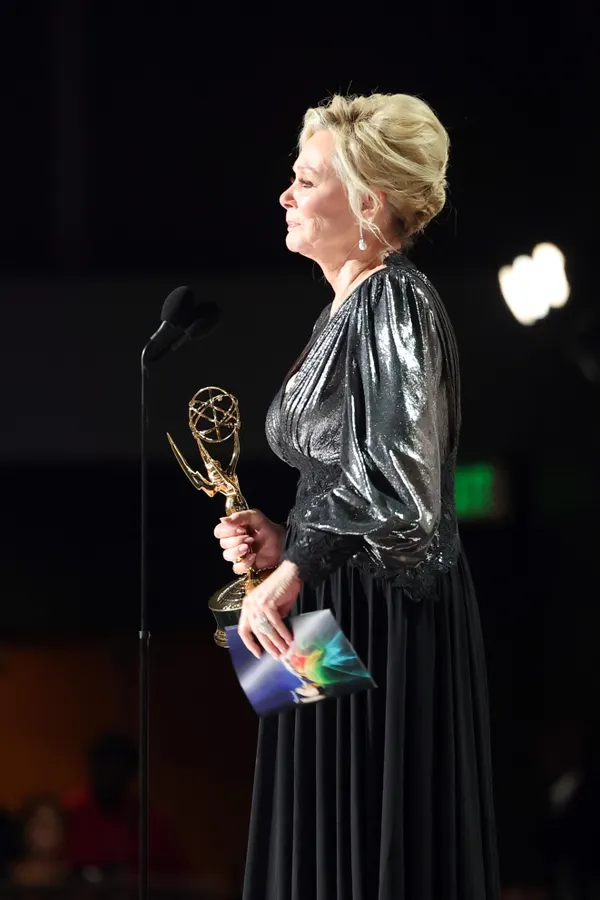

78th PRIMETIME EMMY AWARDS — Pictured: Jean Smart, winner of the Outstanding Lead Actress in a Comedy Series Award for “Hacks”, poses in the press room during the 78th Annual Primetime Emmy Awards held at the Peacock Theater on September 14, 2026. — (Photo by: Randy Shropshire/NBC via Getty Images)
NBC via Getty Images
Jean Smart just made Emmy history, winning Lead Actress in a Comedy Series for Hacks. This was her fifth consecutive win.
What makes Smart’s story even more interesting is what she had already built before Hacks brought so many of those abilities together.
For decades, Smart has been developing her craft across television, comedy, and drama. Each role helped her build different abilities she could carry into what came next. In a 2021 Los Angeles Times interview, Smart shared that she felt fortunate to have interesting roles that allowed her to show what she could do.
Experiences can appear random, and careers don’t always develop in a straight line.
One experience might give you a skill. Another gives you perspective. Another teaches you how to work with people. Another gives you an important relationship. Then another teaches you something you didn’t know about yourself.
That accumulation not only builds on itself, but it also begins to connect.
Over the course of her career, Smart developed her craft across different roles, genres, and experiences, building a range of abilities she could bring to new opportunities.
When the opportunity to play Deborah Vance came along, Hacks didn’t create those abilities. It gave her a place to use more of them.
Sometimes the value isn’t in one thing we’ve learned. It’s in the combination.
Research from the McKinsey Global Institute (2022) found that work experience builds knowledge and capabilities over a career, and that moving into a new role can let people use existing skills in ways their previous roles didn’t. The researchers also found that people often have capabilities their current employers haven’t recognized.
In other words, we’re accumulating much more than job titles. We’re accumulating skills, knowledge, relationships, perspective, and a clearer understanding of ourselves.
Leaders may know why they hired someone, and what they need that person to do, but that doesn’t mean they see the full value that person brings.
The resume tells where someone has worked. A job description describes what they’re supposed to do. But neither fully shows what they’ve accumulated along the way.
That’s one reason why conversations with employees matter.
There might be connections that neither the company nor the employee has realized yet. Some abilities may not have had the right environment to be fully seen.
This same idea applies to hiring.
Strategic hiring isn’t only about asking whether someone’s resume perfectly matches a job description. It’s also about understanding the combination of experiences, interests, skills, and ways of thinking that person brings.
Sometimes the most valuable part of a candidate isn’t the one item that checks the box. It’s the combination of things that, together, could make that person especially valuable.
Instead of only looking at what someone can do in the role, leaders can also ask, “What might this person be capable of that we haven’t seen yet?”
Jean Smart didn’t know where all those years were leading or that she would eventually play Deborah Vance. She had no idea Hacks would become such a successful show.
But when the moment came, she was ready for it.
That’s the difference between waiting for an opportunity and building while you don’t know what comes next.
You don’t always know what you’re building until you see what you’ve built.
















Leave a comment