



Just five months into 2026, many of the assumptions that shaped last year’s business strategies are already being tested. Renewed trade volatility, accelerating AI adoption and persistent geopolitical friction are forcing leaders to confront a clear truth: In this volatile world, resilience isn’t just about defense. It’s about building the agility to keep growing while meeting rising customer expectations for speed, transparency and personalization. Across Asia-Pacific and emerging markets, forward-looking executives are learning that resilience and growth go hand in hand. Agile networks, adaptive operations and intelligent systems are becoming engines of growth. The challenges CEOs face today—from trade complexity to faster-moving supply chains—cannot be solved with legacy tools or silos. They demand a fundamentally different approach that puts customers at the center, delivers flexible solutions, provides real-time visibility and builds trust through reliable, proactive service.
That shift is already underway. Leading companies are moving away from rigid, end-to-end global supply chains toward more modular, regionally balanced trade strategies built on flexible logistics, local execution, real-time digital visibility, strong long-term supplier partnerships, scenario planning and multi-sourcing options such as near-shoring. AI and data are the connective tissue in this transformation—enabling faster customer response, smarter adaptation to policy shifts and the confidence to invest even when conditions are uncertain.
Growth, AI And Global Trade Are Now One Leadership Conversation
The dividing line between companies pulling ahead and those falling behind is no longer defined by AI budgets or geographic footprint alone. What matters most is integration and trust that comes from delivering consistent, transparent experiences.
Leaders creating a sustainable advantage have woven growth strategy, technology capability and trade operations together into one unified approach. They have recognized that these are no longer separate workstreams to be managed in parallel. They are three interdependent dimensions of one strategic challenge—treating them independently slows decision-making and limits adaptability. Each dimension has evolved. Growth is no longer measured by expansion alone, but by speed, resilience and customer relevance.
AI has moved beyond experimentation to become essential infrastructure, embedded across operations, customer experience and executive decision-making. Global trade has shifted from frictionless assumptions to become a more regional, politically shaped operating model, where resilience and flexibility often matter more than pure efficiency. Companies that connect these elements are not just optimizing existing models. They are reinventing their businesses for an era where the ability to stay agile, leverage data-driven insights and earn customer trust is the ultimate competitive advantage.
CEOs Are In The Driver’s Seat
Integrating growth, AI and trade into a unified strategy is inherently complex. It cuts across every function, reshapes operating models and introduces significant risk if mismanaged. That level of judgment cannot be delegated.
The January 2026 Boston Consulting Group CEO survey underscored this shift: nearly half of CEOs now view AI as a career-defining issue. That perspective is well-founded. AI decisions influence cost structures, workforce strategy, customer experience and competitive positioning. These are core growth questions that require direct CEO ownership.
The most effective leaders act accordingly. They are chairing AI steering committees, personally selecting priority use cases and insisting that every AI investment ties back to measurable business outcomes. In 2026, AI leadership is not about curiosity or experimentation; it is about accountability.
Automation At Scale: AI’s Most Immediate Return
For CEOs seeking tangible returns, the clearest near-term gains from AI are not found in headline-grabbing applications alone. They come from scaling automation and embedding intelligence deeply across operations—turning data into proactive, trust-building actions.
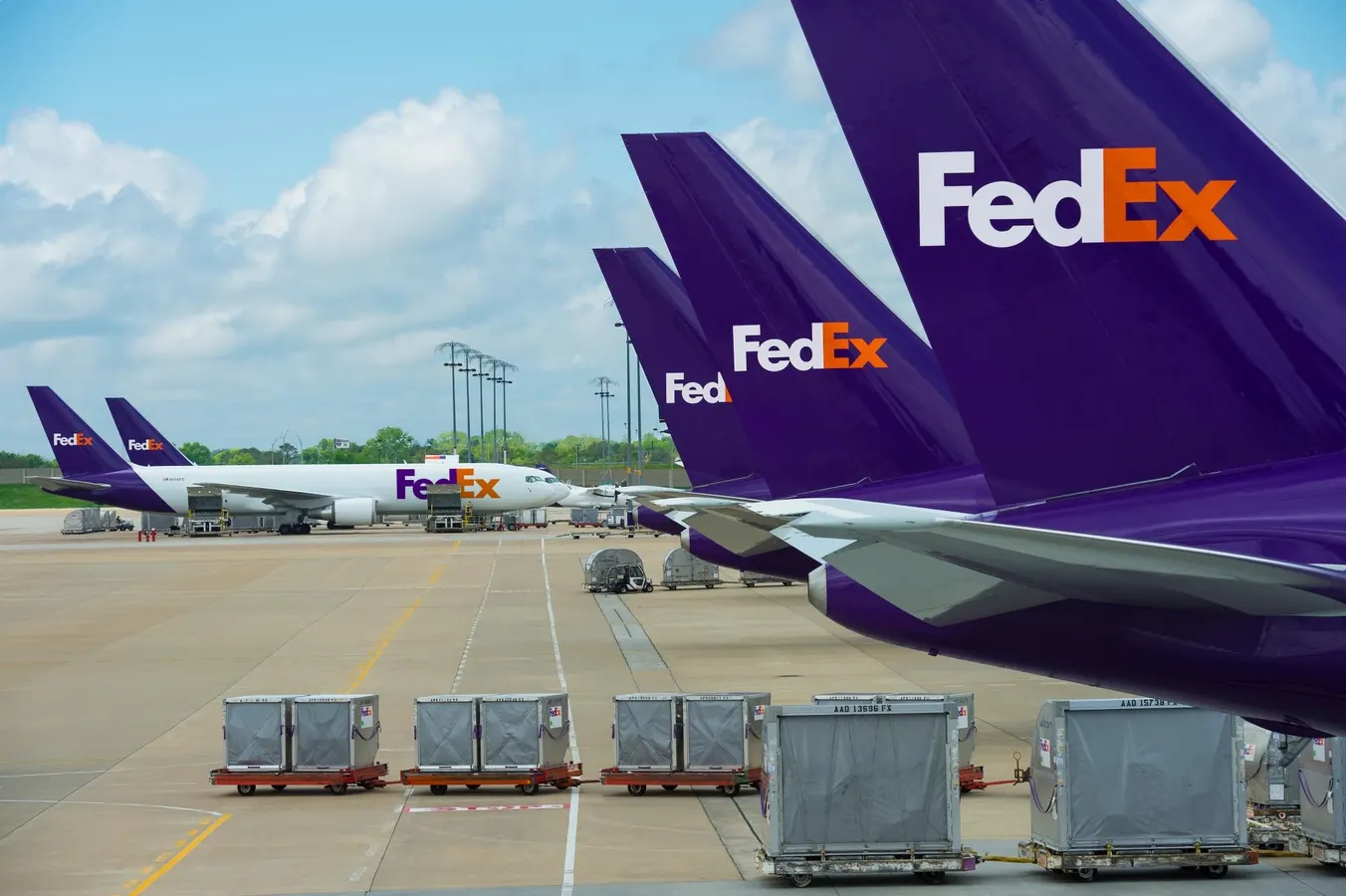
At FedEx, this approach is already embedded in how we work. We are integrating robotics, warehouse automation, intelligent routing, autonomous planning, sensor data and advanced analytics with AI—then embedding these capabilities into the digital tools our customers use every day.
AI-powered solutions such as HTS Code Lookup and our Customs AI Chatbot automate classification, improve documentation accuracy and accelerate clearance. AI-driven precision enhances customer profile matching, tariff classification and predictive demand forecasting, reducing errors, shortening wait times and minimizing cross‑border delays.
FedEx Surround is another example. Powered by AI and SenseAware ID, it provides near real-time shipment monitoring, predicts disruptions before they escalate and delivers 24/7 expert oversight across our global network. The result is the kind of visibility, proactive updates and transparency that builds lasting trust and turns logistics into a true long-term partnership with customers.
With 17 million shipments moving daily across 220 countries and territories, near real-time pattern detection allows us to identify emerging risks well before they happen and optimize performance before issues escalate. This enables greater reliability while scaling—without propositional cost growth.
Equally important is people readiness. Our enterprise-wide AI education and literacy program equips team members with the skills to apply AI responsibly and effectively, ensuring technology adoption drives real operational change.
What Does This Mean For Business Leaders
The question for executives in 2026 is no longer whether to invest in AI, redesign trade networks or build adaptive operations. The real test is whether those investments are pursued as isolated initiatives or as parts of one coherent strategy for managing growth in volatility while earning customer trust.
Three priorities stand above the rest:
- Put customers first with agile and flexible solutions. Use AI and data to sense shifts early, provide proactive updates, offer personalization options and respond faster than competitors—turning every interaction into a long-term partnership built on trust.
- Design trade strategies for volatility rather than stability. Build regional strength, modular networks, strong long-term supplier partnerships, multi-sourcing options and scenario planning from the ground up so you can adapt quickly without losing momentum or customer confidence.
- Tie every AI and data investment directly to measurable productivity and growth. Focus first on automation and robotics, where the returns are clearest, ensuring technology strengthens both your operations and your customers’ success in uncertain times.
The businesses that will define the next growth cycle are those that change early, adapt continuously and act decisively. The question is whether their organizations are ready to reinvent themselves for growth in a world that will not stand still.














Leave a comment