


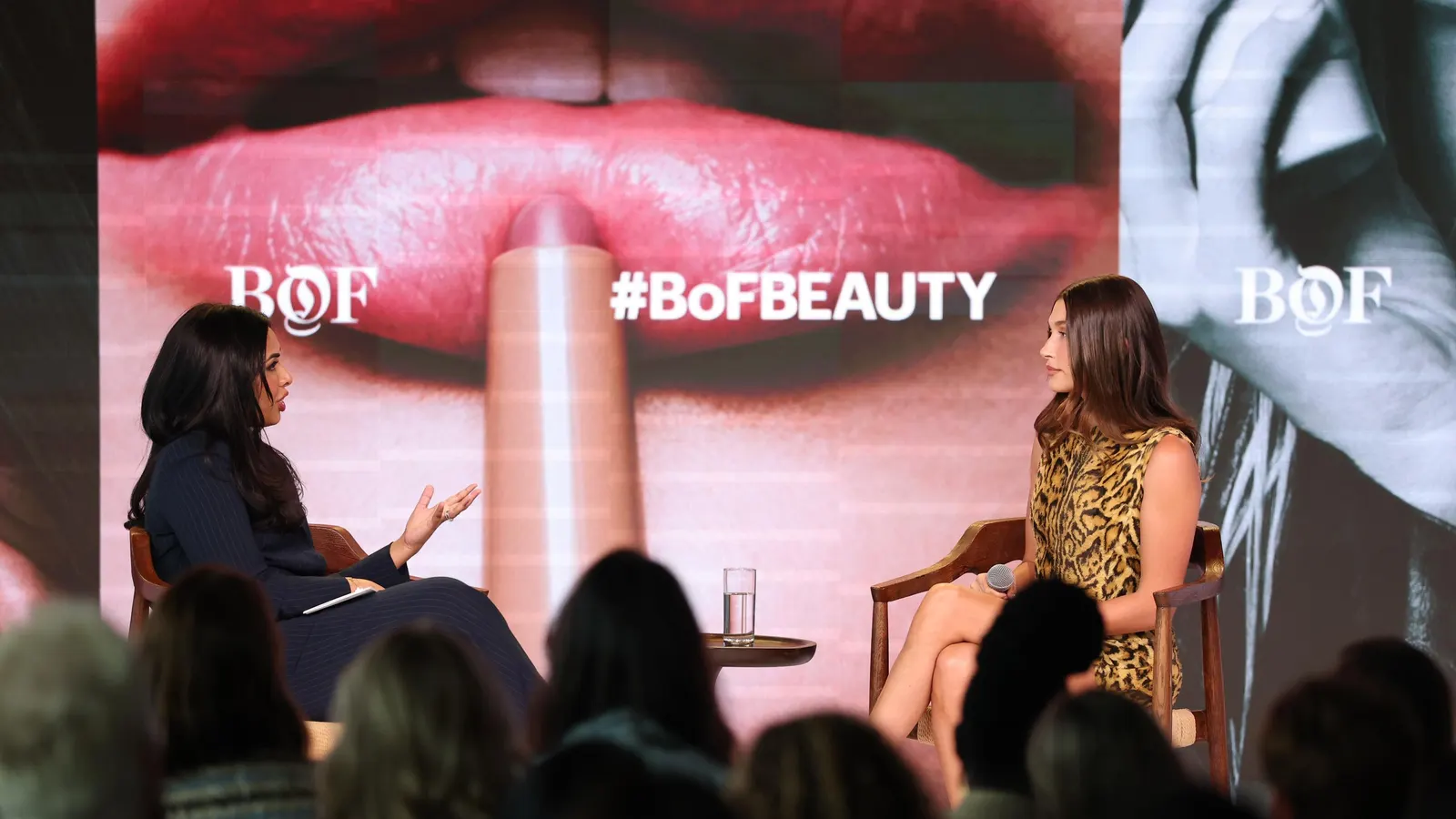

Hailey Bieber, Founder & Creative Director of Rhode, at the Business of Beauty Global Forum 2025 in California.
Getty Images for The Business of Fashion
The first half of 2026 has already seen its fair share of M&A transactions across the consumer goods world. Unilever acquired vitamin gummies brand Grüns for $1.2 billion, while Henkel announced its acquisition of premium haircare brand OLAPLEX for more than a billion, alongside Gen Z brand Not Your Mother.
Meanwhile, L’Oréal finalized the acquisition of Kering Beauté, the beauty division of luxury group Kering, which includes Creed and the licensing of Bottega Venetta, Gucci and Balenciaga perfume and beauty lines, all for a value of $4 billion. Private equity funds are equally hungry for beauty brand takeovers, with Advent International acquiring bodycare brand Salt & Stone for an undisclosed sum.
And while e.l.f beauty’s acquisition of Rhode and L’Oréal’s acquisition of Medik8 date back to 2025, these transactions also reinforced a broader shift already reshaping the industry: consumer groups are increasingly targeting modern brands operating at the intersection of beauty, performance, wellness and lifestyle.
Acquiring Brands Shaping The Future Of Beauty
Rhode largely expanded the introduction of peptides and food aesthetics into skincare amongst the TikTok and GenZ audiences with its Peptide Glazing Fluid and the resulting “glazed donut” skin aesthetics. Grüns reinvented and simplified the supplement category in less than three years. Salt & Stone thrives in a hybrid space between functional, clean beauty and fragrance categories. These brands exemplify well the shift beauty has slowly been undergoing.
As highlighted in HighSnobiety’s latest report, “The Status Economy: Beauty”, wellness and health have become essential parts of the beauty universe. “We’re seeing the the traditional boundary between beauty (looking good)
and wellness (feeling good) disappearing. Consumers now see beauty as part
of a broader wellness routine that includes nutrition, sleep, mental health, and fitness, and products are evolving accordingly,” shared Lizi Aston, the global communications and collaborations at Decium, with HighSnobiety.
Beauty is now converging with health and wellness entirely. The lines between skincare, supplements, functional beverages and longevity are increasingly blurred, making brands with strong positioning in this hybrid space especially attractive acquisition targets. Unilever’s divestment from its food unit in favor of doubling down on beauty further reflects where major groups see long-term growth opportunities.
Still, exposure to “masstige” or wellness alone is no guarantee of investment interest. The brands commanding the highest valuations are pairing cultural relevance with operational discipline: strong EBITDA, scalability, high repeat purchase rates and retail expansion. As Folmer told us: “The founders building today, who experienced the post-Covid VC pullpack, know they must build efficient and profitable businesses going forward,” adding that when thinking about investing, his fund looks for “a strong thesis on why a brand will flourish over the next 10 years, creativity in customer acquisition, and operational efficiency.”
Further proof that today’s most sought-after beauty brands are no longer just selling products to make consumers look good. They are building scalable ecosystems at the intersection of beauty, wellness, community and culture.
















Leave a comment