


Topline
A major lobbying group associated with the credit card industry has spent some $200 million to oppose bipartisan legislation that aims to reduce swipe fees on credit card transactions, according to a new report from Demand Progress, as the Credit Card Competition Act has sparked a major division between proponents who see it as a way to reduce costs and opponents who see it as coming for Americans’ credit card rewards.
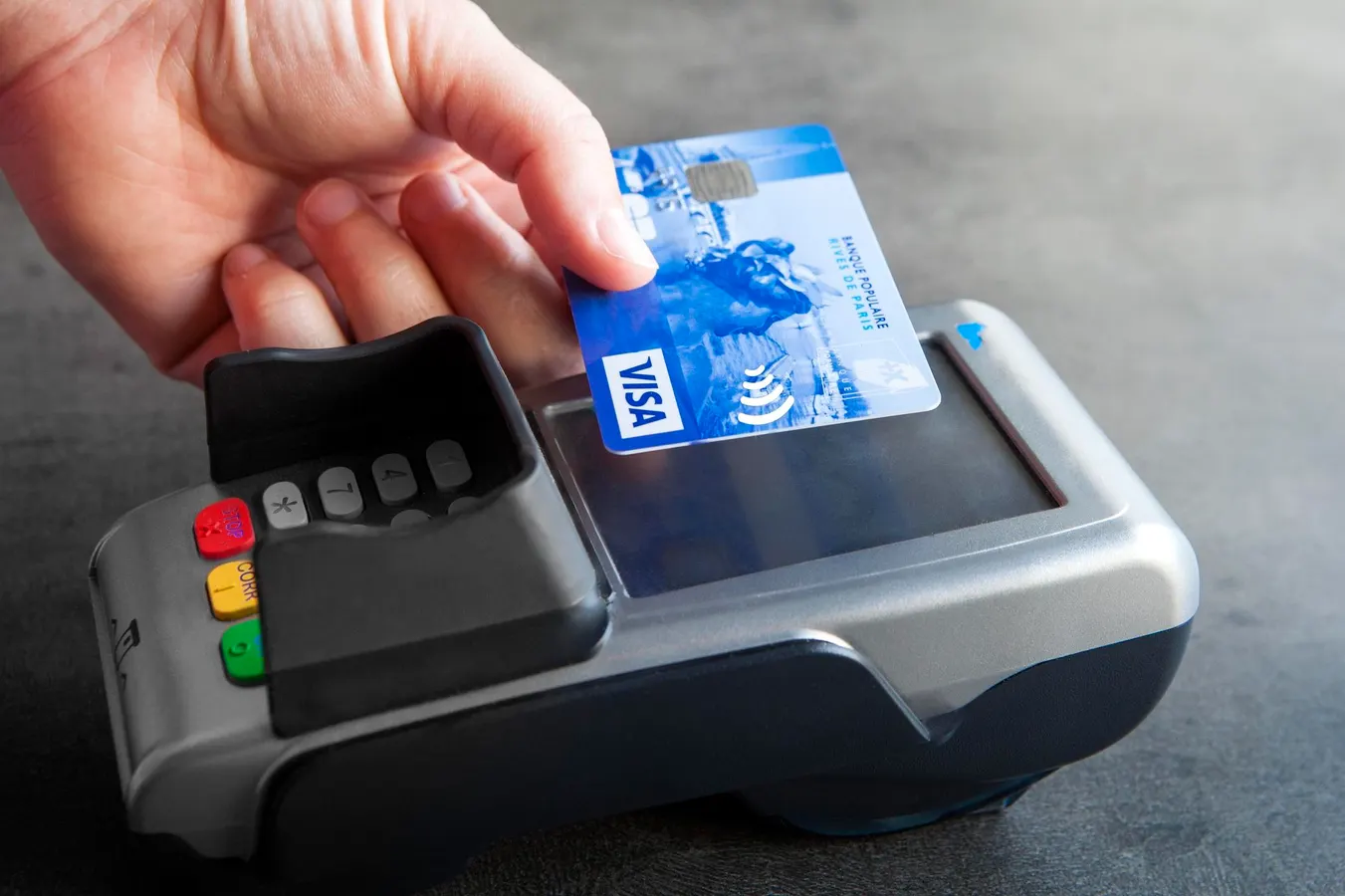
The Credit Card Competition Act aims to lower the swipe fees charged on each credit card transaction.
Universal Images Group via Getty Images
Key Facts
The Credit Card Competition Act, or CCCA, targets swipe fees, which are the extra charge—typically 2-3%—that merchants pay to networks like Visa and Mastercard when users make a credit card purchase.
Merchants typically account for those fees by raising prices to build them in, and some $198.25 billion in credit card swipe fees were paid in 2025 alone, which amounts to costing each American household roughly $1,200 annually.
The CCCA would make it possible for merchants to have smaller networks besides Visa and Mastercard process credit card payments and get the swipe fees—meaning it will increase competition, and, the thinking goes, hopefully lower swipe fees for merchants and prices for consumers as a result.
The Electronic Payments Coalition, a lobbying group representing credit card payment networks, banks and others involved in the credit card industry, has spent some $200 million since the legislation was first introduced in 2023, as tallied by Demand Progress, an advocacy group that typically champions progressive causes.
The coalition, also known as EPC, has argued the CCCA would not result in lower prices for consumers as proponents claim, and posits the lower swipe fees will result in credit card companies cutting down on popular credit card rewards programs—which proponents of the bill deny.
The bill has bipartisan support in Congress and President Donald Trump championed it on Truth Social in January—saying it would “stop the out of control Swipe Fee ripoff”—though it still remains uncertain when, or if, the legislation will pass.
How Do Credit Card Swipe Fees Work?
When someone makes a purchase using a credit card, the bank that issued the credit card—like Chase or Bank of America—essentially pays the merchant on behalf of the cardholder, who then reimburses the bank when they pay their credit card bill. The payment network is the middleman in that transaction, sending information between the merchant and the card issuer. The payment network that’s used is tied to the card, which is why some cards are Mastercards, while others may be Visa cards, Discover or American Express. Those payment networks charge a fee for the work they do to facilitate the transactions, which is the swipe fee. Right now, banks and merchants have to use whatever networks are tied to the card—which means they have pretty free rein to set whatever swipe fee rate they want. Those rates are typically between two and three percent, and the Merchants Payments Coalition, which advocates for the CCCA, reports the average rate has gone up from 2.02% in 2010 to 2.36% in 2026. Since the fees are a percentage of the transaction’s overall cost, that also means the fees get higher as inflation rises and prices of goods go up. The CCCA would require larger banks that issue credit cards to give an alternate network that could handle the payment, and let merchants choose how the payments should be routed.
Who’s For And Against The CCCA?
Broadly speaking, members of the credit card industry—such as payment networks like Visa and Mastercard and the banks that manage the credit cards themselves—have been opposed to the CCCA, while merchants, including Amazon and big-box retailers like Walmart and Target, have supported it. Airline worker unions have also opposed the bill, arguing it will reduce revenue for airlines that rely on their credit card programs and hurt workers as a result. In Congress, the bill has brought together lawmakers from both sides of the aisle, with Sens. Dick Durbin, D-Ill., and Roger Marshall, R-Kan., leading the legislation. Vice President JD Vance also co-sponsored the bill when it was first introduced in 2023, when he was a senator from Ohio, along with Democratic Sen. Peter Welch, Vt. Trump posted in support of the CCCA in January right after the bill was reintroduced in Congress, though his praise was mostly focused on Marshall. “Everyone should support great Republican Senator Roger Marshall’s Credit Card Competition Act, in order to stop the out of control Swipe Fee ripoff,” Trump wrote on Truth Social. “Roger is a FANTASTIC Senator!!!”
Would The CCCA Reduce Prices?
It’s still unclear. Merchant consultancy firm CMSPI estimated the bill would save merchants more than $17 billion annually overall, as of 2024, and proponents of the CCCA hope the bill would lead to merchants using those savings to lower prices, or at least keep them more steady. Opponents of the bill argue that may not necessarily end up being the case, as businesses will instead keep the cushion they previously had from swipe fees and put that money toward their business expenses. Proponents of the bill have relied on a 2015 study that estimated a similar 2010 measure targeting debit card swipe fees resulted in $8.5 billion worth of savings to consumers and merchants in 2012, with $5.87 billion being passed on to consumers through lower prices. The author of that study, economist Robert Shapiro, released a further analysis in 2025, however, which backtracked on his previous findings. “With more than a decade of new data and analysis, it is evident that those consumer benefits never materialized,” Shapiro wrote. The Congressional Research Service concluded the debit card measure, known as the Durbin Amendment because of the senator’s involvement, “had a limited and unequal impact in terms of reducing merchants’ costs,” and it is “indeterminate” whether “any change in consumer prices occurred.” The CRS also believes “it is not clear whether retailers would pass interchange savings on to consumers” if the CCCA passes.
Will The CCCA Kill Americans’ Credit Card Rewards?
Opponents of the CCCA have argued the legislation will harm consumers by targeting their credit card rewards. While the CCCA does not say anything about credit card perks directly, opponents are afraid that the reduced revenue from lower swipe fees—and potential higher administrative costs for banks to deal with multiple payment networks, Nerdwallet notes—will eat into the money credit card issuers use for reward programs, and cause them to slash rewards as a result. Banks previously responded to the 2010 measure on debit card swipe fees by eliminating rewards for those cards, and opponents are afraid credit cards will follow. Proponents of the bill argue those fears are overblown, because the amount consumers earn in credit card rewards—$47.5 billion in 2024, according to the Consumer Financial Protection Bureau—is only a fraction of the $198.25 billion paid in swipe fees. CMSPI estimated the CCCA would only reduce rewards by less than $1 per $1,000 spent, based on an analysis of a similar law in Australia. The EPC has criticized those findings due to the CMSPI’s ties to groups advocating for the CCCA. Experts cited by Nerdwallet also noted that even if the CCCA does eat into credit card issuers’ ability to award points, they could compensate by increasing other card benefits, like access to lounges and airline status.
Lobbying Efforts Against The CCCA, Explained
The EPC, industry groups and major credit card companies and banks—such as Visa, Mastercard, Citigroup, JPMorgan Chase, Capital One and Wells Fargo—have spent approximately $165 million since 2023 lobbying Congress against the CCCA, according to public lobbying records cited by Demand Progress that specifically mention opposing the bill and changes to swipe fees. The EPC has also spent more than $5 million on ads that oppose the legislation, Demand Progress calculated, and a group of small business owners affiliated with the EPC, called the “Small Business Payments Alliance,” has spent some $57,000 on ads opposing the bill, along with placing op-eds and speaking against it in Congress. The banking industry has also spent millions on political contributions, including for lawmakers who sit on committees that would have power to move the CCCA forward or block it in Congress. The American Bankers Association, Capital One, Wells Fargo and Visa have given a combined $15.7 million since 2023, of which more than $5.5 million was given to members of the House Financial Services Committee and Senate Banking Committee.
Credit Card Industry Gives To Trump Administration
Demand Progress’ report argues the credit card industry has sought to curry favor with Trump, with JPMorgan Chase, Capital One, Bank of America, Mastercard, Citibank and Visa donating more than $2 million combined to Trump’s inaugural committee, along with a $1 million donation from the EPC itself. The EPC also sponsored Transportation Secretary Sean Duffy’s “Great American Road Trip” reality series, though EPC executive chairman Richard Hunt said at the time its involvement was to highlight that “credit cards and credit card rewards help make” road trips “possible through cashback programs, savings at the pump, complimentary hotel stays, and airline miles.” The Great American Road Trip has not yet been released, and some have criticized groups and major companies who sponsored the reality series when they may have business before the Trump administration. “The thing that this arrangement offers them … is access and the affiliation with the federal government,” Donald Sherman, president of left-leaning watchdog Citizens for Responsibility and Ethics in Washington, previously told Forbes.
Contra
EPC spokesperson Nicklaus Simpson opposed Demand Progress and the Merchants Payments Coalition that supports the CCCA in a statement to Forbes on Thursday, and defended the EPC’s lobbying against the bill. Unlike “groups carrying the water for corporate mega-stores without disclosing their finances, we are proud to be completely transparent about our work protecting the payments system American households and small businesses depend on every day,” he told Forbes. The Merchants Payments Coalition, or MPC, a retail industry lobbying group, has also spent money on Capitol Hill lobbying in favor of the CCCA, reporting $60,000 in lobbying fees every quarter since 2023, which amounts to some $840,000 through the second quarter of this year. Some companies who support the CCCA were also donors to Trump’s inauguration, such as Target and Amazon, which each gave $1 million.











Leave a comment