


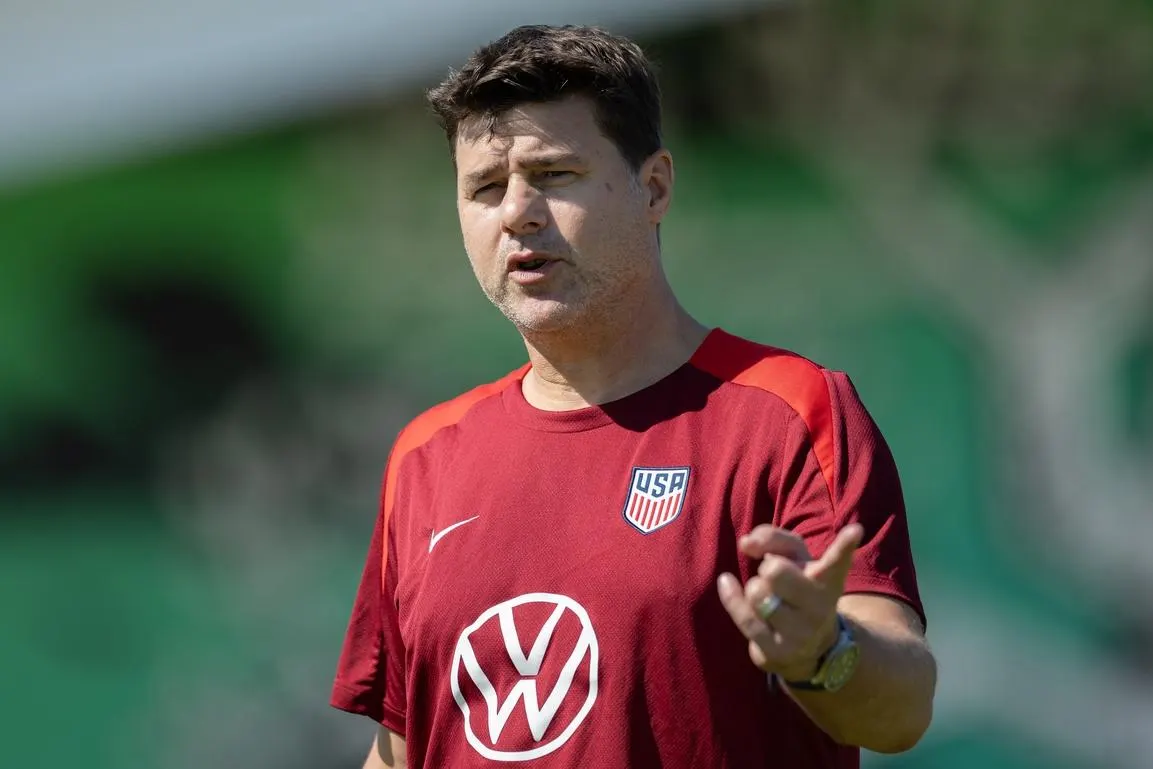

AUSTIN, TX – OCTOBER 9: Head Coach Mauricio Pochettino of the United States during USMNT Training atSt. David’s Performance Center on October 9, 2024 in Austin , Texas. (Photo by John Dorton/ISI Photos/USSF/Getty Images for USSF)
Getty Images
When it comes to living in the moment, international soccer coaches may be among the worst offenders of not doing – and that’s certainly true for Mauricio Pochettino.
The USMNT boss has shown he’s looking to the future in his first squad selection since the 2026 World Cup by prioritising young, uncapped stars rather than maintaining the continuity of the side that reached the Round of 16 this summer.
Pochettino has named 13 debutants on his roster for the friendly matches in September and October to bring the average age of his squad down to just 22 years and nine months, most notably calling up 16-year-old Cavan Sullivan and 17-year-old Mathis Albert.
The former PSG coach is clearly looking to the future with his selection and is without a host of more established stars, including Folarin Balogun and Christian Pulisic, who will surely still play a key role in that. But is it a risk to make such wholesale changes and ignore the present?
The easy answer is to say that with four upcoming friendlies, the short-term impact of Pochettino taking a closer look and not winning those matches is minimal. Yet considering this prolonged international window provides a rare chance for coaches and players to spend time together – a valuable opportunity for time-starved national team bosses to retain camaraderie and instil new tactical ideas to take the side to the next level.
Providing a consistent environment in which players can build familiarity, understand their roles in the squad and establish a leadership hierarchy is key. And while this may now be the start of a new four-year cycle that’s aimed at the 2030 World Cup, four games still make up a high percentage of USMNT fixtures this season.
What are other international coaches doing?
Pochettino isn’t alone in making such a significant call in this international window. Brazil’s Carlo Ancelotti has overseen an even bigger overhaul, with only nine of the Selecao’s final 26 for the World Cup chosen for their matches with Australia and India, with a deliberate switch to a more youthful squad he can shape.
Elsewhere, new Germany head coach Jurgen Klopp has gone even further. Charged with turning their fortunes around after their shock Round of 32 exit at the World Cup, he’s named two almost separate squads, totalling 44 players, with only 16 of the players from the summer retained. Klopp’s move is even more extreme given Die Mannschaft are in Nations League action during this international break.
This sort of approach has been taken before by nations trying to build a squad with several years to go before the next World Cup, though. In the past, it has usually been the emerging countries that take such drastic action to build something new, such as when the USA created an almost entirely new squad and put them into a residency programme ahead of the 1994 World Cup.
Another host, Japan, did something similar in the years leading up to the 2002 World Cup, with coach Philippe Troussier taking charge of the senior, under-23 and under-20 sides in order to foster a new ethos and tactical approach that would see them more able to compete against the elite nations.
If that translates to the modern international game when time is so tight for national team managers is yet to be seen. Assessing players is important, but every minute on the training pitch counts, even for the longest-serving managers, when they want to get their ideas across.
Has every nation made wholesale changes?
That’s why the likes of Spain, England and Argentina – three of this summer’s four World Cup semi-finalists – have largely kept the core of the team in place, with the majority of their squad changes being forced due to injury, international retirement or suspension.
Of course, those coaches are still looking to introduce new faces who didn’t go to the World Cup, but the likes of Spain’s Roberto Fernandez and England’s Rio Ngumoha – who made his debut in a friendly in June – are exceptions rather than the rule.
The nature of international soccer and its major tournament cycles will inevitably create a need to look forward, but staying in the moment is still important when it comes to creating something successful.










Leave a comment