


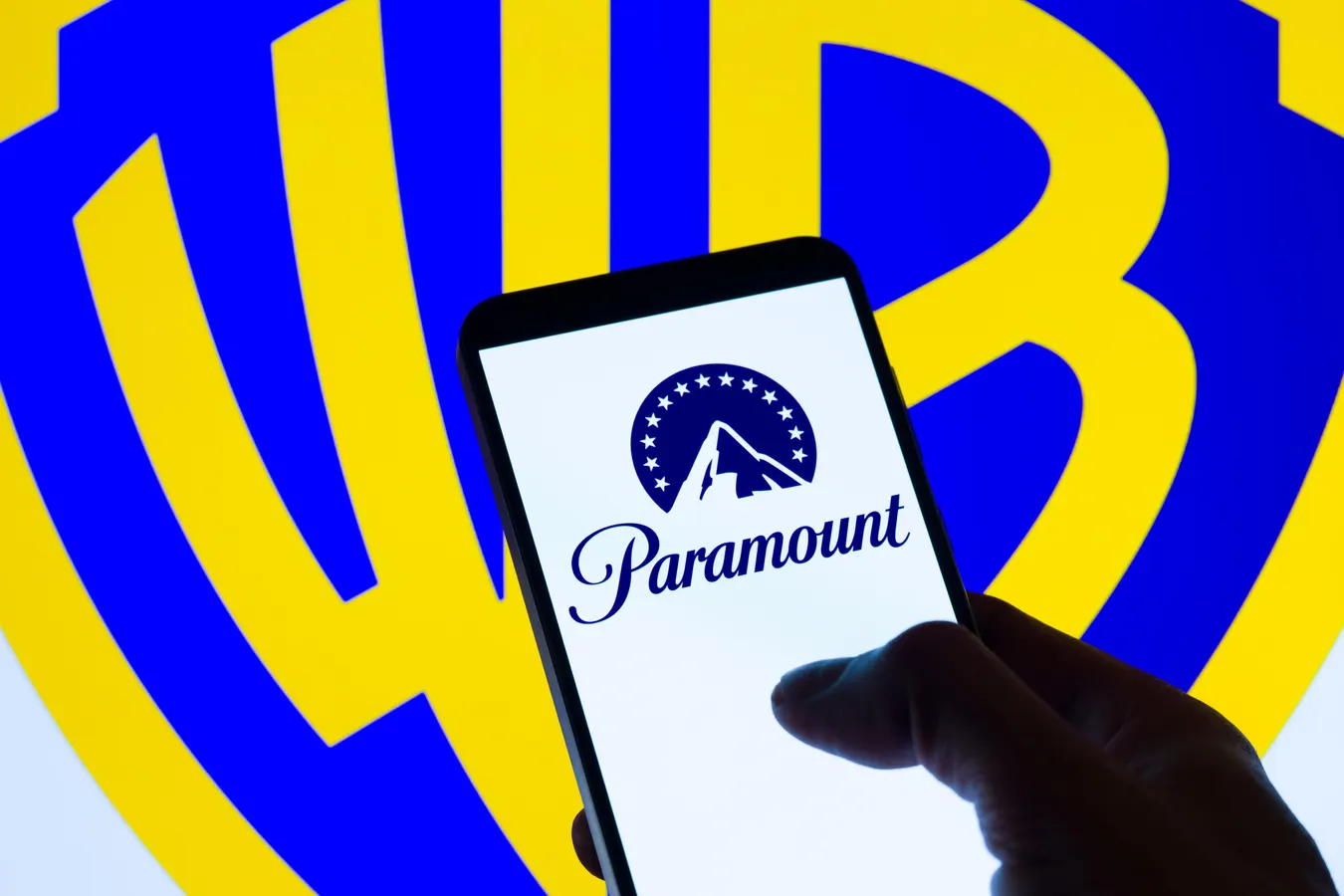
The end of Warner Bros. Discovery as an independent company seemed to follow the pattern of Ernest Hemingway’s take on how one becomes bankrupt: “Gradually, then suddenly.” With WBD under control of Paramount Skydance – pending regulatory approvals – we’re left with a series of questions about what is next for this newly configured media conglomerate.
It’s worth a quick recap of how we got here, one that reflects a journey both gradual and sudden. The Warner Bros. studio and its former and current stable of magazines, cable systems, film franchises and cable networks has been a much battered-about group of media assets for over 25 years.
It all began with the AOL-Time Warner merger in 2000, deemed even by its architect Gerald Levin as the “worst deal of the century.” After that debacle, the Time Warner that emerged spent years shedding key assets, including iconic magazine titles such as People, Sports Illustrated and Fortune (most of which have continued to wander in the publishing desert). It spun off its cable systems in 2009, which ultimately merged with Charter Communications in 2016. AT&T purchased the remaining Warner Bros. studio and cable networks (including HBO and CNN) in 2018, winning a regulatory battle it undoubtedly wishes it had never fought.
The creation of the new Warner Bros. Discovery in 2022 kicked off a period of mostly agonizing cutbacks and upheaval and almost immediate speculation about future merger partners. Hemingway’s gradual process became a sudden one just last June when WBD announced it would split it two, an eventually abandoned endeavor that led to the short-lived agreement to sell to Netflix and then the emergence of Paramount as the winner in the takeover battle.
Assuming regulatory approvals (if we we can assume anything about anything anymore), the new Paramount Skydance Warner Bros. Discovery etc., and its presumed CEO David Ellison (and financier father Larry Ellison) have a ton on their plate. Here are just a few things I’ll be watching:
Whither CNN?
Especially during a time of war as we’re in right now, the fate of CNN under its new owners and the potential changes to its global newsgathering mission are inevitably front and center in terms of the deal’s impact. It’s not hard to find plenty of angst inside and outside of the news media world about what CNN looks like under leadership whose early returns of their stewardship of CBS News have hardly proceeded according to any well-recognized plan.
It has to be said, however, that the Ellisons will hardly be taking over a news organization that has been any model of stability in recent years. Like much of the cable universe, the network’s ratings have declined for years, down 45% in prime time since 2017. Chris Licht, the handpicked CNN CEO put in place by David Zaslav and WBD’s leadership had a short 13-month reign that ended in 2023 and was generally viewed as a disaster. Marc Thompson, former head of the BBC and CEO of The New York Times, followed and announced a sweeping “digital first” strategy over two years ago, but there is scant evidence yet of what that it fully looks like for most news consumers, especially younger ones.
Given Paramount’s massive debt load emerging from this deal, the worst-case scenario for CNN would be – and could be – a set of devastating cost cuts that look like what Jeff Bezos has wrought at The Washington Post. Fears of ideological purges are certainly everywhere, with potential tea leaves from Anderson Cooper’s exit from 60 Minutes.
Does Bari Weiss’s CBS News responsibility get extended to CNN? I don’t see Weiss’s Free Press as a MAGA o
What happens when the Warner Bros. hit streak ends?
Probably the biggest success of the Zaslav WBD tenure – other than getting the price received for selling it – has been an extraordinary run of box office success. In 2025 alone the studio released Superman, Sinners, and F1, and the prior year saw Dune: Part Two, the Beetlejuice sequel and Godzilla x Kong: The New Empire. But remember not long ago when Disney’s theatricals seemed invincible? Then came Marvel fatigue and a series of less than stellar Star Wars universe offerings. It is unlikely that the newly merged Warner Bros. and Paramount Studios can maintain a consistent run in a business where William Goldman famously observed “nobody knows anything.” Who and what will be the next pivot at the studio?
Has cable network retrenchment been accelerated?
From a financial market perspective, the new Paramount-WBD is significantly overweighted with cable networks. From the vast stable of legacy Viacom networks such as MTV, VH1, Nickelodeon, the Paramount Network and more we now have the flood of networks from the legacy Turner, Scripps and Discovery organizations (I’ll put aside HBO (“It’s not TV, it’s HBO)). These are the types of networks that Comcast already spun off into Versant Media, and that Netflix never had any interest in acquiring.
There are still properties here to save, from HGTV and The Food Network to TCM. But it would make sense that this deal will finally create the momentum to kill off cable networks that no one is watching, that overwhelmingly air reruns available on streaming platforms, and that distributors are increasingly hostile to funding with sub fees? It’s not a strategy for dynamic growth, but it would quickly demonstrate a more realistic view of a sustainable media empire of the future.
My kingdom for a growth strategy
Speaking of growth, the Ellisons have assembled a jaw-dropping array of media assets, but have yet to articulate a plan for growth, either in the purchase of Paramount by Skydance or the pending WBD deal. Cuts will come fast and furiously, but as the current WBD team amply demonstrated, that gets you lower debt payments but does nothing to spur growth. That will take genuine innovation and, in a world where no corporation is an island, will demand an intelligent approach to strategic partnerships in sports, news and entertainment. Sure, content might still be King, but how big is the territory in a world surrounded by giants?

The Paramount logo is displayed on a mobile phone with the Warner Bros. Discovery icon seen in the background, in this photo illustration in Brussels, Belgium, on December 9, 2025. (Photo by Jonathan Raa/NurPhoto via Getty Images)
NurPhoto via Getty Images











Leave a comment