


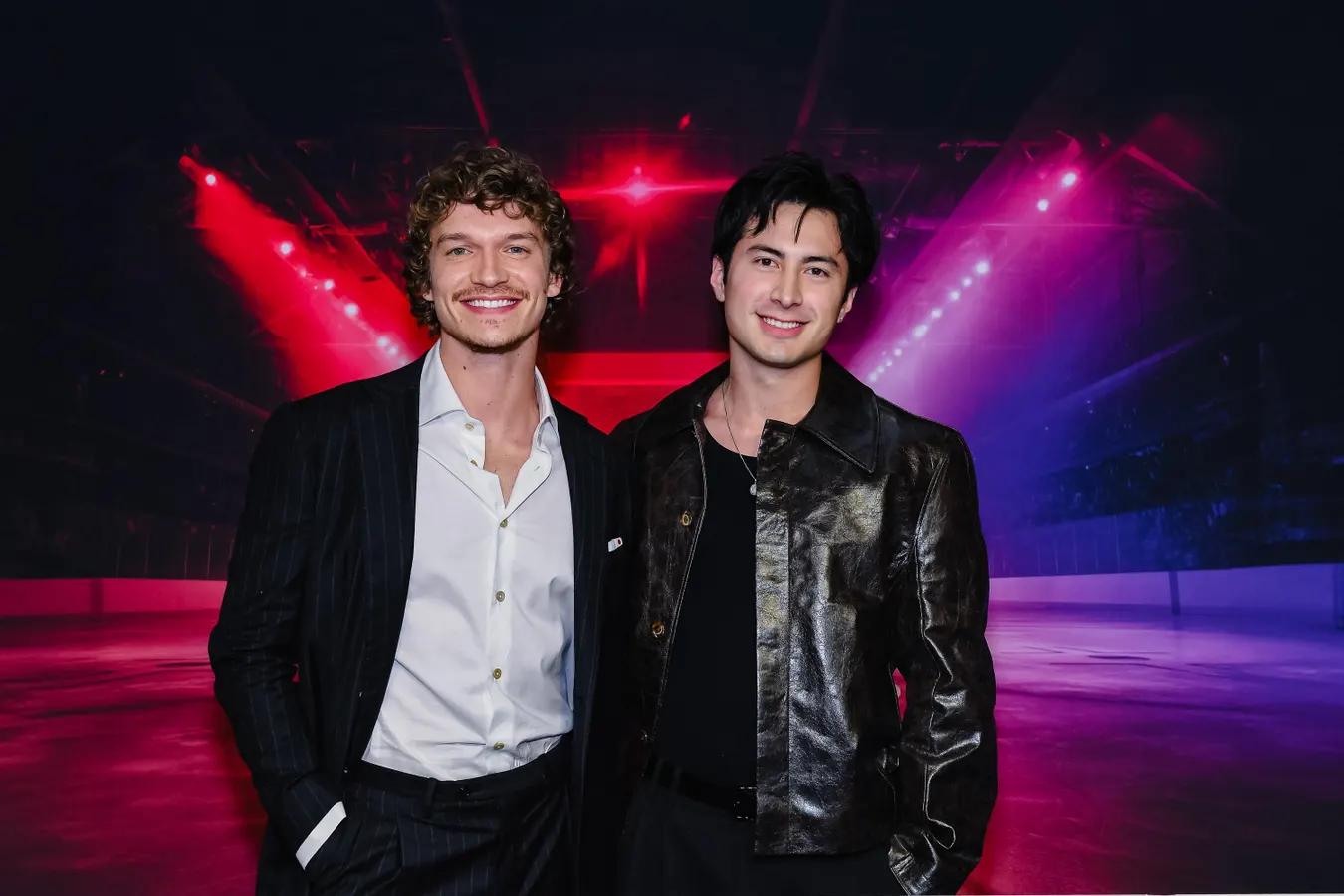

TORONTO, ONTARIO – NOVEMBER 24: Connor Storrie and Hudson Williams attend the premiere of “Heated Rivalry” at TIFF Lightbox on November 24, 2025, in Toronto, Ontario. (Photo by Harold Feng/Getty Images)
Getty Images
Heated Rivalry became a sensation this winter for its great storytelling, fantastic soundtrack and steamy scenes, but the Cinderella story of its two young leads can’t be overlooked. Suddenly inescapable, Connor Storrie and Hudson Williams were, until last year, jobbing actors and restaurant servers. Their meteoric rise is something to be celebrated. And in the current climate, it might be the last time it happens.
There has been much talk about AI’s effect on Hollywood; it was one of the main issues of the Writer’s Guild of America and SAG-AFTRA strikes in 2023. More recently, many have raised concerns about the use of an AI-generated version of the late actor Val Kilmer for a forthcoming film. But aside from a handful of high-profile controversies, AI hasn’t made a massive impact on the mainstream film world just yet.
Yet there are two more immediate concerns for aspiring young actors that will likely affect them well before AI-generated scripts and movie stars. The first is the rise of AI-generated industrials — the unsexy training and educational videos that might never show up on an Oscars reel but pay the bills. The second is the AI-driven reduction in good, old fashioned “day jobs” — the low-impact, 9-5 office gigs that gave aspiring creatives a steady paycheck and let them workshop material in between boring meetings.
These changes won’t impact young actors with trust funds or family in the industry, but for actors without resources and connections like Storrie and Williams, it could kill their chances before they even start.
How AI Is Cutting Into Struggling Actor Jobs
You might not know the term “industrial,” but if you’ve ever sat through a corporate training seminar with videos about how not to sexually harass a colleague or how to avoid doing insider trading, you know what one is. I’ve built several of these for virtual reality platforms and worked with actors like Annapurna Sriram (whose latest feature, coincidentally, also stars Heated Rivalry’s François Arnaud) and Eulone Gooding (who has appeared in Law & Order: SVU). But the industrial pipeline has been starting to dry up as platforms like Synthesia allow companies to produce training content at scale at a fraction of the cost.
The other transformation that can be partially attributed to AI is the death of the “clockwatchers” job. For many years, aspiring creatives could rely on mindless temp roles to pay the bills; this is in fact the origin story for Severance creator Dan Erickson, who worked a dull office gig while writing his script. But as awful as that job was, it was a paycheck that gave him the time and space to work on his creative projects. And as AI continues to mature, those jobs are more likely to disappear.
Other typical starving artist jobs are starting to be disrupted as well. Driving for Lyft or Uber, once a favored way to make money between auditions, is no longer a secure option as Waymo spreads throughout Los Angeles. Serving and bartending gigs still exist, but rising competition for those jobs now that other avenues are closed off means that lots of people will still be left out in the cold.
How AI Is Locking Out Actors Without Trust Funds
What this all ultimately means is a bifurcated creative class, where people with money and connections are able to pursue arts careers and those without won’t even have a chance to try. And even people with experience and past success are not immune to this. The Hollywood Reporter recently ran a piece by an Emmy-nominated writer who is now doing construction work.
There are no easy solutions to this. For many years, there was a tacit agreement between companies and the wider world — they would provide jobs that might not have been mission critical but provided people with outlets for work and some sort of income; in exchange, workers were kept busy and consumed products. The last few years and rounds of layoffs have shown that era has come to an end, and until companies are forced to feel some level of social responsibility again, companies will remain lean.
For the time being, then, we’re left with a world where success in the creative arts will be ever more concentrated among the wealthy, and that’s not a world anyone really wants. Seeing a star break out, whether because they were discovered at a soda shop or submitted a tape for a little Canadian hockey drama, is a magical experience, and one that will become impossible to achieve soon.








Leave a comment