


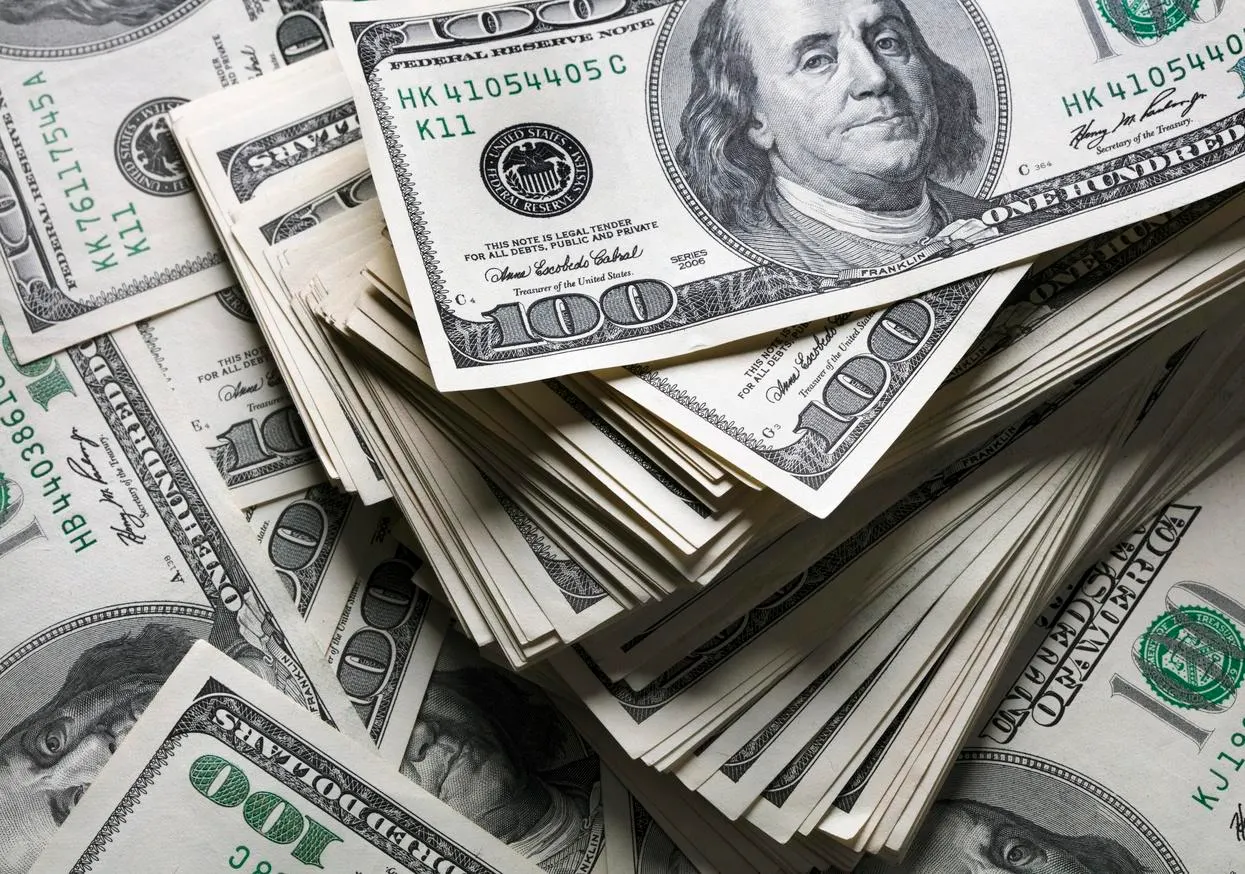

Big banks are paying out record dividends and share buybacks.
getty
In Q1 2026, the eight globally systemically important banks showered shareholders with $46.17 billion in dividends and buybacks — a 34% surge over last year. Twenty years of data reveal a paradoxical pattern: the more uncertain the economy looks, the more aggressively the banks give money away.
$46 Billion in 90 Days
Bank Earnings Releases
In the first three months of 2026 — a period marked by the Iran war, tariff uncertainty, and the most dramatic regulatory shift in bank capital rules since Dodd-Frank — America’s eight largest banks did something that surprised almost no one on Wall Street and almost everyone on Main Street. They handed shareholders $46.17 billion. In ninety days, more than half a billion dollars a day.
To put that in perspective, it is roughly what the United States spends on the entire Environmental Protection Agency over five years. It is, by every measure, a record pace, and it arrived not at a moment of obvious abundance, but at one of unusual economic and market anxiety.
This level of payouts and share buybacks is more than about one quarter. It is about a twenty-year shift in how the largest eight globally systemically important banks in the U.S. think about risks and their obligations to shareholders versus responsibilities to ordinary American consumers and the safety and soundness of the banking system. This shift has made share buybacks the dominant financial instrument of our era, and has elevated a debate among regulators, lawmakers, and economists, that is far from settled.
The Numbers Side by Side: Q1 2025 vs. Q1 2026
SEC Form 8-K earnings releases tell the story of the significant increases in dividend payouts and share buybacks that happened in just one quarter. Every single one of the eight G-SIBs increased both dividends and buybacks year-over-year.
All eight G-SIBs increased both dividends and share buybacks.
Bank Earning Releases
Source: SEC Form 8-K Q1 2025 and Q1 2026 earnings releases for all 8 banks. BB = Share Buybacks. Div = Common Dividends. ▲ = increase year-over-year.
Twenty Years in the Data
The pattern across two decades is unmistakable. The dividend line moves in a narrow band, small increases most years, modest declines in 2008–2009 and 2020, never dramatic. The buyback line swings wildly: up 35% in 2006, collapsing 80% in 2008, near-zero by 2009, surging 75% in 2014, hitting records in 2018 after the Tax Cuts and Jobs Act, collapsing again in 2020, then rocketing back in 2021 and beyond.
This is by design. Dividends are a commitment. When a bank raises its quarterly dividend, investors bake that payment into their financial models. Cutting it, as JPMorgan, Wells Fargo, and Citigroup all had to do in 2009, sends a panic signal to markets. Buybacks are a valve. You can open it when times are good, and your stock is cheap relative to book value. You can close it when a pandemic hits and regulators come calling.
The standout story is Citigroup, whose buybacks exploded 260% year-over-year — from $1.75 billion in Q1 2025 to $6.3 billion in Q1 2026 — as the bank aggressively executed the $20 billion share repurchase program it launched in January 2025. State Street saw its buybacks surge 300% from a low Q1 2025 base of just $100 million. Bank of America’s dividends held flat while its buybacks jumped 60%, an illustration of the structural asymmetry between the two instruments.
Key Events in the 20-Year Cycle
2007–2009 The Global Financial Crisis
Bank equity was destroyed. TARP capital injections arrived. The Federal Reserve urged banks to conserve capital. Buybacks collapsed to near-zero across all G-SIBs. Dividends were slashed — JPMorgan cut its dividend 87%, Wells Fargo 85%, Citigroup to nearly zero.
2011–2013 The CCAR Era Begins
The Federal Reserve’s Comprehensive Capital Analysis and Review process began granting banks permission to resume buybacks and raise dividends. The stress test regime created a formal “permission slip” dynamic that endures today.
2017–2019 The Tax Cuts and CCAR Deregulation Surge
The 2017 Tax Cuts and Jobs Act cut the corporate tax rate from 35% to 21%, freeing massive capital for shareholder returns. Aggregate G-SIB buybacks hit what was then a record of approximately $118 billion in 2018.
2020 COVID — The Federal Reserve Pulls the Plug
In March 2020, the Fed suspended all large bank buybacks and capped dividends. G-SIB buybacks fell approximately 87% for the full year. The episode proved the Minneapolis Fed’s thesis: bank capital adequacy during COVID was not a triumph of pre-built buffers — it was the direct result of forced restraint.
2021–2026 The Record Era — And the Basel Mulligan
Once restrictions lifted, buybacks exploded. In March 2026, regulators finalized the “Basel III Mulligan,” significantly lowering capital requirements and potentially freeing tens of billions more for future capital returns. The annualized Q1 2026 pace represents a new peak.
Who Is Pushing Back and Why
The surge in bank capital returns has not gone uncontested. Over the past two decades, a cohort of economists, legal scholars, regulators, and politicians has built a sustained and serious critique of share buybacks.
Key Critics Of Stock Buybacks
MRV
The Counterargument: Why Banks Say This Is Rational
The critics have critics of their own. The case for buybacks in banking rests on a set of arguments that are financially rigorous even if politically inconvenient.
The first is valuation. When a bank’s stock trades below its tangible book value — as Citigroup’s did through much of 2024 and into early 2026, buying back shares is accretive to remaining shareholders. Every dollar spent buys more than a dollar of underlying asset value.
The second argument is flexibility. Research published in 2024 by the International Review of Financial Analysis found that banks are most likely to buy back shares when they have strong earnings and well-above-minimum capital ratios. The same research found that the flexibility of buybacks — compared to the sticky commitment of dividends —makes the banking system more resilient, because banks can cut buybacks without triggering the market panic that a dividend cut would cause.
What Q1 2026 Tells Us — And What It Does Not
The Q1 2026 data lands at an unusual moment. The macroeconomic environment includes geopolitical volatility, elevated recession probability estimates from major forecasters, and tariff-related supply chain uncertainty. Yet, the banks are returning capital at a record pace.
There are two ways to read this. The optimistic reading: banks are doing this because they genuinely are in good shape — well-capitalized, strong earnings, with fortress balance sheets. JPMorgan posted $14.6 billion in net income in Q1 2026, while Goldman’s trading revenues hit multi-year highs. The buybacks reflect strength, not recklessness.
The pessimistic reading, or in my view the realistic one, is what the Minneapolis Fed would offer, that big banks are distributing capital precisely because regulatory pressure has eased, stress test requirements have been relaxed, and no one is stopping them. If — when — the next credit shock arrives, the question of whether these banks have adequate capital buffers to sustain unexpected losses will be answered not by their pre-crisis pronouncements, but by the havoc banks can wreak on Americans who are not on Wall Street.
History, as the twenty-year data makes plain, is unambiguous on one point: the banks that were aggressively buying back stock in 2006 and 2007 were the same banks that needed taxpayer capital in 2008. The pattern repeats. Whether that represents rational capital allocation, a structural subsidy from the public to shareholders, or simply the natural behavior of institutions operating within the incentives their regulators have constructed — that is the debate that $46 billion in ninety days should force us to have. And I urge bank regulators to have that debate with the banks, which we want to be as safe and as strong as possible for the sake of Americans on Main Street.
Recent Articles Written By This Author
Regional Banks’ Earnings Stabilize But Exposure To Nonbanks Rises
Wall Street’s Big Banks Signal The Next Credit Risks
Goldman Sachs’ Rising Provisions For Credit Losses Are Signaling Stress
Beyond Private Credit-The Overlooked Risks to Banks’ Ties to Nonbanks
Bank Lending To Private Credit And Non-Banks Is At Historic Highs
Financial Stability Board Finds That Non-Banks’ Resilience Needs Strengthening
Market Participants And Regulators Should Be More Vigilant Of Non-Banks
Non-banks Are The Largest Holders of Collateralized Loan Obligations Globally
Non-banks Need To Be More Transparent About Their Leveraged Loan and Other High Yield Exposures
Congressional Testimonies
Strengthening Accountability at the Federal Reserve: Lessons and Opportunities for Reform
A Holistic Review of Regulators: Regulatory Overreach and Economic Consequences













Leave a comment