


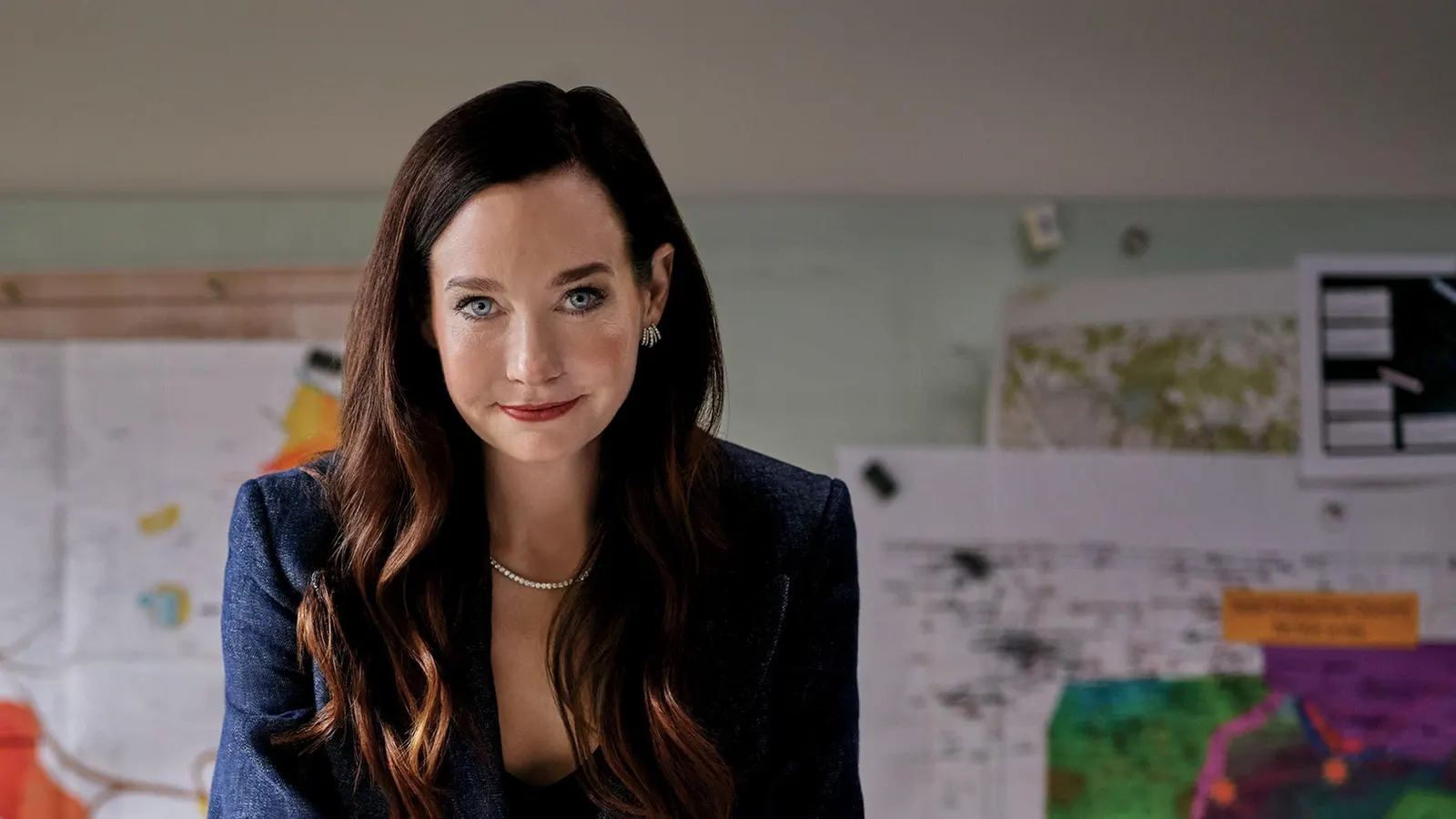
It’s almost 8 a.m. when Gloria Moncrief arrives at her oil firm’s hangar at Meacham Airport in Fort Worth, Texas. She climbs into an eight-seater Cessna Citation, explaining that her Boeing 737, Lucky Liz, is in the shop. The flight to a small airfield in southern Louisiana takes about an hour. Then it’s a 45-minute drive along the levee into the Atchafalaya river basin, the largest swamp in North America, followed by 15 minutes on a flat-bottomed boat past alligators, nesting bald eagles and fishermen muscling their bass boats into the bayou.
Rounding a bend in the waterway, the boat arrives at a giant drilling rig with a 150-foot-tall derrick and roaring engines. Tall and thin, decked out in jeans and knee-high ostrich-skin boots, the 44-year-old Moncrief steps onto the rig, where a handful of mud-covered roughnecks maneuver 40-foot lengths of steel pipe with massive hydraulic tongs.
trevor paulhus for forbes
Moncrief is the head of Montex Drilling Company, the family business that owns Moncrief Oil and has been spending $300,000 a day to rent the rig and staff it around the clock with 60 folks working 12-hour shifts, 14 days on, 14 days off, all to drill the second-deepest natural gas well ever in the U.S. The Highlander 2 goes down 30,862 feet (almost six miles), where it intersects an 800-foot-thick (gross) zone of sand saturated with trillions of cubic feet of natural gas. The well was recently completed after 389 days of drilling.
There is no more compelling high-wire act in the oil-and-gas industry today than this oil heiress’ all-in bet on an ultra-deep well that no one else would touch, after 20 years of disappointments and disasters in the area. The company has already spent $300 million drilling Highlander 2. Now Moncrief is looking for partners to help her fund the roughly $2 billion more needed to hook up the well, build a processing plant—and, ideally, drill five more super-deep wells.
Luckily, Moncrief has oil in her blood and grit in her genes. After both her father and grandfather died in 2021, her uncle tried to strip the company from her. No sooner had she prevailed in taking the reins than the Highlander’s predecessor well collapsed. Not one to wallow, she quickly brought together a team to help her try again. With the first phase now done, and oil prices soaring, Moncrief is more certain than ever that she can raise the money and sell the bounty to Louisiana’s gas exporters for billions. “I promised my dad and grandpa that I would drill it,” she says, “and that’s what I did.”
Her family’s oil roots date back to 1927, when her great-grandfather William A. “Monty” Moncrief, a machine gunner in World War I, started drilling. After more than dozen dry holes, he hit the jackpot with the discovery of a billion-barrel East Texas oil field in 1931. His son William A. Jr. (known as Tex) joined in 1945. Backed by investors including Tex’s golf buddies Bing Crosby and Bob Hope, they built one of America’s biggest family oil outfits and earned a spot on the first Forbes 400 in 1982—a decade after they had tapped into the giant Madden Deep gas field in Wyoming in 1972.
illustration by patrick welsh FOR FORBES
How to play it
By William Baldwin
Growth industry: natural gas for export. Cheniere Energy makes steady money at two liquefaction sites, in Texas and Louisiana, where LNG is loaded onto ships. The corporation’s enterprise value (debt plus market value of common shares) comes to a reasonable ten times the $7.5 billion it expects this year in earnings before interest, taxes and depreciation. Also reasonable: The stock trades at 16 times the $15 a share in cash flow after capital expenditures that Value Line estimates for 2026. Less compelling, but of interest to dividend-hungry investors willing to put up with irksome K-1 tax filings, is Cheniere Energy Partners, which owns the Louisiana terminal and a pipeline. It yields 5%.
William Baldwin is Forbes’ Investment Strategies columnist.
The oil rush may have gone to their heads. In 1994 the IRS raided Moncrief Oil, seizing 300 boxes of documents and 25 filing cabinets in what Tex’s lawyer described at the time as a “Gestapo-like” raid. Tex settled with the taxman in 1996 for $23 million.
Tex had eight children with two wives. His eldest son from his second marriage—Gloria’s father, Charlie—became heir apparent, to the chagrin of half-brother Richard (who went off on his own and set up Moncrief Oil International but ended up stuck in a lengthy lawsuit with Russia’s Gazprom).
Charlie’s eldest daughter caught the wildcatting bug. “Even as a little girl, I knew it was what I was going to do. I loved the action,” says Moncrief, who joined the business in 2009 after a brief stint at the U.S. Department of State during President George W. Bush’s second term. (Jenna Bush was a roommate at the University of Texas, Austin.)
Moncrief remembers her first day in the family office, when James Robert “Jim Bob” Moffett, chairman of mining giant Freeport-McMoRan, stopped by to pitch Tex and Charlie on investing in an ultradeep prospect in Louisiana. He’d taken over the Blackbeard site from ExxonMobil, which had given up after more than a year and $300 million down the hole. Undeterred, Moffett (d. 2021) rolled out maps for Tex and Charlie showing renderings from seismic data that by his reckoning held massive reservoirs of gas trapped in 100-million-year-old rocks.
Tex and Charlie signed on for a 10% stake in one of Moffett’s prospects. Gloria had a ringside seat: “I sat through every meeting and listened to every phone call.” Moffett, who named his prospects after pirates (legendary or not), drilled the Davy Jones well to a depth of 29,000 feet. It appeared to be a huge discovery, with trillions of cubic feet of gas, but mechanical troubles exacerbated by downhole temperatures of 440 degrees and intense pressure forced them to abandon the well in 2012. The failure only spurred obsession. A string of ultradeep dry holes followed. Then came the original Highlander. A consortium led by Freeport-McMoRan, with Moncrief at 10%, completed the well in 2014; it soon started producing 75 million cubic feet a day (about $80 million a year in revenue at today’s prices).
Many thought ultradeep drilling made no sense at all with the shale gas boom underway. One of those naysayers was corporate raider Carl Icahn, who successfully agitated to have Freeport abandon Moffett’s dream.
In 2017, not long after Freeport exited, selling its stake to another outfit, Charlie was diagnosed with brain cancer. Gloria drove her father to radiation treatment every day, and he used those trips to teach her everything she would need to know. “He said, ‘Gloria, this is all going to fall on you.’ ”
Tex and Charlie both died in 2021, after which Gloria’s uncle Dick tried to fire the CFO and objected to the idea of a woman running the family business. (The company is owned by three trusts, representing Tex’s descendants.) Gloria took him to court and won one case, but litigation between the two continues. “You have to be tough, especially in a man’s business,” says Kit Moncrief, Gloria’s mother, who chairs the board of Texas Christian University and is president of the Texas Cowgirl Museum Hall of Fame. “She was the one who was supposed to take over. It was never a question.”
In January 2023, Gloria got a call that the first Highlander was destroyed. Water had infiltrated the well and no more gas would come out. It was a total loss. In May, the partner who had acquired Freeport’s stake sold out to Montex. One silver lining: $300 million in insurance coverage to be used only to replace the Highlander with a new well.
Skeptics wonder why anyone would bother to spend so much to drill so deep, given America’s abundance of cheap shale gas. Ironically, it’s because of the shale revolution that Moncrief is more bullish than ever. That’s because an abundance of shale gas led to the construction of gas-hungry liquefied natural gas export terminals along the Gulf coast, close to her Highlander. By the end of 2027 Moncrief expects to connect Highlander 2 to one of the several gas pipelines that are just miles away.
Flying through storms on the flight home, Moncrief makes a point of getting out of her seat on the Citation to ask her pilots to please steer clear of the giant thunderhead blocking the way back to Fort Worth. “I’ve had a shaky enough ride the past few years.”












Leave a comment