


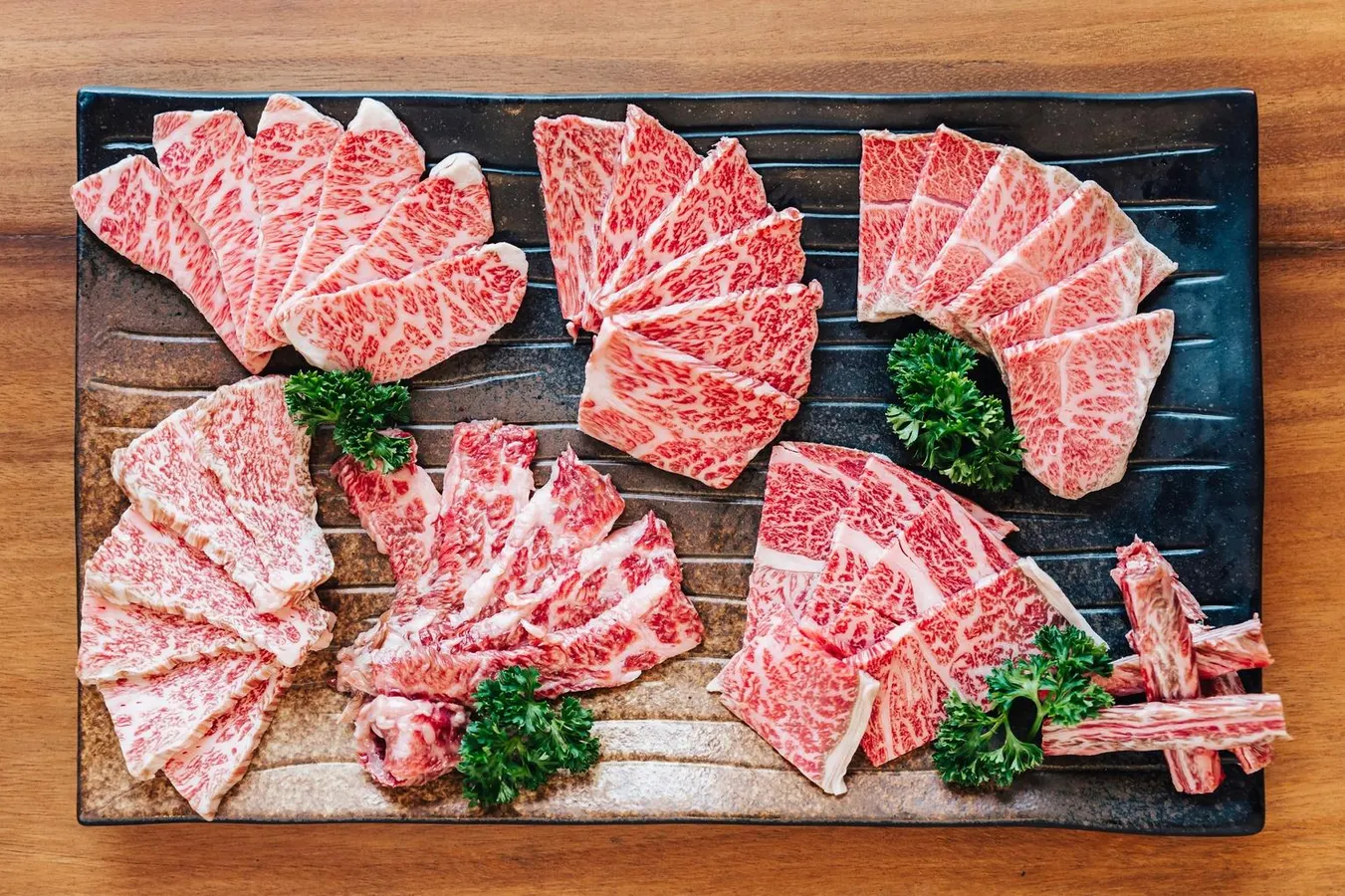

Highly marbled A5 grade Wagyu beef.
getty
Americans’ appetite for Wagyu continues to grow. The U.S. market is projected to reach $13.64 billion by 2032, yet many restaurant menus never tell diners whether they’re ordering Japanese Wagyu or American Wagyu. That distinction can make a substantial difference in both price and dining experience.
There are two general categories of Wagyu. The Japanese Wagyu costs about $100–$300 per pound, depending on cut, grade and the region it was produced. On the other hand, American Wagyu ranges from $30 to $100 per pound, depending on cut and producer.
Why? The difference isn’t simply where the cattle were raised.
Japanese Wagyu cattle typically take 2.5 to 3 years to reach market weight, compared with about 1.5 to 2 years for conventional beef cattle. Also, Wagyu producers carefully adjust the feed mix and manage their physical condition.
Japan has developed more than 200 regional Wagyu brands, including Kobe, Matsusaka, Yonezawa, Omi and Miyazaki, each supported by local producers and municipalities that have invested heavily in breeding standards and regional identity.
Each carcass is graded by the Japan Meat Grading Association. The cattle with the top grades earn the best price at the auctions.
Shoji Tsugawa, chef and CEO of Yakiniku Great, operates nine restaurants across Japan, Hong Kong, Indonesia, Malaysia and New York and works directly with Wagyu producers throughout Japan.
“Every time I visit the Wagyu farms I work with, they are experimenting with something new, like adding rice to the feed, to improve meat quality. They don’t use growth hormones or antibiotics, even though the latter is legal, to achieve the highest natural flavor and texture unique to Wagyu,” he says.
The Value Of American Wagyu
Japanese Wagyu is delicious, but American-bred Wagyu has its own value as well.
Japanese wagyu has a web-like network of intramuscular fat dispersed throughout the muscle fibers, rather than just at the border. It is so intensely buttery, soft and silky that a small portion is just enough. However, if you love a big steak, Japanese Wagyu may be unsatisfactory. That is where American Wagyu fills an important niche: it offers balanced marbling, along with the traditional, beefy flavor and texture of a steak, all at more approachable pricing.
Be aware that there are different types of American Wagyu. Full-blood Wagyu is 100% traceable to Japanese Wagyu with no crossbreeding. Purebred has 93.5% or higher Japanese Wagyu DNA. Crossbred can be a minimum 50% up to 87.5 Japanese Wagyu. These ratios can affect the flavor of the meat.
Consumers may soon have greater confidence in how American Wagyu is labeled. Since September 2025, there has been a USDA-verified certification program for American Wagyu called Certified Authentic Wagyu. Developed by the American Wagyu Association (AWA), it ensures that beef is born, raised and processed in the U.S. and that the animal’s Wagyu genetics are strictly DNA-verified. It also guarantees meat quality that meets or exceeds the highest standard U.S. Prime levels.
A Japanese Wagyu in a stable.
getty
Akami Of Wagyu
Wagyu meat is graded based on yield, marbling, color and brightness, firmness and texture, fat color and quality. Marbling is the most important criterion and its measurement is called Beef Marbling Standard (BMS), which ranges from 1 to 12. To qualify as A5, beef must achieve a Beef Marbling Standard (BMS) score of at least 8 while also meeting the highest standards for yield and overall quality.
For diners who find highly marbled A5 Wagyu too rich, there is another option: leaner cuts of Japanese Wagyu.
If you buy Japanese Wagyu, you most likely get the highly marbled A5, which is about 70% of the entire Wagyu market in Japan, according to the monthly statistics of the Japan Meat Grading Association. However, meat quality is evaluated on the entire carcass rather than individual cuts. Because different cuts naturally have varying fat contents, you can choose the one that best fits your preference.
In fact, in Japan, more consumers are demanding leaner, less pricey red meat, due to an aging population and soaring prices of Wagyu.
Then, which part of Wagyu should you choose?
Tsugawa of Yakiniku Great says, “The cuts from the shoulder called Togarashi (chuck tender), Kuri/Shakushi (oyster blade) and Daisankaku (chuck rib) are my favorite. The moderate fat still melts elegantly in your mouth, alongside the increased protein offering elevated umami. Also, the delicate fiber in the meat makes the umami linger longer. Repeat customers tend to prefer these leaner parts for the unique palate experience.”
In Japan, these cuts are readily available because the practice of finely butchering beef is common. Outside of Japan, you can find them at specialty butcher shops and restaurants, particularly establishments that purchase whole carcasses.
“Leaner Wagyu cuts are similar to Tuna Akami in sushi. You enjoy fatty Otoro first but as you further experience eating sushi, you realize the pure flavor of lean Akami. I hope more people discover the special lean Wagyu flavor and texture. They will grow on you for sure,” says Tsugawa.
Whichever type of Wagyu you prefer, consider these to pay a fair price:
- Whether it is Japanese or American Wagyu
- Whether it is full-blood or crossbred (if it is American)
- What region/ranch it is from
- The grade
As Wagyu becomes more mainstream in the U.S., understanding the differences between Japanese Wagyu and American Wagyu is becoming as important as understanding the difference between Champagne and sparkling wine. As consumers become more knowledgeable, restaurants that clearly identify the origin and grade of their Wagyu are likely to earn greater trust—and justify premium prices.
















Leave a comment