


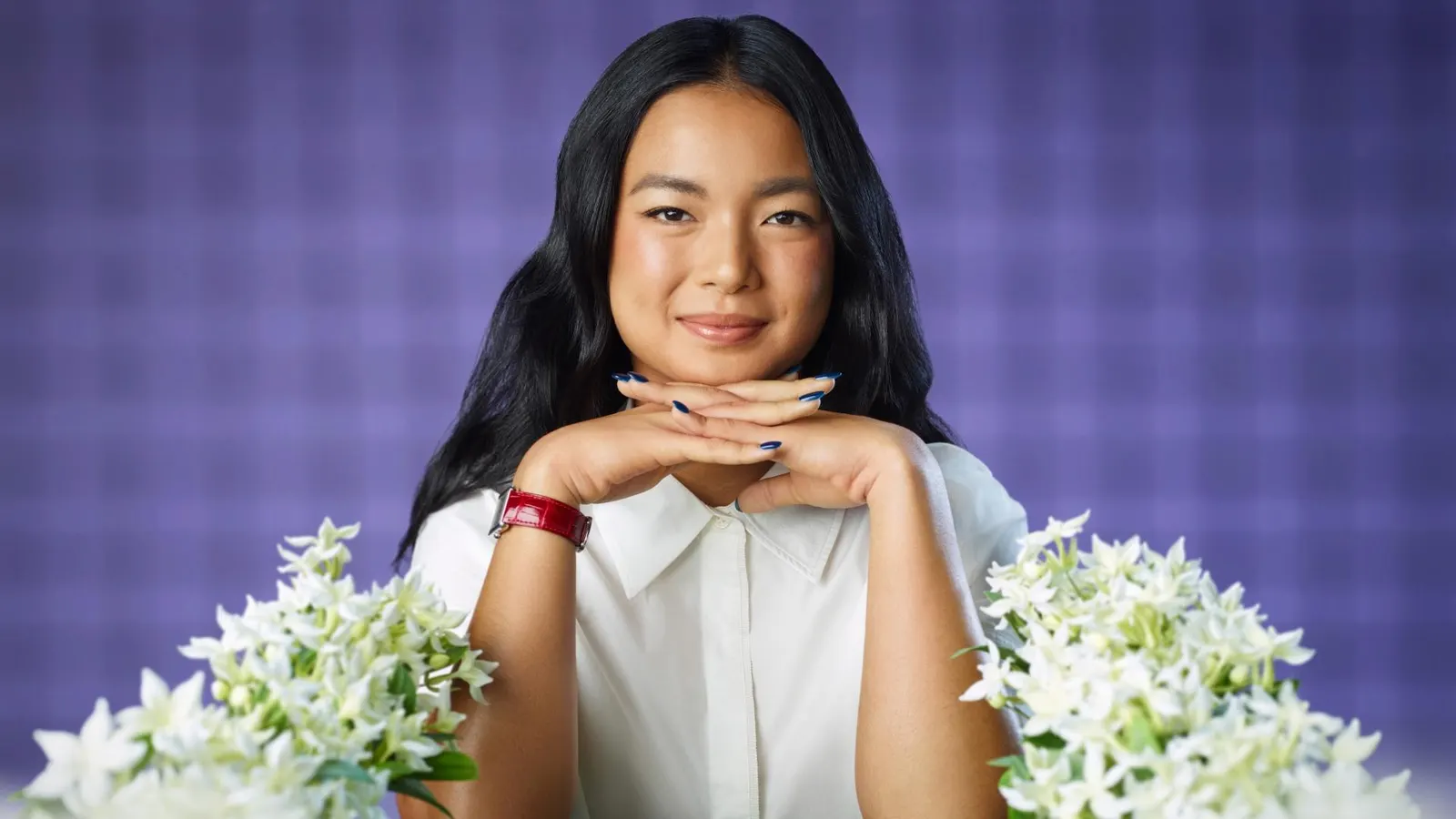
Alex Eala has flown into Ninoy Aquino International Airport in Manila countless times in her life—returning from youth tennis tournaments as a kid, flying back from the Rafael Nadal Academy in Spain as a teenager, or just coming home to the Philippines during WTA Tour’s off-season. But the 21-year-old phenom realized just how much her life had changed when she traveled there in July. A live band and thousands of fans greeted her in the terminal, and for the next week, everywhere she went was pandemonium, requiring a presidential security team to escort her to each new venue.
“You have brought such pride to the Philippines,” president Ferdinand Marcos Jr. said in a speech honoring her at Malacañang Palace in the nation’s capital. “You show the greatest, best qualities of Filipinos.”
That “Eala mania” spread this summer to North America, where thousands of Filipino fans have waved flags and cheered her on at each WTA tour stop. In Washington, D.C., where she claimed the first singles title of her young pro career last month, D.C. Open owner Mark Ein said that more than 80% of ticket requests the tournament had received were for when Eala was playing.
“I understand who looks up to me and what I represent,” Eala tells Forbes a few days before the start of the 2026 U.S. Open in New York. “I think this whole experience of being this big representation of the Philippines has really made me be self-aware, and it really makes me want to be the best version of myself.”
And more practically, she says, “I don’t think for me personally it would be beneficial to shy away from the attention I’m getting or keep it in a box or be in denial.”
After all, it’s heady stuff being a national hero. And as boxing legend Manny Pacquiao, her countryman, has understood for many decades, it pays well, too. In addition to the $1.7 million in prize money Eala has earned so far in 2026, Forbes estimates her off-court earnings have exceeded $5 million over the past 12 months (before taxes and fees to agents and managers), much of which comes from companies based in the Philippines. Given her trajectory on the court—she is currently ranked No. 18 in the world—Eala’s earning potential could be exponentially higher in the years to come.
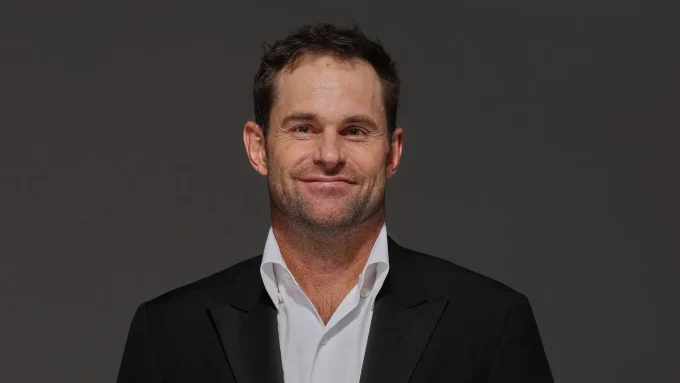
Game Changer: “She is quite literally bringing hundreds of millions of new fans to tennis,” former world No. 1 Andy Roddick says of Eala. “I’m happy it’s her because of her maturity.”
Guerin Blask for Forbes and Getty Images
“I feel very confident that by 2027, she will be the second-highest-paid female athlete in the world, behind Coco [Gauff],” says Max Eisenbud, head of client representation at WME Sports and its subsidiary IMG Tennis, who has been at the center of similar phenomena representing players like Gauff, Maria Sharapova and Emma Raducanu. Forbes estimated Gauff earned $25 million off the court in 2025, trailed by Chinese freestyle skier Eileen Gu at $23 million and tennis player Qinwen Zheng at $21 million. (Fellow top tennis players Aryna Sabalenka and Iga Swiatek earned an estimated $15 million last year.)
Eisenbud’s IMG group began laying the foundation for Eala’s commercial success four years ago, soon after she won the 2022 U.S. Open Junior Championship to become the first Filipino player to win a Grand Slam of any kind. As a young, charismatic athlete succeeding on the world stage, Eala’s marketing appeal was obvious, so the agency dispatched agent Carter Lin to the Philippines to meet with brands there. “The first few years was going and educating them about the world of tennis,” Lin says. “They were so used to Manny Pacquiao, and a lot of [his deals] were based around a big moment.”
Eala’s agents, though, weren’t interested in one-off campaigns. They wanted long-term partners, and pitched companies on the global, yearlong exposure of the four Grand Slams. There was some “sticker shock” about the size of the fees, Eisenbud says, but any hesitation melted away after the 2025 Miami Open, when Eala defeated top-ten opponents Madison Keys, Paula Badosa and Swiatek during a run to the finals that electrified the tennis media. In the sports-mad Philippines, tennis quickly became the country’s new obsession.
“She is quite literally bringing hundreds of millions of new fans to tennis,” says former world No. 1 Andy Roddick, who interviewed Eala on his podcast Served in March. “Most of the time you would worry about someone that young dealing with all of that. I’m happy it’s her because of her maturity and ability to know it, not ignoring it but also knowing that that doesn’t make your forehand go in the court.”
The World’s Highest-Paid Tennis Players 2026
View Full List
And rising from No. 140 before Miami in 2025 to the top 20 heading into this year’s U.S. Open is important, because the majority of tennis players earn most of their off-court income through an apparel deal that ties compensation to year-end ranking and performance bonuses. Eala has had a longstanding relationship with Nike, which produced a special gift for her ahead of Wimbledon last year—a hair tie shaped like a sampaguita, the Philippine national flower, with an inspirational message in Tagalog: “Kung may tinanim, may aanihin.” (Every dream begins as a seed.) This year, Nike added a sampaguita T-shirt to its Eala merchandise, and it unveiled a new U.S. Open kit last week.
Eala’s paydays are more certain because Philippine brands such as Globe Telecom, where her mother was recently chief financial officer, and Bank of the Philippines Islands (BPI) re-upped new four-year deals at the start of 2026 for more than $1 million guaranteed annually to be featured in patches on the sleeves or chest of her Nike kit. That’s the starting price for any brands looking to work with her now, says Eisenbud, who also believes Eala is one of the very rare athletes who could one day have a very large licensing business, earning a percentage of each purchase for products that bear her name or image.
The products don’t even necessarily need to be tennis related. When she arrived in New York this week ahead of the Open, Eala, who clearly loves fashion, was seen wearing several luxury items, including a Chanel bag, an Hermès bracelet and a Cartier Tank watch.
“It’s safe to say, in the Philippines, she just needs to be breathing,” Eisenbud says. “She never needs to win another tennis match; she’s crazy famous there.”
Born to two business executives with no tennis experience, just outside Manila in Quezon City, a place with no tennis tradition, Eala was introduced to the sport at age 4 by her grandfather, who taught himself to play. She grew up playing alongside her older brother on a court made of crushed seashells, sand and a little clay, eventually showing enough promise to be invited to move into the Rafael Nadal Academy at ages 13 and 16, respectively. Her brother, Miko, would go on to play at Penn State, just as Eala broke into the professional ranks.
Adjusting to her newfound fame hasn’t always been easy, Eala says. Yes, the money allows her to treat her friends to nice dinners, and her coaches and trainers to business-class flights between tournaments, but mentally, she convinces herself that the fan support at every event “doesn’t have much to be with me,” as ridiculous as that sounds.
“When I first started blowing up at this scale, I didn’t really want to accept I was becoming famous because I didn’t want it to get into my head; I didn’t want it to impact my tennis or my routine,” she says. “But I’ve had to accept that it was part of my job, it’s part of my life, and it’s a part of my experience.”
Having a heavily centralized business portfolio also helps with that focus. Eala can handle her brand obligations in bulk, with weeklong trips twice a year—once in the summer, once in the winter—to the Philippines, where she has a dedicated day for each sponsor for content or promotion. Although that week can be a gantlet, especially when shadowed by boisterous crowds this summer, the schedule does free her up from having to participate in brand activations during pre-tournament preparations. American players, by contrast, typically have jam-packed schedules the week of the U.S. Open.
And given the large Filipino community in New York—particularly Queens—Eala can expect to be supported as much as or more than any American tennis star in Flushing Meadows. Her matches will likely be played in the tournament’s biggest stadiums, and even her training time—when Eala says she likes to “get vulnerable” and work on her weaknesses—has become one more stage she must perform on. In addition to the fans crowded around the court to watch, livestreams of her practice sessions have received nearly 100,000 views on YouTube—for comparison, other top players are lucky to receive 10,000 views.
“One thing I’ve had to get used to is that basically everything I do is under the public eye,” she says. “It’s not that I don’t have privacy, but it’s a little bit less now.”
That will be especially true at the Open, where the crowds can be rowdy and major sponsors populate the luxury boxes. If Eala makes a deep run, she could quickly evolve from a national hero into an international superstar.
Even more important, it would get her closer to achieving the goal she first dreamed up while learning to play tennis on a converted basketball court in the Philippines that she imagined to be Centre Court at Wimbledon or Arthur Ashe Stadium at the U.S. Open—to become world No. 1.
“It’s really surreal to actually be living it out because I’ve been imagining it for so long,” Eala says. “The more I experience all these tournaments, the more I realize how difficult it is to achieve these goals, and the better I get, the steeper the mountain is. So I’m just trying, day by day, to climb that mountain.”









Leave a comment