


Topline
Some Republicans praised Army Secretary Dan Driscoll, while at least one high-profile GOP lawmaker expressed disappointment in his resignation, which adds to the leadership vacuum in the Army from a string of resignations and firings under Defense Secretary Pete Hegseth.
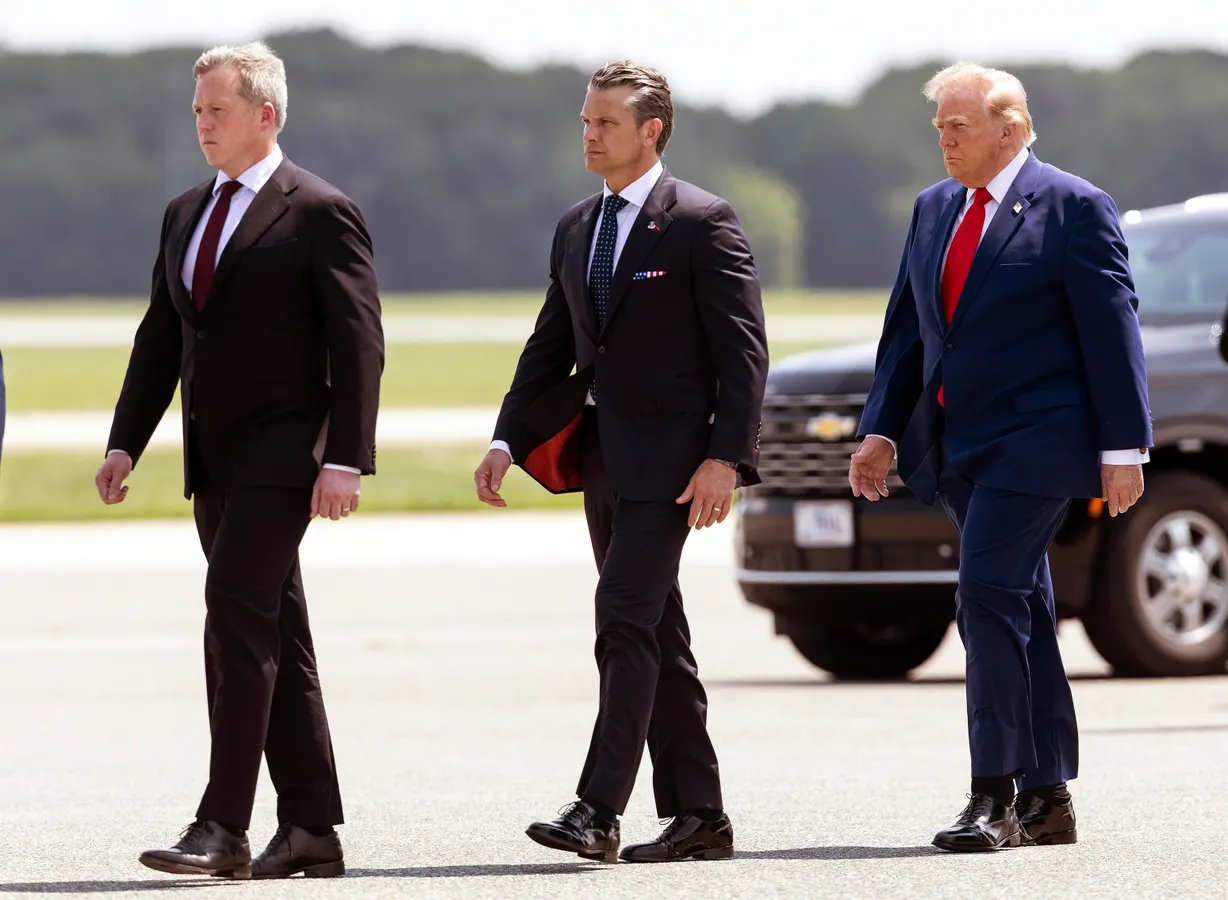
DOVER, DELAWARE – JULY 22: (L-R) U.S. Secretary of the Army Dan Driscoll, Secretary of War Pete Hegseth and U.S. President Donald Trump attend a dignified transfer at Dover Air Force Base for military casualties of the war with Iran on July 22, 2026 in Dover, Delaware. (Photo by Kevin Dietsch/Getty Images)
Getty Images
Key Facts
Sen. Mike Rounds, R-S.D., told reporters on Tuesday—after news broke a day earlier that Driscoll submitted his widely expected resignation to President Donald Trump—he’s “disappointed” Driscoll left the administration.
Rounds said he is “hearing the same rumors everybody else is that he was frustrated with some of his top generals being released,” adding that senators will be asking “questions . . . in terms of, where is the leadership at” when they return from recess.
Driscoll, who reportedly resigned amid tension with Hegseth, is among several other Army leaders who have left recently, including Army Chief of Staff Gen. Randy George in April and Army Gen. Christopher Donahue, who led forces in Europe, in June, along with at least five other senior Army officers who have been fired or forced out by Hegseth, The New York Times reported previously.
Driscoll reportedly expressed concerns directly to Trump last week about the leadership gap, and Trump said he was surprised and concerned about the cuts, The Atlantic reported Monday, citing unnamed sources familiar with the conversation.
Most other Republicans who have spoken publicly of Driscoll’s departure have praised him, but stopped short of criticizing Hegseth or expressing concerns about the loss of top military brass.
Rep. Austin Scott, R-Ga., told Punchbowl, “he’s a good man that did a good job,” adding, “I hate to see him go, but I can’t say I’m surprised.”
Rep. Steve Womack, R-Ark., called Driscoll a “transformative leader” and said he looks forward “to continuing to work with Pentagon leadership to ensure our Army is ready to fight,” while Rep. Pat Harrigan, R-N.C., said Driscoll’s “leadership made the Army stronger, and the impact of his work will be felt long after his time as secretary.”
Why did Driscoll resign?
Driscoll and Hegseth reportedly clashed over some of Hegseth’s personnel decisions, including his removal of two Black men and two women from a list of potential promotions to one-star generals. Driscoll reportedly refused to remove the names, The New York Times reported in March. In February, Hegseth forced the resignation of Col. David Butler, a longtime Army spokesperson and one of Driscoll’s senior advisers, multiple outlets reported. When Hegseth fired George in April, Driscoll told lawmakers in a hearing when asked about his dismissal, “I, too, love Gen. George.” Hegseth also appeared to have an issue with Driscoll’s level of responsibility, The Washington Post reported in February. Driscoll was a leader in discussions to end the Russia-Ukraine war and served as interim director of the Bureau of Alcohol, Tobacco, Firearms and Explosives. Hegseth allegedly lashed out at Driscoll and told him to stay in his lane shortly after Trump took office last year, when Driscoll suggested he could arrange a visit between his close friend and former Yale Law School colleague, Vice President JD Vance, and Trump, with soldiers about reforming the Army, according to the The Wall Street Journal, citing unnamed sources. After Hegseth participated in a compromised Signal chat that was later leaked to the media, Hegseth worried Trump could replace him with Driscoll, according to the Journal.
Tangent
White House spokesperson Anna Kelly lauded Driscoll in a statement to multiple outlets upon news of his resignation. She said he “has been highly effective in advancing President Trump’s agenda to Make America Strong Again at the Department of the Army by providing outstanding leadership during historic military operations, restoring an emphasis on readiness and lethality, assisting with negotiations between Russia and Ukraine, and more,” adding, “The United States Army is more powerful than ever thanks to his work alongside the Commander-in-Chief and Secretary of War.”
Key Background
The Army has fewer generals than at any point in recent history, according to The Atlantic, and the number of four-star generals on active duty is down to five, from 10, when Hegseth took office, The New York Times reported in April. Hegseth replaced George with Gen. Chris LaNeve. The Trump administration has said it intends to formally nominate LaNeve for the position permanently, but has yet to do so, amid opposition from at least one Republican on the Senate Armed Services Committee, Sen. Joni Ernst, R-Iowa. LaNeve is serving as both acting chief of staff and vice chief of staff, replacing Gen. James Mingus in the latter role after Hegseth forced out Mingus last year.
further reading
Trump Strongly Denies Feud With Hegseth—Amid Backlash Over Munitions (Forbes)
Pete Hegseth Denies Report He’s Running For President In 2028: ‘100% False’ (Forbes)










Leave a comment