


Topline
The Department of Justice has expanded an antitrust investigation into the nation’s meatpacking industry by investigating beef prices at eight of the nation’s largest grocery retailers, according to the agency’s X account.
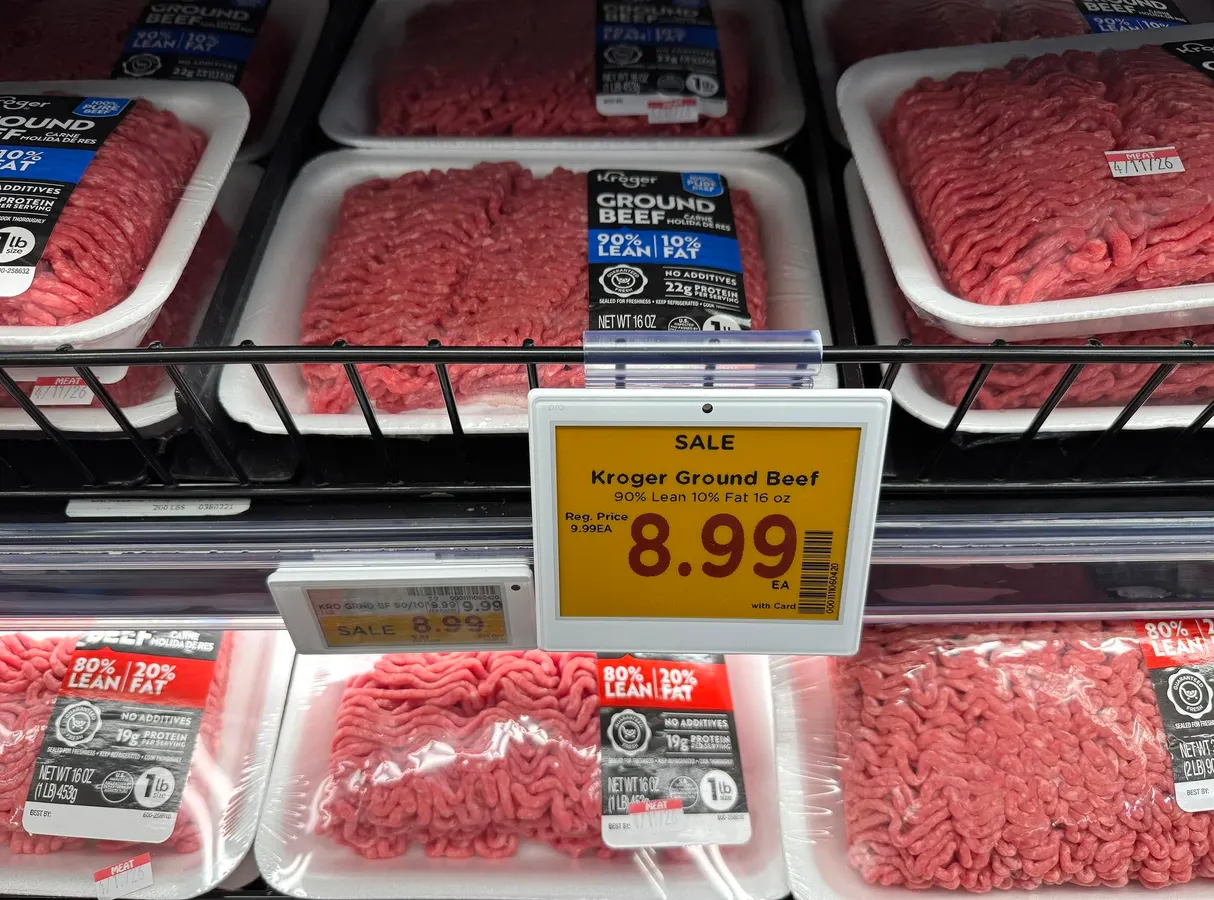
LOS ANGELES, CALIFORNIA – APRIL 06: Packages of ground beef are displayed in a grocery store shelf on April 06, 2026 in Los Angeles, California. Amid persistently high food inflation, the price of a pound of ground beef has risen to between roughly $6.49 and $8.96, often exceeding the federal minimum wage of $7.25 an hour, as supply shortages, drought, and disease affecting cattle herds drive costs higher while wages remain unchanged since 2009. (Photo by Justin Sullivan/Getty Images)
Getty Images
Key Facts
In July, Associate Attorney General Stanley Woodward sent letters to Kroger, Publix, Walmart, Albertsons, Aldi, Ahold Delhaize, Costco and Amazon requesting information to support the DOJ’s investigation into recent increases in the retail price of beef.
Specifically, the DOJ asked for each company’s beef pricing strategies, margins and costs, including how they have changed from 2020 to 2026, along with detailed information on wholesale arrangements with meatpacking companies and a broader explanation of trends and analysis across the retail and wholesale beef markets.
This action follows the Trump Administration’s request to examine potential price-fixing, collusion or other antitrust violations in the highly concentrated meatpacking industry, where four packers control roughly 85% of U.S. beef processing.
Surprising fact
The average price of ground beef has risen from $3.95 per pound in December 2020 to $6.89 this July, according to the Bureau of Labor Statistics. In July, the 12-month inflation rate for uncooked beef was 9.4%.
KEy Background
In a May press conference, the DOJ announced it was investigating the meatpacking industry dominated by four companies: Cargill, Tyson Foods and primarily Brazilian-owned JBS and National Beef. Together these firms control 70 subsidiary companies and 85% of the processing market. With so much power concentrated in the industry, the agency warned that it presents opportunities for anti-competitive behavior, threatens food security and limits cattle producers’ ability to get their product to market at a time when the U.S. cattle herd size is at its lowest level since the 1950s. “These companies now have an unprecedented ability to wield market power and to influence prices paid for cattle, definitely more so than if we had greater competition,” said Brooke Rollins, Secretary of Agriculture, at the conference.
Expanding PRobe Into Retail Supply Chain
The DOJ is now going deeper into the beef supply chain to examine how wholesale beef is priced at retail. The central question in this top-down probe is whether today’s high beef prices are primarily a function of normal supply-and-demand pressures or from potentially anticompetitive business practices by the meatpacking industry and retailers. According to Reuters, none of the retailers have responded to a request for comment.
Tangent
In January, Tyson Foods agreed to pay $82.5 million to settle a proposed class-action suit brought by grocery stores, food distributors and other parties that accused it of conspiring to inflate U.S. beef prices by restricting supply.
Further Reading
US Justice Department Expands Beef Price Probe To Eight Retailers (Reuters)
DOJ Expands Beef Price Investigation To Walmart, Costco, Amazon And Other Major Retailers (Fox Business)
DOJ Probes Soaring Beef Prices At Eight Major Stores Including Walmart (Newsweek)
Tyson Foods Settles U.S. Beef-Pricing Lawsuit for $82.5 Million (Reuters)








Leave a comment