


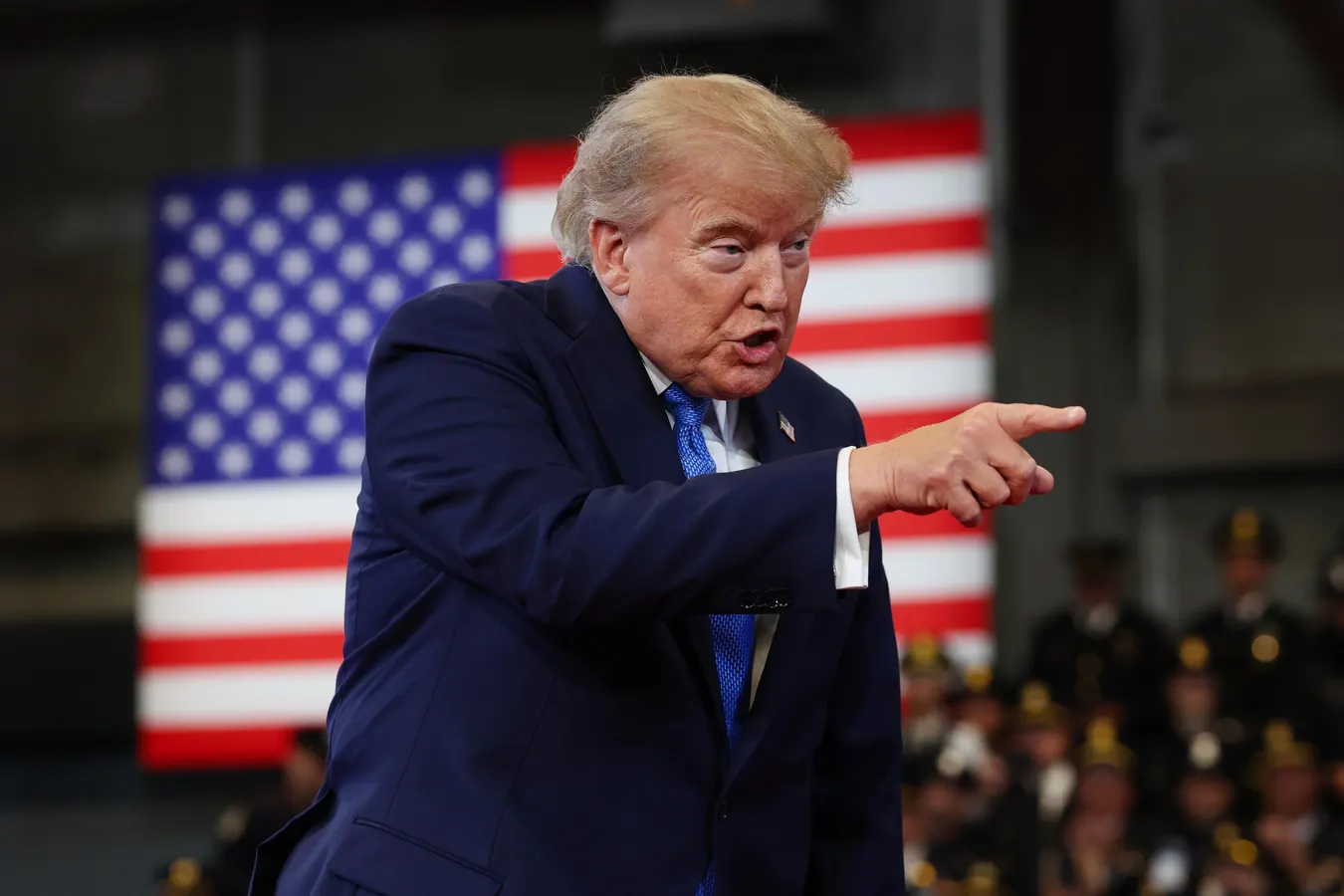

U.S. President Donald Trump. (Photo by Samuel Corum/Getty Images)
Getty Images
The Trump administration has taken exception to the UK’s plans to increase the prominence of ‘trusted news sources’ on YouTube and other digital platforms.
A U.K. government Green Paper published earlier this summer, ‘Watch this Space: A new strategic direction for UK media’, calls for the platforms to prioritize content from public service media including the BBC, ITV and Channel 4. The aim is to limit the amount of misinformation online, and promote more trustworthy sources.
“Today, most people get their news on social media and video-sharing platforms, yet unlike on traditional linear TV, there are no rules and no transparency governing how platforms curate and rank the content that appears in their feeds. The result is a media environment where trust is eroding and misinformation is spreading unchecked,” said Azzurra Moores, associate director (information ecosystems), at the Demos think-tank.
“Extending prominence requirements to social media platforms will be a critical step towards strengthening our information environment and building democratic resilience.”
However, with Donald Trump already not the BBC’s biggest fan, the White House has entered the debate via a statement from the U.S. embassy in London, with a submission to the public consultation on the plans.
It has two main concerns: how exactly trusted news sources will be identified, and the fact that platforms would be required to alter their algorithmic systems to make those sources more prominent.
“A framework that empowers governments to influence which sources receive preferential visibility risks becoming a mechanism for viewpoint-based censorship. Such a framework also risks disincentivizing viewership for or reducing the reach of independent journalists who lack the credentials deemed ‘trustworthy’ by the government, in effect undermining independent journalists,” it said.
“If the UK compels platforms to boost government-preferred media in algorithmic feeds, the effect on a government-disfavored speaker or media source’s reach is not meaningfully different than outright removal. The U.S. government would likely consider such a measure as facilitating censorship.”
Most of the platforms concerned are U.S.-headquartered companies, and any changes, said the embassy, could affect not just what U.K. users see, but could conceivably also have a global impact.
Meanwhile, the White House also has big concerns over fair competition, market access, and trade treatment for American companies, independent media and content creators.
“Regulations that impose disproportionate compliance burdens on American companies relative to competitors, or that apply unevenly across similar services, will always raise our concern,” it said.
It wants safeguards to be put in place to make sure that outlets can appeal against exclusion, and to make sure that government-endorsed source rankings aren’t influenced by government biases and preferences, and don’t disadvantage independent or minority-viewpoint journalism.
This is by no means the first time that the U.S. government has objected to attempts in the U.K. and EU to restrict the activities of U.S. tech giants. It’s especially concerned about the Digital Services Act, aimed at regulating online platforms and strengthening user rights.
And the BBC is a particular bugbear for Trump, whose attempt to sue the broadcaster for defamation has been damaged by the BBC’s request for his financial records. In an attempt to keep his financial situation secret, he’s now no longer claiming that his brands and businesses have been harmed.













Leave a comment