


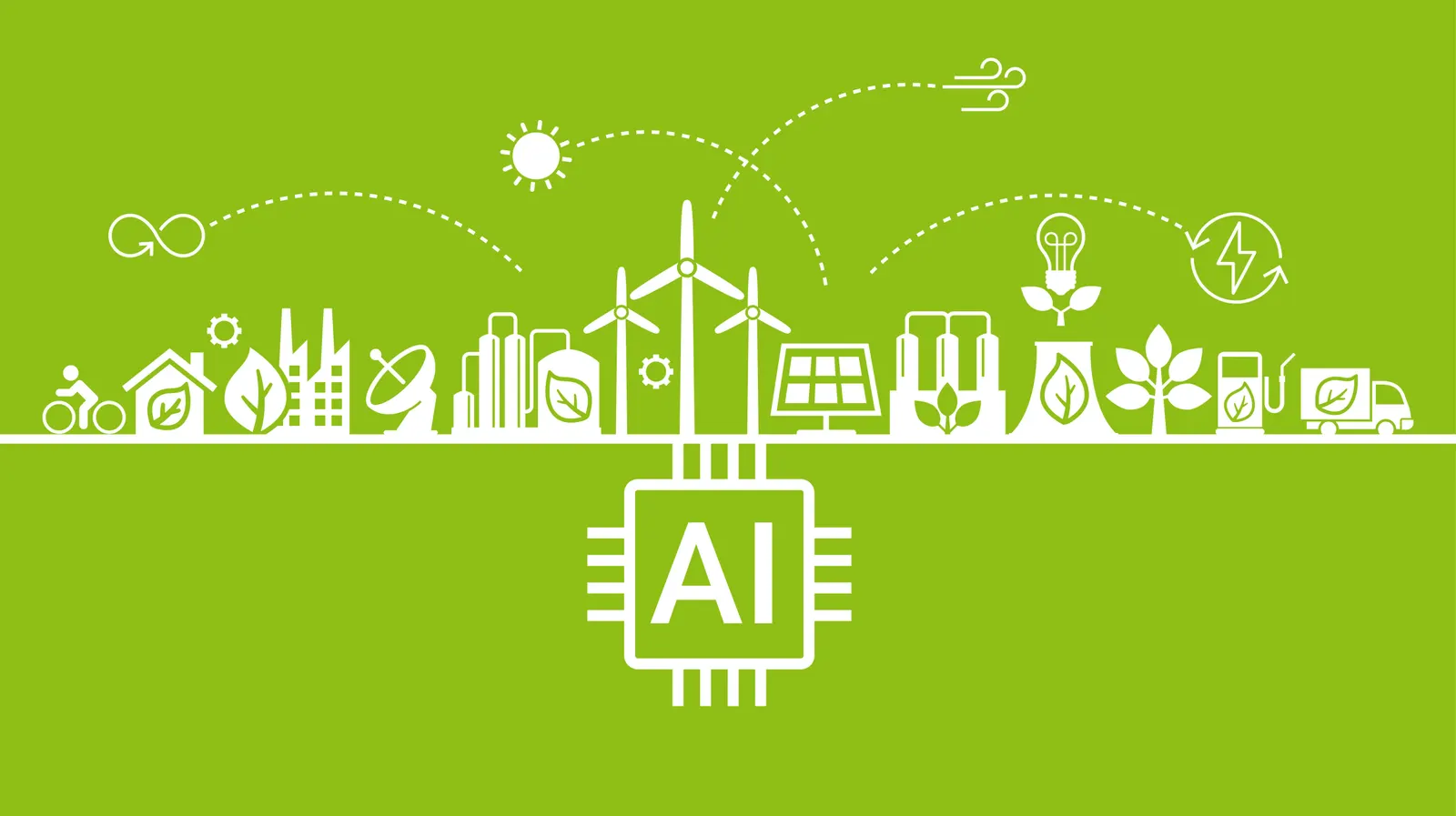

AI is powered by Energy, and AI powers Energy Technologies.
getty
A future to beware of has arrived in the Netherlands, where I grew up. Its excellent wind-power conditions have attracted many hyperscalers and data-center companies. The result is scarcity of electricity supply.
As of December 2025, the waiting list for a new grid connection counted roughly 15,000 requests. Most are for new houses and small businesses; several hundred come from large industrial users. The average wait time for small consumers is 45 weeks, while upward price pressure is likely to make energy bills much higher for families.
This same challenge is arising elsewhere in the world. The global economy is entering an age where growth hinges on a society’s ability to generate and move electrons to where they are needed. So far, few countries have built an electricity supply chain that can meet current, let alone future, demand.
Goldman Sachs estimates US data-center power demand will more than double from 31 GW in 2025 to 66 GW in 2027. Yet it expects only about 50% to 60% of the data-center capacity scheduled over the next two years to arrive on time.
AI is competing with transportation, buildings and industry for electrons. Robotics alone could consume 363 TWh annually by 2035, according to Wood Mackenzie, versus 78 TWh today. And while AI data centers dominate the headlines about unmet demand, nearly 80% of additional electricity demand through 2030 is expected to come from emerging economies, says the International Energy Agency.
Our energy system’s vulnerability to climate change and geopolitics makes the gap between supply and demand worse. The deadly glacial collapse in Nepal, attributed to global warming, damaged 12 hydropower plants and knocked out more than 10% of the country’s generating capacity. In Romania, drought on the Danube forced the Cernavodă nuclear plant to take offline both reactors, which would normally provide 20% of Romania’s electricity. Meanwhile, governments at war have tried to disrupt maritime chokepoints, fossil fuel pipelines and subsea power cables to raise the economic and political costs for their opponents.
We need vastly more electricity, and quickly. We need it to be clean, affordable and resilient against climate and geopolitical risks. Here are four pathways to accomplish this.
1. Do More with Existing Supply
Traditionally, utilities have been obsessed with reliability. Their priority is security of supply, followed by security of supply, followed by more security of supply, resulting in overcapicity. Most AI companies are obsessed with maximizing intelligence, efficiency be damned. This mismatch in priorities is a problem. For the AI era, we need a newfound obsession with producing the most intelligence per watt.
In data centers, there are opportunities for better cooling, smarter workload management and improved materials as well as power-conversion chips that can reduce electricity use and waste heat. I’ve seen this firsthand through GaN Systems, formerly a portfolio company of my firm, Chrysalix, and now part of Infineon. Its power transistors can make the conversion of electricity significantly more efficient.
The culture of AI must change as well. Almost everyone wants to use the most powerful LLMs, even for tasks that smaller, more efficient models can handle equally well. It’s like the American automobile industry before the 1970s oil crises. Everyone wanted a bigger engine and more horsepower until Arab oil producers halted exports to certain countries, and lines formed at gas stations. We are running AI like a muscle car when we should be running it more like the car that oil shocks popularized: the unsexy but efficient Honda Civic.
Similarly, the Chinese AI company DeepSeek, constrained by US limits on chip exports, has demonstrated that frontier intelligence is possible with smarter architectures and much less energy. While most US companies chase maximum intelligence, DeepSeek and peers like MiniMax, Zhipu and Moonshot are competing in the race that matters: intelligence per watt.
2. Make Electricity Demand Flexible
More than 25 years ago, when I was the VP of Strategy for one of Canada’s largest energy companies, we had “interruptible” contracts for the natural gas we supplied to fertilizer producers. That meant we could reduce or cut off supply during times of higher demand or supply emergencies. We need that flexibility now.
Today’s electric grids aim to provide as much power as customers want, when they want it. We need grids that reverse this relationship by making demand interruptible. We should use smart grids, storage, time-of-day pricing and AI itself to shift consumption away from peak periods. Instead of just building more power plants to meet demand, we need to move demand and supply more intelligently. Often, the solution is better software, not more hardware.
Emerald AI recently raised $150M at a $1.05B valuation on that premise. It enables data centers to reduce or shift electricity consumption when grids are constrained. A data center doesn’t necessarily need every GPU running at full capacity every second. Workloads that tolerate latency can be routed across time zones and borders, from the most overburdened data centers to the least. Others can shift by minutes or hours.
3. Aim for Supply That’s OK, Not Necessarily Perfect
For the next decade, we cannot go cold turkey on fossil energy and still meet demand. We need to keep the lights on. That requires investing in everything that makes sense in the short term: more solar, wind, batteries, hydro, geothermal, natural gas and nuclear. We cannot afford to be too ideological about technology. Let economics, speed, reliability and emissions determine the mix.
Renewables will be most important because they can be deployed quickly and locally at relatively low cost. Among them, geothermal is becoming more compelling where the geology supports it. Google recently signed a 396 MW power purchase agreement with Fervo Energy for enhanced geothermal power in Utah, with an option that could eventually take the agreement close to 1 GW.
Anyone who thinks natural gas can quickly clear every bottleneck ought to look at the equipment supply chain. GE Vernova’s gas-turbine equipment backlog and slot reservations reached 116 GW in the second quarter of 2026. Orders placed today won’t be delivered until 2031. All other turbine producers have similar waiting times. Plus, every new gas plant built today represents a 30-year commitment precisely when the world has committed (with notable exceptions) to decarbonizing.
Existing nuclear plants should keep operating wherever they can do so safely and economically. Small modular reactors could eventually become an important part of the mix. To decarbonize, keep the lights on, contain residential electricity prices and power AI simultaneously, we need to be practical and adaptable.
4. Invest Now in Technology to Power the 2030s and ‘40s
Fusion is among the technologies that could relieve energy supply crunches in the two decades ahead. If commercially successful, it would ultimately provide abundant, clean and reliable electricity almost anywhere. Fusion will not solve next year’s grid congestion, but it could expand supply between 2035 and 2045, when global electrification enters its most demanding phase.
AI is often framed as a winner-takes-all race between the West and China because the economic and security implications are so immense. Fusion energy needs to be treated with the same urgency.
Although China has no shortage of electricity, it has made fusion a pillar technology in its plans to become energy independent. It already dominates in solar panels, batteries and electric vehicles. Fusion is the logical next step for fortifying China’s energy system against foreign disruptions.
The geopolitical consequences of China winning the fusion race would be enormous. Western governments therefore need to act accordingly.
Watts Will Define Energy Superpowers
The scramble to build and power AI data centers is an early warning for the global economy. The biggest companies in the world have placed multitrillion-dollar bets on AI and robotics and understand that without electricity, they’re in trouble. Their methods of securing supply may work at the expense of consumers and smaller businesses, as the Dutch have learned.
Countries that pursue the four pathways above will reduce their energy dependencies and bolster supply chains while generating more watts locally. They will have a better chance for an energy transition to sustainable power at reasonable prices. In this process, AI may help curb its own energy woes by coding new grid management software, discovering new battery chemistries and perhaps accelerating fusion development.
For existing energy powers including Canada, my home for over 30 years, these four pathways offer a strategy to become a future energy superpower. The key is not merely to export more energy but to use that abundance locally to build and import the industries of the future. Watts and intelligence per watt will determine the outcome of the AI race and much more.
















Leave a comment