


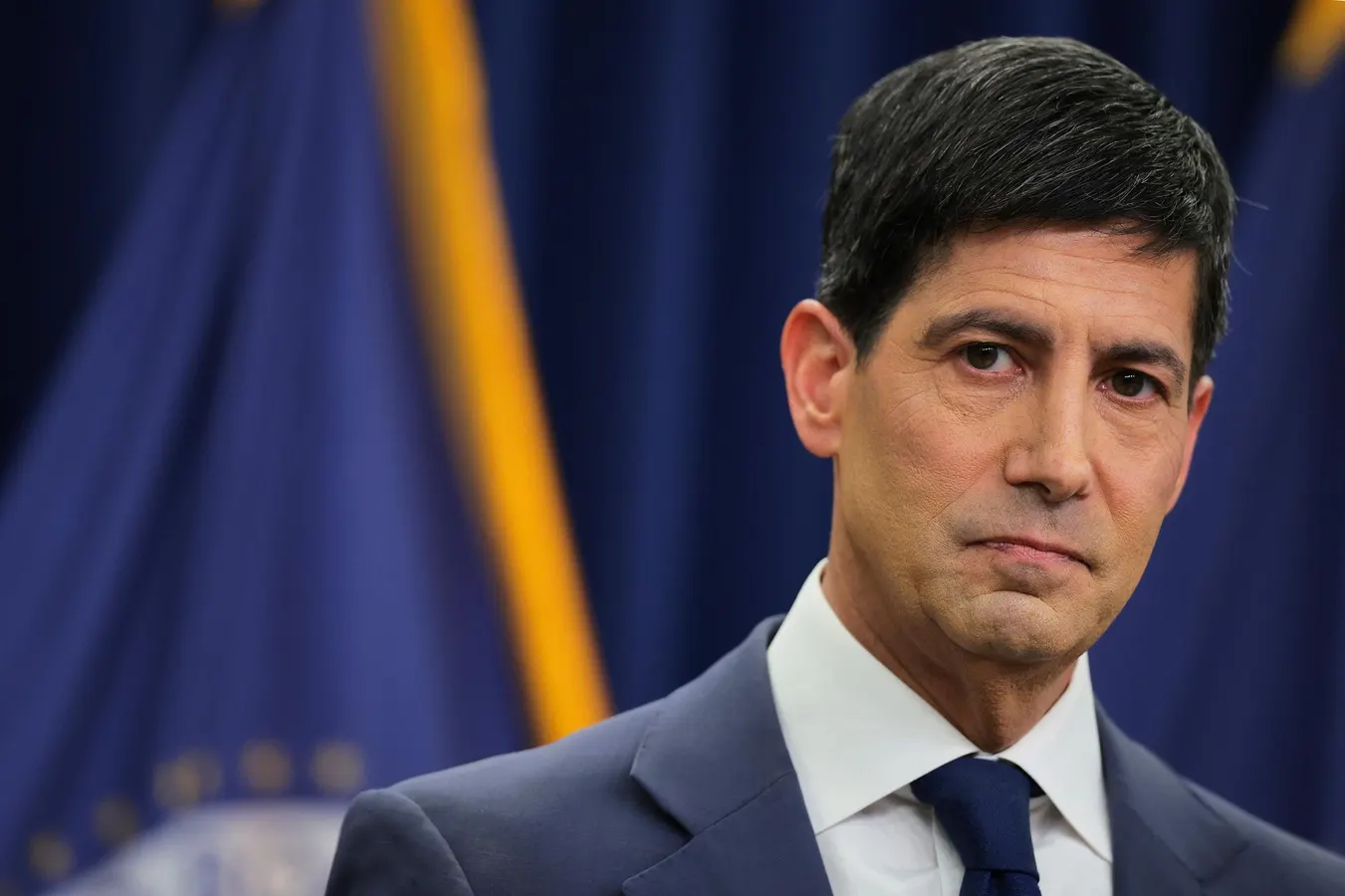

WASHINGTON, DC – JUNE 17: Federal Reserve Chair Kevin Warsh looks on during his first news conference since taking the helm at the central bank on June 17, 2026 in Washington, DC. Warsh was appointed by President Donald Trump after former chair Jerome Powell’s tenure ended in May. (Photo by Chip Somodevilla/Getty Images)
Getty Images
Markets are increasingly pricing in back-to-back rate hikes at the Federal Reserve’s final two meetings of 2026, signaling that policymakers may need to tighten more aggressively as inflation proves stubborn. Fixed income traders see the Oct. 28 meeting as the most likely point for the next move, which would lift the federal funds rate to 4% to 4.25% from its current 3.75% to 4% range.
If the Fed does not raise rates in October, markets see a hike on Dec. 9 as almost certain. But, for now, markets believe that hikes are most likely to happen at both meetings according to the CME FedWatch Tool. That also raises the prospect that a sequence of hikes could extend into early 2027, but that’s not the markets’ current base case.
Upcoming Policy Questions
Given the recent statements from Fed governors, it appears that the question on the mind of policymakers is not whether rates need to rise further, but how much and how fast. Fixed income markets appear to see that too. This is potentially a shift from the projections at the FOMC’s September meeting, when most policymakers forecast a single remaining hike in 2026.
This also creates a risk for equity markets. Rising interest rates have historically been associated with a degree of equity market weakness. That’s already apparent in more interest-rate-sensitive sectors, but so far this year the S&P 500 has posted gains supported by strength in energy and tech.
Fed officials will watch upcoming inflation releases closely. Upcoming Consumer Price Index releases are scheduled for Oct. 14, Nov. 10 and Dec. 10, with the December release coming after the Fed meets.
In addition, the oil price will also be watched as a driver of underlying inflation. For now, the oil price remains elevated but a little below recent highs. If the job market were to unexpectedly weaken, that could revise the FOMC’s approach.
The FOMC is expected to raise rates at both remaining meetings of 2026, and that’s increasingly becoming fixed income markets’ expectation, but improvements in inflation data might soften that perspective. Nonetheless, more interest rate hikes are firmly expected.















Leave a comment