


Current Climate brings you the latest news about the business of sustainability every Monday. Sign up to get it in your inbox.
Welcome back to Current Climate. President Donald Trump gutted clean energy programs enacted by the Biden administration in favor of domestic fossil fuel production. That’s proved to be economically short-sighted: surging electricity demand from AI data centers, paired with fuel price spikes driven by ongoing war with Iran, has pushed domestic energy costs to record highs. It also widened China’s lead as the world’s top exporter of clean energy tech.
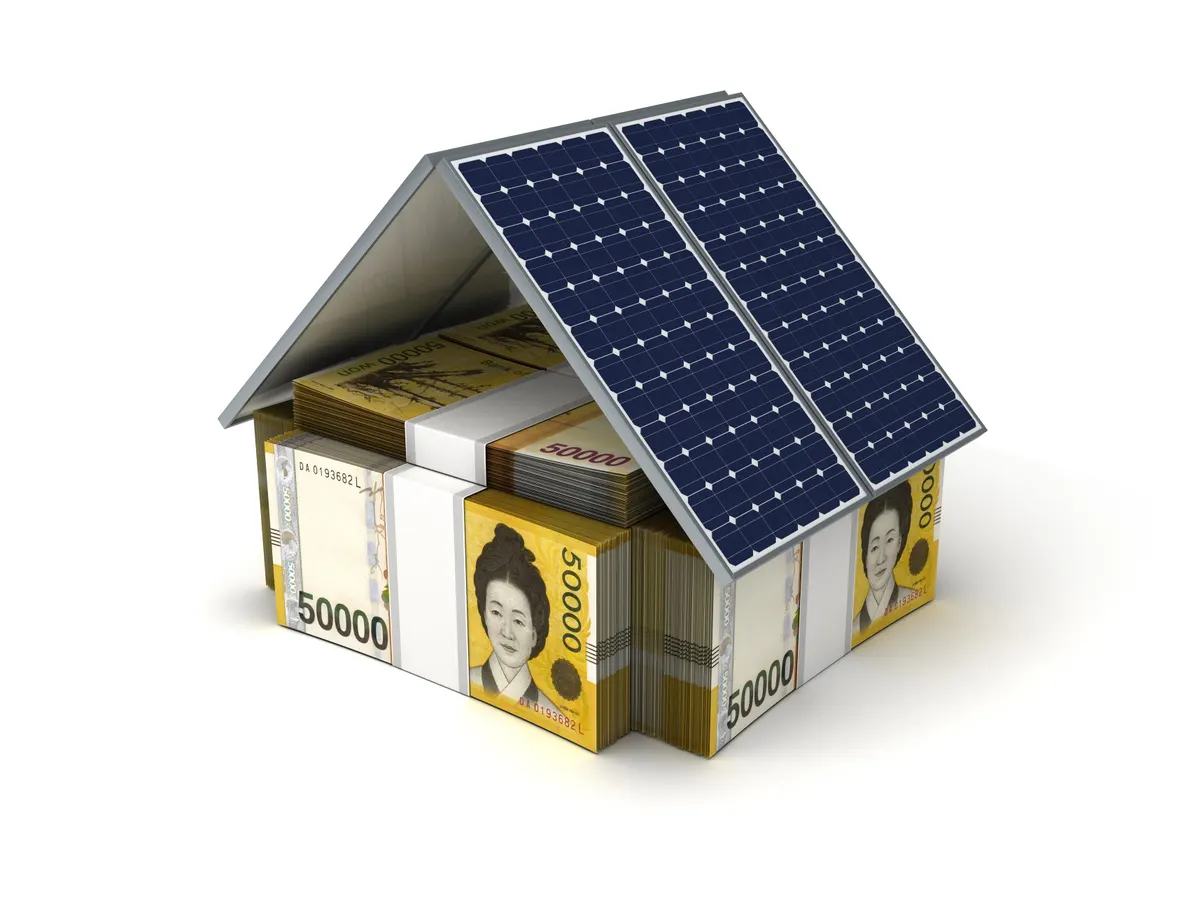
Beyond its climate benefits, carbon-free energy technology has become a compelling financial and national security hedge. That’s why South Korea just unveiled its ambitious $750 billion Korea Green Transformation Strategy (K-GX). Supported by a mix of public and private investment, the 10-year plan aims to overhaul the nation’s energy, industrial and transportation sectors to turn South Korea into a clean-tech superpower.
K-GX targets decarbonization across the country’s five dirtiest industries by 2035: steel, petrochemicals, cement, semiconductor and display manufacturing, and oil refining. The initiative also aims to challenge China’s clean-tech export dominance by scaling up production in high-growth areas, including electric vehicles, batteries, solar panels, wind turbines, small modular reactors, power grid infrastructure, power semiconductors, heat pumps, hydrogen and carbon capture technologies.
“The most important thing about K-GX is that it isn’t really a climate plan; it’s a security plan,” said Erin Sikorsky, director of the Center for Climate and Security at the Council on Strategic Risks. “Renewable energy is a core pillar of Korea’s national and economic security, not merely a climate imperative.”
In addition to boosting energy security and export revenue, South Korea also aims to position itself as a hub for AI data centers powered entirely by zero-carbon electricity.
Whether it hits every target, K-GX could prove transformational for the country’s economy and environment. And if its powerhouse manufacturers can compete with Chinese rivals in clean-tech markets, the global economy stands to benefit from cheaper, cleaner energy and transport solutions.
The Big Read
Trump’s Iran War Has A Winner: Used Electric Cars
In just over a year, the Trump administration has managed to split the U.S. electric-vehicle business into dueling stories. In showrooms, new battery models are struggling without federal help. On used lots, they are moving quickly now that we are eight months into a gas price-spiking war Trump said would take four to six weeks.
That is the awkward policy math of 2026. Washington made new EVs more expensive when it killed federal clean-vehicle credits. Then, after the start of the U.S. war with Iran, fuel got expensive enough to make a secondhand EV look less like a climate statement and more like a good way to keep household expenses down in a souring economy.
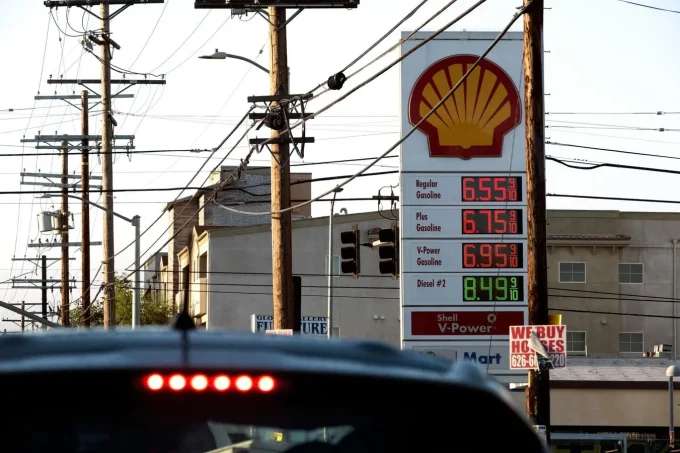
Persistently rising gasoline prices since the start of the U.S. war with Iran have lifted used electric vehicle demand for much of the year, likely hitting an all-time high of about 127,000 units in the third quarter, Cox Automotive estimates. And with a steady supply of models coming off of lease for the next two years, combined with pricey fuel, the trend isn’t likely to change anytime soon.
“The longer gasoline stays over $4 a gallon, you get a lot more consumers willing to consider and/or pull the trigger on a used EV that’s already at a pretty attractive price point relative to a non-EV at the same age, make, model kind of basis,” Jeremy Robb, Cox’s chief economist, told Forbes.
That’s particularly true in California, the country’s top EV market, where gasoline currently averages $6.36 a gallon, according to AAA. The state’s new rebate for used EVs worth $1,750 at the point of sale, added in August, may also entice more people there to ditch gas guzzlers. By contrast, fueling with electricity is less than half the cost of gasoline.
Hot Topic
Economist Sir Andrew Steer and Angeleno Group Cofounder Daniel Weiss on the compelling economics of the clean energy transition
How has the economic case for the clean energy transition changed?
Weiss: One could argue that one of the most, if not the most, significant changes in terms of the value proposition of sustainability and clean tech really is about economics. We started investing in the space in 2001, and believe me, we have plenty of tire marks on our back to prove that we were sort of early into this and we made many mistakes. But one thing that was clear is that in many circumstances, while renewables had a value proposition for the planet, it really was not cost competitive with conventional energy or fossil fuels.
That has fundamentally changed. So today, depending on whose statistics you look at, in two-thirds or north of 70% of the planet, clean energy is actually cost competitive with conventional energy. And there are many examples of this in other parts of the economy. So it’s a really interesting moment in the space for investors. There’s a convergence of factors in addition to economics, which are driving adoption of clean technologies at a rate and a scale that we’ve never seen in our 20-plus years of investing in the space.
Stern: If you think of the phases we’ve gone through, up until the year 2000, there was a genuine trade-off. Nice to do something about climate change and green energy, but actually it’s going to cost you.
Then the next phase was actually you can do both together. Your economy can be reasonably healthy, but you still need subsidies to do it. You still need help from the government. We’re now in phase three, where actually the prices have come down so much. Jimmy Carter put solar panels on the roof of the White House in 1978. Those panels today would cost 99.4% less than they cost then. And we’ve all seen the numbers just in the last 15 years: more than a 90% reduction in the cost of battery storage, so too, with renewable energy, especially solar.
We’re now at a stage where actually it’s not just that you can have the two together, but actually if you want to have healthy growth, you’re going to have to invest in a green future. It used to be the economic profession had this notion, rightly, that it’s a trade-off. Now the best economists in the world are saying, actually, something dynamic is going on here. If you take bold action to support green energy, you will get technological advances. You’ll have more efficiency because you’re using resources more carefully. You will change expectations so people will know what direction you’re going in and you will reshape them toward a new sort of industrial structure, if you like. Those four things together actually add up to a more dynamic economy.
Lord Nicholas Stern, who’s a colleague of mine at the London School of Economics, just brought out a book called The Growth Story of the 21st Century, which basically says if you study Econ 101 about growth, you need technological change. And the question is what drives technological change? Apart from AI, probably the leading technological change that’s happened is actually in the space of green technology.
Now I should say we’re still in stage three. Stage three is where we actually know what to do, but most people don’t realize that. So you have investors like Daniel who are actually doing great because they’re ahead of the curve and the Angelino Group, for example. Ten years from now, 20 years from now, everybody’s going to get it and there’ll be no doubt about it. The arc of history is obvious. Then we won’t even really be talking about green energy anymore. We’ll just be talking about energy because it makes sense.
What Else We’re Reading
A new crop of solar panels is the U.S.’s best hope of catching China (New York Times)
Climate change supercharged the warm Gulf waters fueling Hurricane Isaias (Climate Central)
Google inks a massive $4.3 billion nuclear power deal with Constellation Energy (Axios)













Leave a comment