


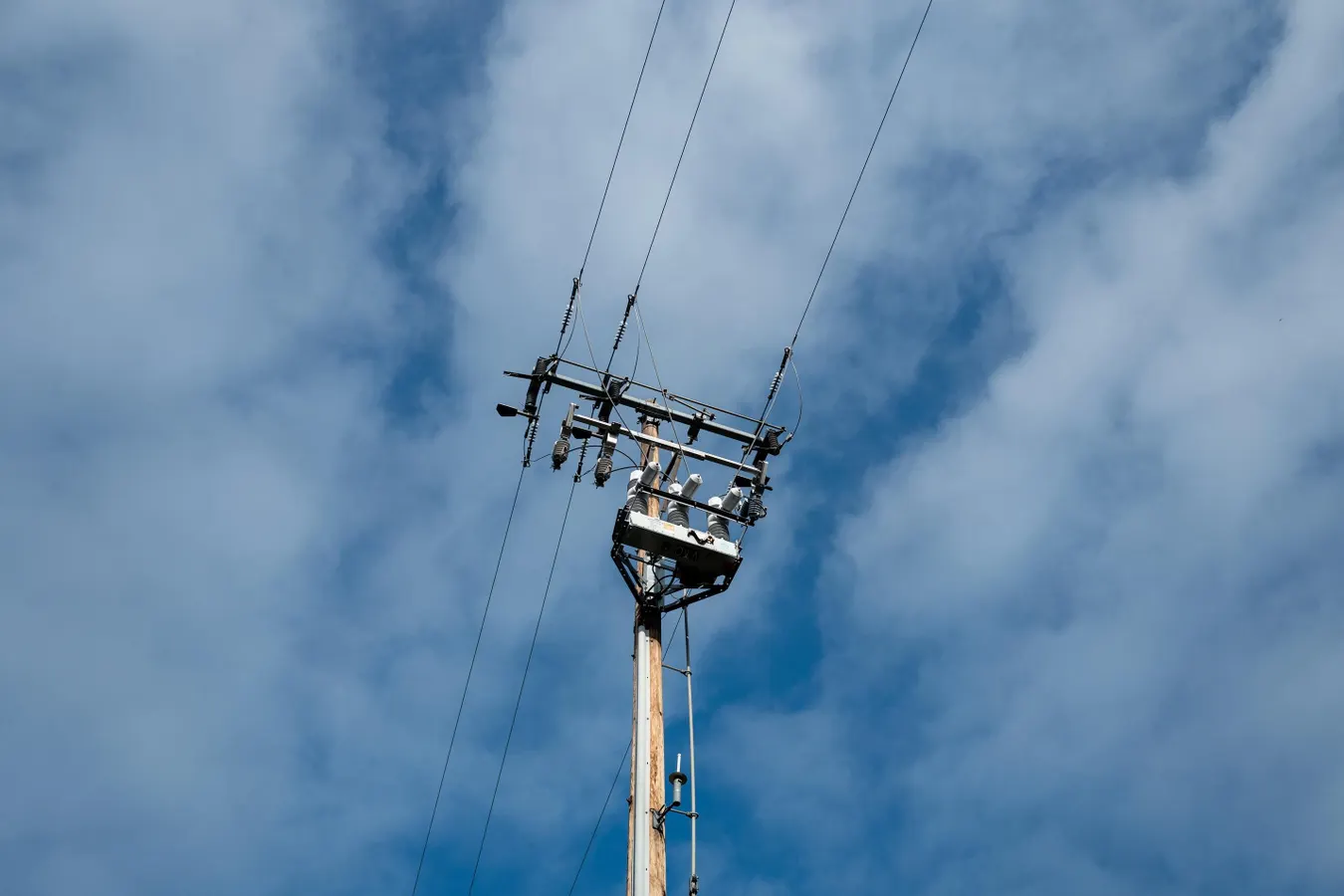

Power lines (Photo by Smith Collection/Gado/Getty Images)
Gado via Getty Images
Edison Electric Institute, the industry association for investor-owned utilities, recently released a report addressing the need for grid modernization across the U.S. While Americans are rightly focused on affordability, they also expect the lights to come on when they flip a switch, businesses to have power when they open their doors, and communities to withstand increasingly severe weather. Meeting those expectations requires continued investment in the electric grid.
Of course, Americans are struggling with affordability challenges. Families are carefully watching every dollar that goes out the door, and all costs are being scrutinized. Regrettably, it is easy for some politicians and other self-appointed “consumer advocates” to characterize grid investments as unnecessary or driven exclusively by data centers. While that may be tempting to say, it’s wrong. The report is correct – grid hardening is critical to grow America’s economy (and not just data centers) and that expansion is a national security imperative. Hard truths in the age of affordability concerns. But the truth, nonetheless. To be clear, people have warned for years that the nation’s collective investment in our electric grids has not been adequate.
In his 2017 book Modernizing America’s Electricity Infrastructure former co-chair of CAISO Mason Willrich estimated that $2 trillion was needed just to maintain the status quo as of 2017 without considering new demand or the increased reliance on wind farms and solar farms. EEI estimates that utilities will invest $239 billion just for 2026.
EEI’s report may raise the level of discourse in state capitals and Congress. To encourage investment in America’s grids, policymakers need to look beyond the pocketbooks of the residential customers who already subsidize commercial and industrial customers in most regions. That means data centers pay for their needs. This approach will include long-term take-or-pay contracts, special tariffs and prices, demand charges, and exit provisions to require that data centers, and not on American families, pay for any stranded costs. The grid operator PJM, home to the largest concentration of data centers in the country, will mandate that new data centers bring their own generation and pay for transmission connections. Even In Texas, Governor Abbott, the de facto CEO of the Texas grid, has reversed course and ordered his appointees at the Public Utility Commission of Texas and the Electric Reliability Council of Texas to impose similar pay-as-you-go requirements on new data centers.
The nation’s grid is comprised of thousands of operators of generators, transmission lines, local utilities, retailers, and suppliers who combine to operate a typically robust supply chain for electricity. Everyone notices when a supply chain breaks. The EEI report points to direct economic losses totaling billions of dollars when grid operations are interrupted. But like with all high-impact, low probability events, consumers tend to ignore “potential losses of billions” until it happens to them personally. There are many examples, and they all point to a need to invest in our electric grids.
We also need to be realistic about what we are up against – when it comes to the condition of our electric grids and asking utility customers to pay more. Rates are up across America in all electricity markets, regardless of design, and consumers are complaining. Regular weather events are exposing the true costs of decades of deferred maintenance. With coal power plants now averaging more than 55 years in age and natural gas power plants averaging more than 30 years in age, states and grid operators are confronting the need to encourage the construction of power plants just to maintain current supply capabilities. Even the impact of the Iran war is adding to electricity bills in the Northeast because LNG supplies have been cut and more oil is being burned for electricity. Add to this the projection that new electricity demand from data centers may require more triple the current electricity supply in less than 10 years, and electricity infrastructure has moved to the first page of voter concerns.
In particular, data center growth has upended the old approach that grids would and could expand to accommodate new demand as a matter of public interest. It’s not working, and we need leadership to develop actual solutions to generate more electricity which would help alleviate the root of the problem. For example, in deregulated states, we need to reconsider allowing incumbent electric utilities to build and sell power.
In conclusion, the EEI report is spot on – there needs to be a national investment in electric grids for economic and national security reasons. These investments should have happened already. But if the best time to have planted a tree was a hundred years ago, the second-best time is today. With affordability concerns at top of mind for voters and lawmakers, grid investments are challenging but needed.
















Leave a comment