


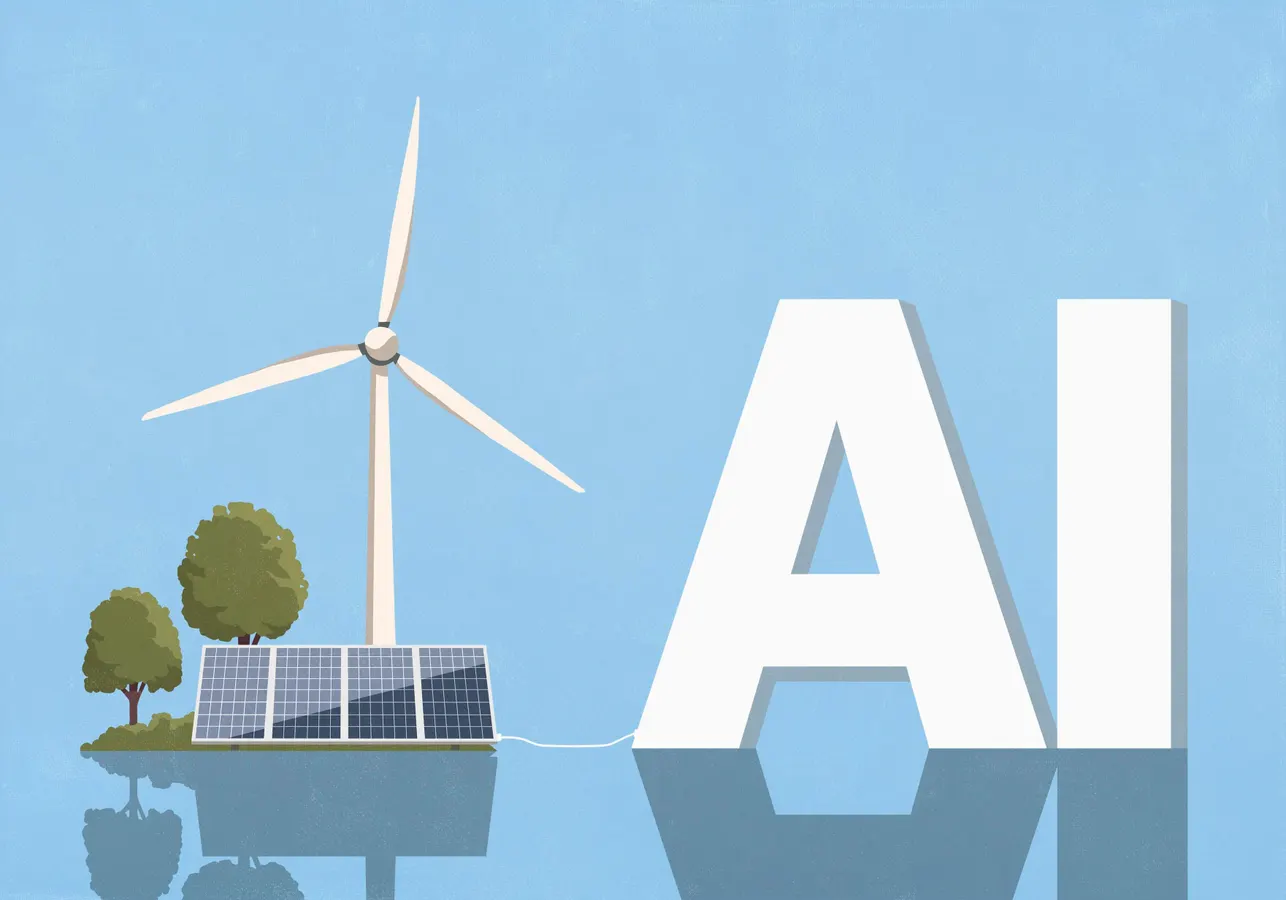

The collision between surging AI demand and legacy grid timelines is reshaping infrastructure strategy.
getty
rtificial intelligence’s next infrastructure bottleneck is electricity that arrives on schedule. Data centers can be financed and built in years. The grids meant to power them often take a decade or more to expand.
That timing mismatch is splitting countries into those that can deliver firm power at a specific site and those that cannot. AI deployment now depends on queue position, generation rights and financing as much as chips.
In June, the World Economic Forum’s Energy Transition Index 2026 showed global system performance edging forward.
Yet finance, policy certainty and infrastructure weakened for the first time in more than a decade.
Global energy investment exceeded $3.3 trillion in 2025, including $2.3 trillion for clean energy. About 75 percent of that capital was concentrated in a small group of advanced markets.
Emerging markets, where most future electricity demand will grow, face financing costs two to three times higher. Investment cannot sustain momentum when grids, regulation and financing conditions deteriorate.
The physical constraint is equally stark. More than 2,500 gigawatts of projects spanning renewables, storage and large new loads such as data centers sit in grid connection queues worldwide. The figure comes from IEA analysis and is highlighted in the WEF Index. It is an aggregate number. No authoritative global source yet isolates the precise data-center share. The clearest regional signal appears in Texas. ERCOT tracks more than 438 GW of large-load interconnection requests, nearly 90 percent from data centers. Utility Dive, Texas facing 438 GW queue and Batch Zero process, June 2026 The grid operator has introduced Batch Zero processing to separate mature projects from speculative ones. The first realistic transmission plan is not expected until fall 2027.
Hyperscalers have read the timeline mismatch. Microsoft has structured a 20-year agreement supporting the restart of a nuclear unit targeted for 2028. Google has committed to multiple small modular reactors with first power around 2030. Amazon has acquired a nuclear-adjacent campus and arranged dedicated gas-fired supply through Chevron’s Project Kilby, ramping toward 2.67 GW under a long-term structure. These are not renewable PPAs. They are direct bets on firm capacity that bypass or supplement congested public queues.
Regulators have begun closing the informal bypass routes. FERC’s June 2026 show-cause orders require grid operators to justify or revise treatment of large loads above 50 MW on study processes, cost allocation and co-location arrangements. The previous window for shifting interconnection costs or accelerating at the margin of existing rules is narrowing.
The capital response diverges by jurisdiction. In higher-risk markets, private project finance cannot clear the hurdle. Gulf sovereign wealth funds have moved from passive allocation to direct equity participation precisely to bridge that gap. PIF through HUMAIN, MGX in Abu Dhabi, QIA partnerships and Temasek/KIA anchors in global AI infrastructure vehicles are substituting patient state capital for commercial terms that would otherwise render many energy-compute projects unfinanceable.
Turkey illustrates the regulatory boundary on the other side. Private generation above exempt thresholds requires EMRA licensing. TEİAŞ holds the legal monopoly on transmission. Unlicensed surplus sales face new restrictions under June 2026 amendments. Nuclear for private tech use is not a near-term pathway. Captive power models that work in parts of the United States do not translate directly.
The resulting divide is not between clean and dirty electrons. It is between places that can assemble permitted, dispatchable megawatts inside the 24-to-48-month commercial windows AI deployment requires and places that cannot. States that keep energy planning and compute planning in separate files will find their digital ambitions rationed by queue position and capital cost. States that integrate sovereign generation rights, regulatory fast lanes and state-linked capital will set the geography of the next compute build-out.
For corporate and investor decision-makers the variable that now dominates AI infrastructure economics is not model performance or chip cost curves. It is time-to-firm-power at the specific node. Queue position, behind-the-meter or co-located generation rights, and the presence of a sovereign co-investor willing to accept strategic rather than purely financial returns have become primary diligence items. The boards that treat these as secondary assumptions will misprice both opportunity and delivery risk.
The next six to twelve months will reveal which regulatory regimes and capital structures can compress current five-to-fifteen-year grid timelines toward the windows AI deployment actually needs. Watch for expedited large-load frameworks, dedicated generation licensing reforms, and new sovereign-AI infrastructure vehicles, particularly along the Gulf-Turkey corridor and in select US states. The decisive advantage will belong to jurisdictions that deliver electrons on schedule, not to those that merely promise them at the lowest theoretical price.















Leave a comment