


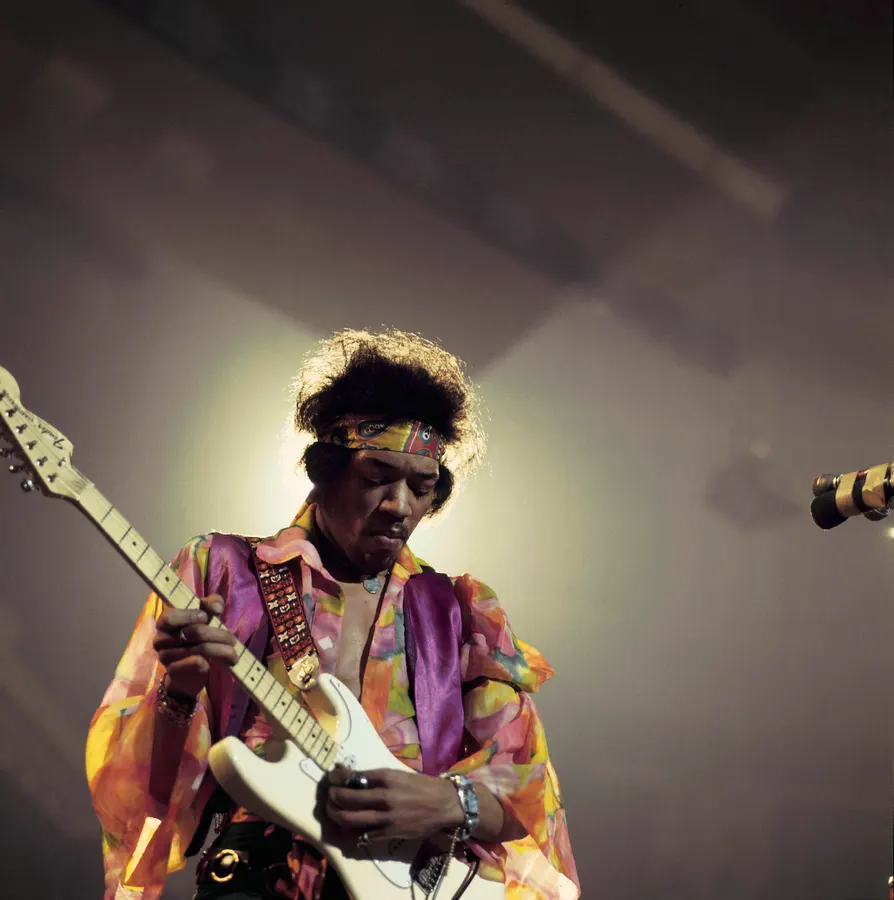

(Photo by David Redfern/Redferns)
Redferns
Iconic guitar, bass and amp maker Fender is overhauling its online presence with a new website launching today designed to leverage a shifting market for musical instruments that’s heading upscale, vintage, and online.
The previous site had been, according to interim Chief Marketing Officer Kelly Magrath, “very transactional,” built on an assumption that people came to Fender.com already knowing what they wanted, and were looking to buy directly.
“That assumption was just that, an assumption,” Magrath told me in an interview. “As the products evolve and the categories evolve, it’s about educating people about what we make and what we continue to make. We’re a brand, and have 80 years of iconic history behind this brand. Are we doing enough to tell people about the brand?”
Certainly, there’s plenty of history in the Telecaster, Jazzmaster and Stratocaster guitars, Precision and Vintera basses, and the amps that Leo Fender first started making in 1946. This year is also the Telecaster’s 75th anniversary.
The list of famous musicians known for wringing distinctive music from Fender guitars is seemingly endless: Buddy Holly, Jimi Hendrix, Keith Richards, George Harrison, Eric Clapton, Bruce Springsteen, Mark Knopfler, Kurt Cobain, Nile Rodgers and Johnny Marr, among many others.
Fender bass notables include Motown legend James Jamerson, Led Zeppelin’s John Paul Jones, Rush’s Geddy Lee, Guns‘n’Roses’ Duff McKagan, jazz star Jaco Pastorius, and Red Hot Chili Peppers’ Flea.
In recent years, Fender has built a far more complicated set of tiers for its various guitar and bass models, led by the upscale Player Series that debuted with higher price points, premium parts and finishes. Now, though, “when you look at the Player Series, it has multiple sublevels,” Magrath said. “What’s the right one for me?”
More importantly, buyers are spending more on premium instruments. One way to create value and differentiate from cheap, overseas competitors is to provide context, i.e., tell the story about the company, its products, and the music they’ve been used to make.
“We want you to be inspired by the artists who helped build the brand, and who are leading the brand,” Magrath said.
In all, the new site showcases five levels of offerings: Standard, Player, Professional, Ultra and Vintage. And, as Magrath noted, there are sub-levels within those categories. The Vintage section features guitar models built using specifications from prized earlier eras of the instrument.
“When you talk about the vintage section, there is a desire (by some consumers) to have products built off specific specs,” Magrath said. That said, the new “vintage” instruments are updated in many ways, for more reliability while capturing the same treasured sound. Most importantly, “The electronics are so much better.”
The Custom Shop, “the pinnacle of the brand,” showcases one-of-one products, something like the guitar version of a Ferrari, Lamborghini or McLaren supercar. In Fender’s case, that means a guitar that’s inspired by a Fabergé egg, or a pinball machine.
Each section features an iconic musician connected with it, such as Hendrix and the Telecaster, and more discussion of the history of those instruments. Expect a lot more audio/video on the site too, featuring performances and examples of the sounds each music makes.
“One of the things that drove me crazy (about the previous site) is that we make noise,” Magrath said. “We need noise.”
U.S. guitar sales peaked during the pandemic. More recently, acoustic sales have settled below 2019 levels, while electric guitar sales are trending up, and are well above 20919
(Graphic by David Bloom)
The transformation of Fender’s site echoes a broader set of changes in the market for musical instruments.
During the pandemic, countless locked-down people took up guitar, buying acoustic models in particular.
U.S. retail sales of electric guitars also rose, by 31.5% between 2019 and 2021, to $931 million, according to 2025 statistics compiled by trade group NAMM. A moderate decline happened in 2023 before rebounding to $840 million in 2024, still well above 2019’s $707 million.
The trends continued in 2025, according to NAMM, which released stats this summer showing overall retail value of fretted instruments and related products dropped 2% to $2.4 billion. The electric-guitar segment, however, actually rose 2%, with growth especially strong for premium guitars priced above $1,500, according to Modern Retail.
It’s a more complicated story on the music retail side. One major chain, Sam Ash, went out of business, closing 42 stores amid the depredations of the pandemic. Guitar Center, another major chain, filed Chapter 11 bankruptcy, closed some outlets, but has since emerged strongly and still operates around 300 stores nationwide.
Even as online sales grow in importance, stores remain a crucial part of Fender’s strategy, Magrath said.
“I think the experiential side of the business is a crucial element,” Magrath said, because guitar players want to hold the instrument, hear first-hand the sounds they can make, and understand what they’re getting for their money. That’s particularly important with more premium instruments.
Overall, according to NAMM data, U.S. sales of music products have been slightly better than flat since the post-pandemic drawback, at around $8.3 billion. The small amount of growth came mostly from price hikes, as store count slipped slightly among the 200 biggest retailers, according to the Music Trades trade publication.
Online sales are big too, as seen by Indiana-based online site Sweetwater, which reported a record $1.86 billion in 2025, from 1.7 million consumers (including me). And that’s important to Fender as it tries to encourage more upscale purchases, continue relationships with pro players, and prime the pump by engaging with and educating newcomers.
“I think as a brand we can’t ignore any of those categories” of buyers, Magrath said. “We’re constantly talking to all three. Even if you’re a 20-year musician, there’s still technology and evolution that’s going to help you be a better player.”















Leave a comment