


Topline
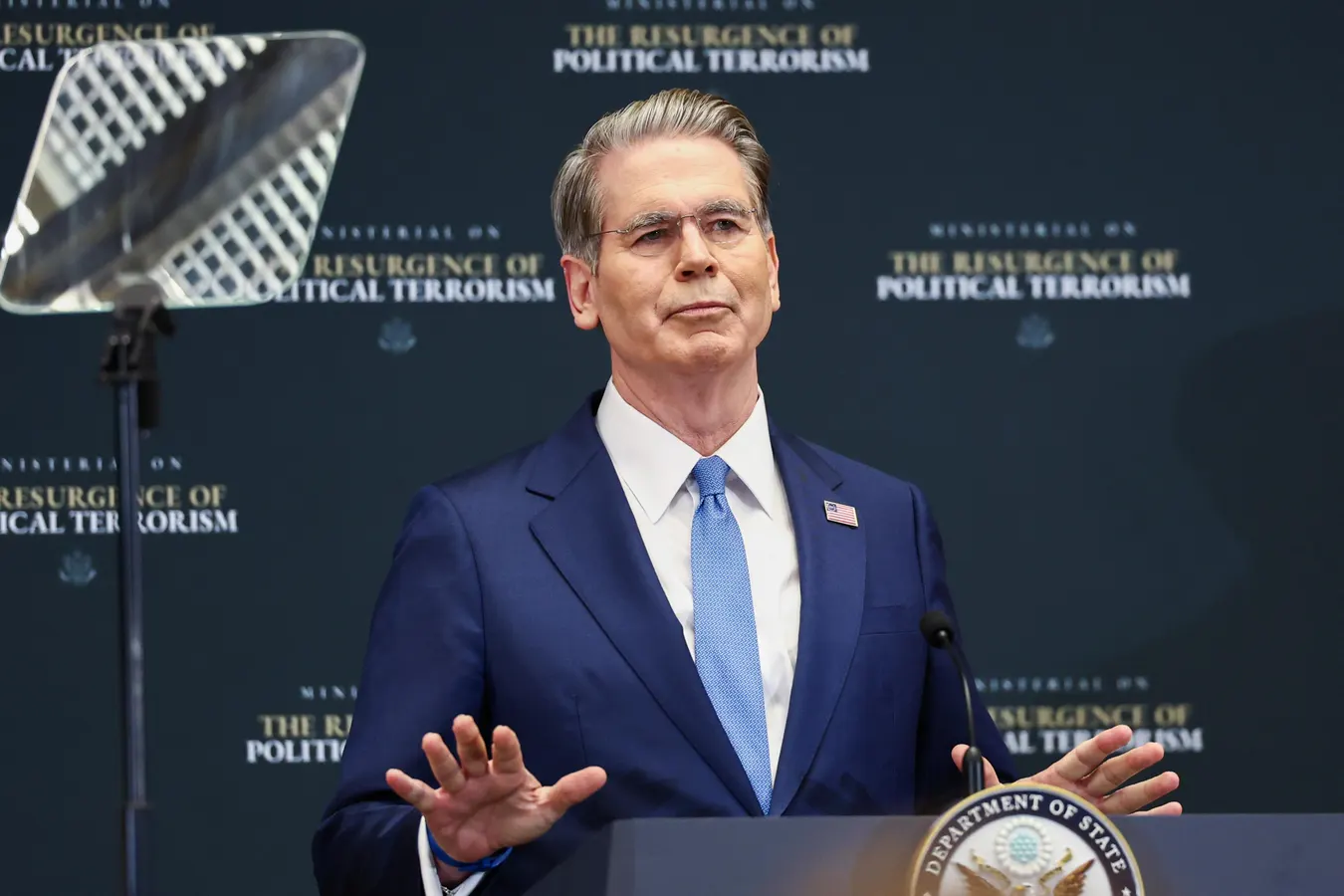
Treasury Secretary Scott Bessent said there was a chance the U.S. could announce a deal with Iran to reopen the Strait of Hormuz “today or tomorrow,” causing oil prices to begin falling and the S&P 500 to break its intraday record shortly after markets opened.
Oil prices fell and stocks rose after the treasury secretaries comments in an interview on Tuesday morning.
Getty Images
Key Facts
In an interview with CNBC on Tuesday morning, Bessent said the U.S. was engaged in negotiations with Iran—although Iranian officials have denied in recent days they were engaged in “direct” talks with the U.S.
Bessent said he thinks “there is a chance we have a deal today or tomorrow to open the strait and move towards a more normalized position in this conflict,” citing the Trump administration’s insistence the U.S. military campaign has degraded Iran’s air force, navy and missiles.
When asked if Iran would be allowed to charge tolls for ships passing through the waterway, Bessent said “I think it would be freedom of movement,” but did not provide any further details about how that would be enforced.
Oil prices fell after Bessent’s comments, with Brent crude oil futures eventually settling around $81.88 around 9 a.m. EDT on Tuesday morning.
News Peg
Stock futures rose before markets opened on Tuesday. The Dow Industrial Average closed at a new record high on Monday, and the S&P 500 just below its last record high set in June. The index broke that record shortly after markets opened on Tuesday
Crucial Quote
“Once the strait reopens, there are hundreds if not a thousand ships sitting in there waiting to go out,” Bessent said, referring to ships trapped in the waterway during the months-long conflict that began on February 28. “It’s not just energy, it’s fertilizer, it’s refined products, it’s various industrial gasses, so I think that we could see a big relief trade as those prices go down.”
Contra
Although Bessent insisted a future deal would include “freedom of movement,” a Reuters report published on Tuesday morning said Iran was expecting to maintain control of inbound traffic in the Strait of Hormuz in a deal being negotiated with Oman, citing an Iranian source. Outbound traffic would take a route between the two countries, and Iran would maintain oversight on those traffic lanes as well.
Key Background
Despite Iran’s past insistence they were not directly negotiating with the U.S., Trump said on Monday the talks were “going on right now.” The president said he called off strikes over the weekend, which he claimed would have been “harder than any attack… since World War II.” Trump said the talks were “backed” by other countries, including Saudi Arabia, the United Arab Emirates and Qatar. “I want to give them every last chance before decapitation,” he said later.













Leave a comment