


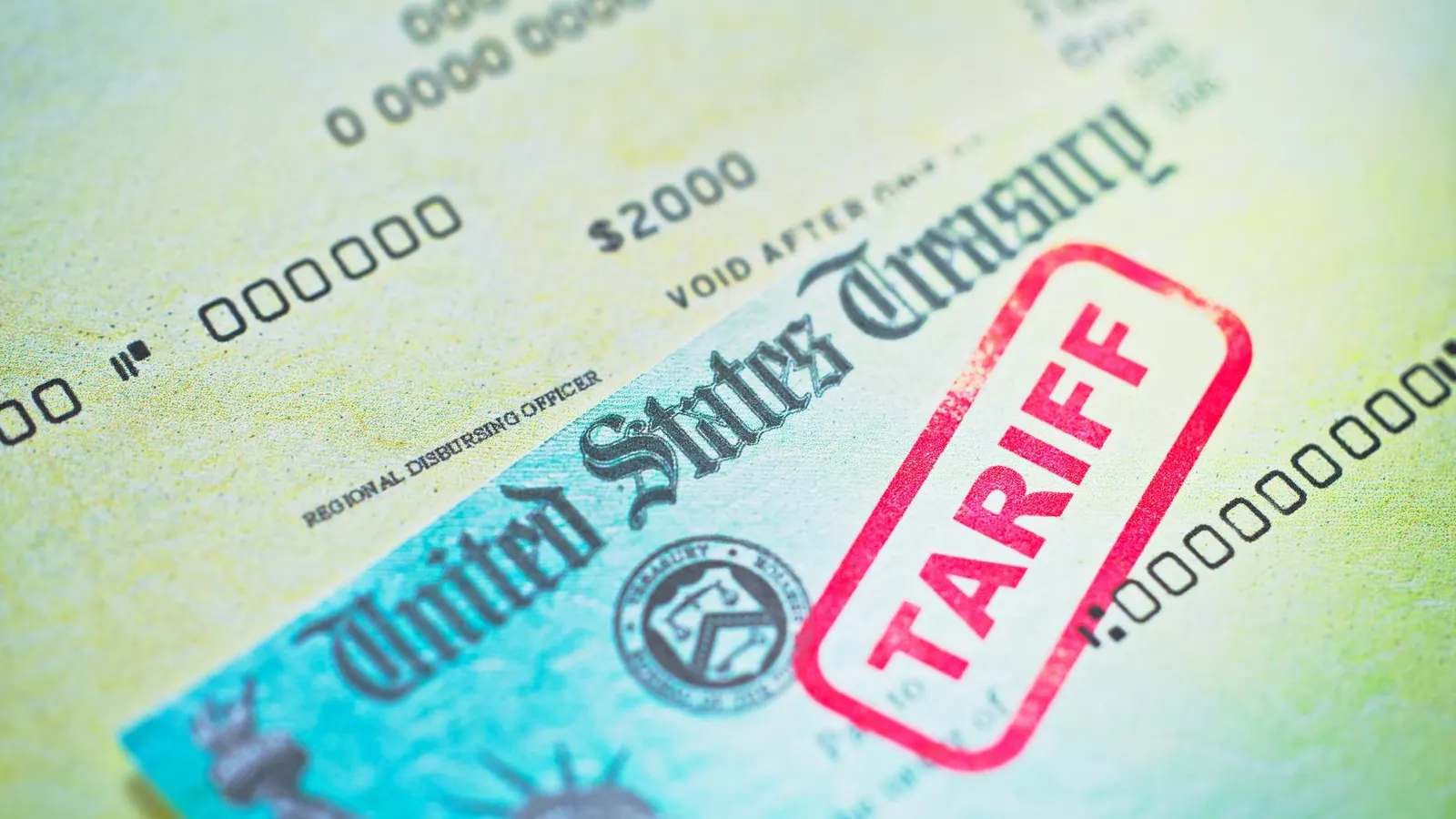

A US Treasury Check with Tariff Stamp. to convey the proposed payment to the US tax payers based on the money generated from import tariffs.
getty
Americans are owed $166 billion in tariff refunds, but consumers are unlikely to see a penny of it. After the Supreme Court ruled the sweeping tariffs imposed by the Trump Administration were illegal, U.S. Customs and Border Protection launched an online system to process tariff refund payments—but only importers of record can apply for refunds, and they are mostly businesses. Even familiar faces like UPS, FedEx and DHL, which say they will pass along refunds, will primarily reimburse their business clients, not the customers whose packages they delivered.
It’s leaving American consumers feeling cheated. According to Bloomberg Law, at least 17 class action lawsuits have been filed seeking to recover tariff-specific costs—11 of them against FedEx. And William Pletcher, litigation director of Consumer Watchdog, said these suits are only the “tip of the iceberg.”
Attorney Lori Leskin, who heads the consumer products practice group at Arnold & Porter, said plaintiffs will have a hard time establishing how much tariffs affected rising costs.
“Every company has eaten the impact of the tariff situation differently,” she explained. “There’s so many things that explain why prices go up, that it’s going to be very hard for a consumer to be able to establish consistency across an entirety of a class.”
Tariffs Had Little Effect On Prices
Despite the widespread belief that tariffs were the major driver of increased prices after Trump tariffs were imposed, subsequent analysis has shown the impact of tariffs was nowhere near earlier estimates. The Budget Lab at Yale initially estimated a 2.3% impact on prices after tariffs were imposed. A year later, it found tariffs only contributed between a 0.5% and 1% to price increases.
Federal Reserve of Minneapolis economists Neil Mehtotra and Michael Waugh looked deeper into the impact of tariffs on prices and argued: “The underlying pattern of inflation within core goods is inconsistent with the predicted pattern of price increases from tariffs.”
In other words, prices rose in line with tariffs in some goods categories, such as furniture and home furnishings, but not in others, such as pharmaceuticals, clothing and motor vehicles.
And in other categories, like video, electronics and computer equipment, price increases may have been a result of anticipated tariffs, not realized ones.
In a nutshell, they state, “Tariffs can’t explain rising goods inflation.”
Consumers Take Action
Still, consumers are looking for someone to blame and retailers are taking the brunt of it. Costco, Lululemon, Fabletics, Nintendo and EssilorLuxottica, parent of Ray-Ban sunglasses, are among the first retailers to get hit with legal action, but as Leskin warns, other retailers, e-commerce businesses, consumer brands, manufacturers, distributors and logistic companies are potential targets as well.
“The initial wave of consumer class action complaints demonstrates that plaintiffs are not limiting their theories to explicit tariff line-items. The broader argument—that any company that passed through tariff costs must return corresponding refunds—has potentially sweeping implications for businesses,” she stated and warned that companies which explicitly stated that tariffs caused prices to rise may be most at risk.
Make Plans Or Pay The Consequences
In Costco’s second-quarter earnings call in March, CEO Ron Vachris got out in front of the tariff refund issue by stating that the company carefully managed its supply chains to “reduce the impact of tariffs,” so that the full cost of tariffs was not passed along to customers.
He also noted that potential tariff refunds are hard to calculate because tariffs were layered on top of other tariffs and multiple changes were enacted throughout the year. Yet, Vachris promised that if refunds are received, they will be returned to members “through lower prices and better value,” adding, “We always want to be the first to lower prices and the last to raise them.”
With its 90% membership renewal rate, Costco has earned customers’ trust and goodwill so that he can get away with making such broad promises, but other retailers won’t be so lucky.
For example, Lululemon, a brand already facing headwinds after U.S. sales declined 2% in fiscal 2025, is challenged by a proposed class-action suit alleging it passed along $240 million in tariff costs to consumers through higher prices while simultaneously seeking to recover those funds from the government.
The Lululemon suit characterizes this as “double recovery,” claiming the company retained tariff-related revenue while pursuing reimbursement. Varnum attorneys, writing in the National Law Review, stated that “double recovery” is a central theory in potential class- action suits. “Lululemon could be an early indicator of potential issues for importers seeking IEEPA refunds,” they explained.
The public perception is that companies will profit from tariff refunds while consumers remain stuck paying higher prices that the tariffs originally created. And notably, those tariff-inflated prices haven’t come down.
Consumers Want Reprieve
Rightly or wrongly, consumers believe that tariffs have contributed to their affordability crisis. Gallup’s annual Economy and Personal Finance survey found a record 55% of Americans believe their financial situation is getting worse, and the same percentage report recent price increases have made it difficult to maintain their standard of living. In particular, inflation and high prices are named the top financial concern by 31% of the 1,000 respondents surveyed.
With affordability top of mind for American consumers, it’s showing up in worsening consumer confidence. The University of Michigan Consumer Sentiment Index— which fell to its lowest level in the survey’s 74-year history in April—found the year-ahead inflation expectations surged from 3.8% in March to 4.7% in April, the sharpest uptick since April 2025, when the new tariff policy was announced.
Consumers demand relief, and with tariff refunds on the horizon, they want to get their share. Retailers now have an opportunity to get ahead of consumers’ worries by being fully transparent about how they plan to use any refunds, either by reducing prices across the board or by offering targeted promotions tied to tariff relief. In effect, announcing that “We got our refund, not we’re passing it along to you, our valued customers.”
Found Money
“Tariff refunds are a one-time thing—it’s going to be found money for retailers,” said Austin Goldman, co-founder and CEO of Shoplift, which advises companies on pricing strategies. “But if you are the first mover to bring prices down, you can be the disruptor and eat up some market share with the first mover advantage.”
Holding onto tariff refunds—besides putting a company at risk of class-action lawsuits—may stain a brand’s reputation and erode customer trust at a time when they can least afford it. Retailers that give back refunds, rather than pocket them, have a rare opportunity to do a good thing for customers and build greater loyalty in an environment where it is in short supply.
See Also:















Leave a comment