



Former BREI Director Christine Natalia Faces Legal Demand Over Allegedly Unauthorised Marina Bay City Contracts
Former director given seven days to disclose any written authority—or face potential civil proceedings and referral of evidence to criminal investigators
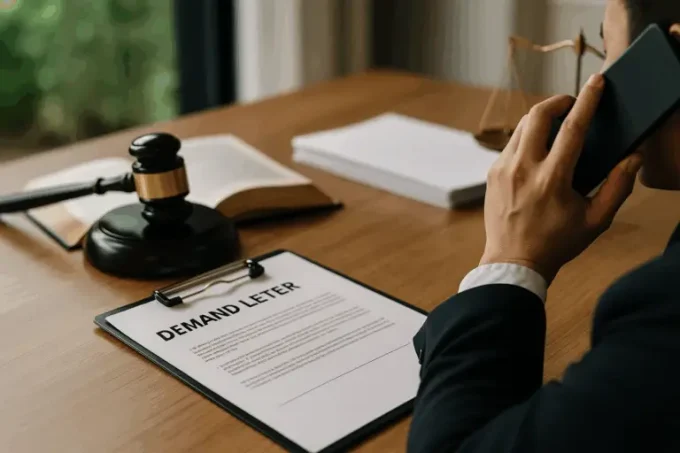
Former PT Bali Real Estate Investments (“BREI”) director Christine Natalia has been served with a formal legal demand concerning sales contracts allegedly issued without the developer’s authority for the Marina Bay City project.
LUX Property Group alleges that the disputed contracts carried Natalia’s copied or digitally reproduced signature, imposed 100% of the construction and delivery liability upon BREI, but directed all or substantially all purchaser funds into bank accounts controlled by Kinnara, Adrian Campbell or associated entities.
The central question is straightforward: Who authorised these contracts?
According to LUX, Natalia repeatedly told its management during early 2026 that she had not authorised Kinnara to copy and paste her signature onto undisclosed sales contracts.
LUX further alleges that Natalia had no authority from BREI’s owners, shareholders or senior management to grant Kinnara an unrestricted right to execute contracts in BREI’s name.
It would appear commercially extraordinary for a developer to accept the entire liability for constructing and delivering villas while allowing 100% of the corresponding purchaser payments to be directed to a third party.
Yet LUX says that is precisely what certain disputed contracts purported to do.
Why did Natalia allegedly change her account?
LUX alleges that Natalia subsequently changed her position and suggested that she had authorised Kinnara to use her digital signature.
The legal demand now requires her to identify:
* every contract on which she knowingly authorised her signature to be used;
* when, where and to whom that authority was given;
* whether the authority was written or oral;
* whether it extended to changing purchaser-payment bank accounts;
* whether BREI’s owners or senior management approved it; and
* why her reported current position contradicts her earlier categorical denials.
She has also been asked to disclose whether she received or was offered any payment, protection, indemnity or other benefit connected with changing her account.
LUX has raised concerns about whether Natalia was pressured or improperly influenced after a police complaint was reportedly made against her by or on behalf of Campbell or Kinnara. These remain allegations and have not been determined by a court.
Seven days to produce proof
Natalia has been given seven days to provide a signed statement and produce any written authority she says permitted Kinnara to reproduce her signature or issue contracts in BREI’s name.
If such authority existed, it should be capable of being produced.
If it did not exist, LUX says Natalia must publicly correct the record and confirm that neither she nor Kinnara possessed unrestricted authority to issue the disputed contracts.
The demand also requires the preservation and production of relevant emails, WhatsApp messages, contracts, draft documents, bank records and communications with Campbell or Kinnara.
Campbell’s Federal Court defeat
The dispute has intensified following Campbell v McIntyre (No 2) [2026] FCA 1279. In that proceeding, the Federal Court discharged interlocutory injunctions obtained by Campbell and ordered him to pay 80% of McIntyre’s costs on an indemnity basis. Published legal reporting states that the case concerned material non-disclosure, including Campbell’s previous criminal convictions. Gazette of Law and Journalism
The judgment did not determine the separate Marina Bay City allegations now raised against Natalia or other parties. Those allegations must be independently investigated and proved.
Could Natalia face civil or criminal action?
The letter warns Natalia that, if she fails to provide a truthful and documented response, LUX intends to pursue available civil remedies.
Those remedies may include damages, compensation, indemnities and relief concerning alleged fraud, misrepresentation, breach of directors’ duties, knowing assistance and contracts issued without corporate authority.
Separately, LUX says that if the evidence establishes reasonable grounds to suspect fraud, forgery, document falsification or concealment of purchaser funds, it may refer that evidence to Indonesian, Australian or other competent law-enforcement authorities.
No criminal charge against Natalia is established merely because a legal demand has been issued. Any criminal liability would need to be investigated and determined through the proper legal process.
Will she produce the authority—or confirm there was none?
Natalia now faces a critical choice: produce authentic written authority showing that BREI knowingly approved the contracts and payment arrangements, or explain why contracts carrying her signature were issued without that authority.
The documents—not competing public statements—should determine the truth.
LUX says it wants Natalia to provide a full and accurate account of what occurred, who controlled the contracts and who authorised purchaser funds to be directed away from the project developer.
Christine Natalia should be offered a reasonable opportunity to respond before publication. Any response received should be published prominently and fairly.















Leave a comment