


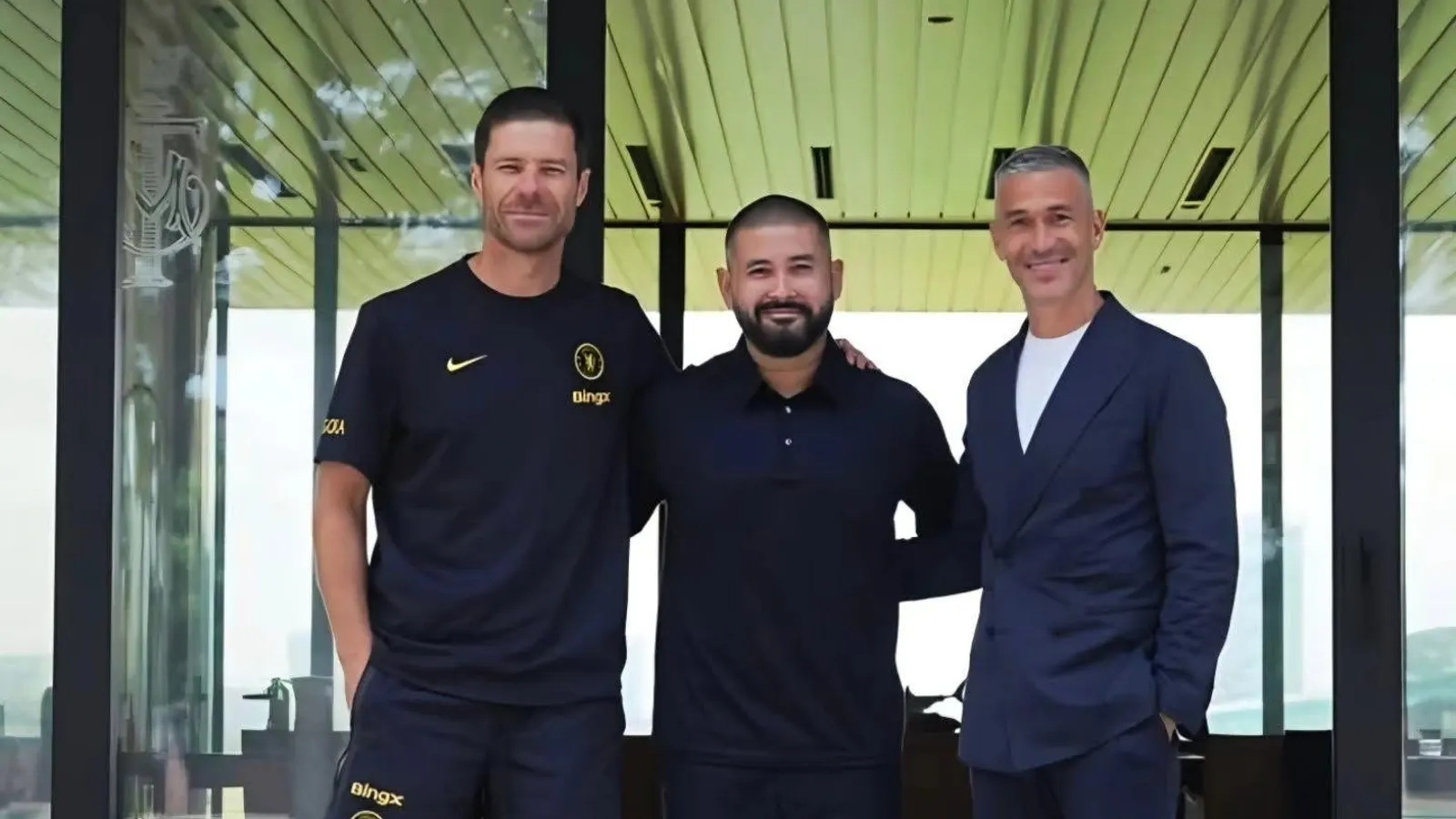

Luis García (right) alongside Tunku Ismail Sultan Ibrahim, Regent and Crown Prince of Johor Region in Malaysia, and Chelsea coach Xabi Alonso.
Luis García
Luis García is best remembered by most for scoring some of the biggest goals of his career in a Liverpool shirt, none bigger than the disputed “ghost goal” that sent Chelsea out of the 2005 Champions League semifinal on the way to Istanbul. 21 years later, he found himself on the other side of a very different kind of tie against the same opponent as CEO of Johor Darul Ta’zim, hosting Chelsea in a preseason friendly that ended 3-3, a fixture García calls a proof of concept for everything JDT is trying to become.
A month later, JDT had moved onto their next landmark result. On August 21, they beat Kuching City 3-0 in their Charity Shield opener to reach 109 consecutive league matches unbeaten, breaking the world record of 108 held by Ivory Coast’s ASEC Mimosas since 1994 with a winning streak stretching back to April 2021.
A run through September, including a 3-0 win over Negeri Sembilan, has pushed the number past 113, comfortably the longest unbeaten run in the history of top-flight soccer anywhere in the world. For a club that had never won a major honour before 2014, it’s a staggering transformation. It’s an era now being run, in part, by a man whose professional life has mostly been spent on the field rather than in a boardroom.
From dressing room to executive floor
García’s route into the JDT CEO’s office wasn’t always planned like this. After retiring, he explored coaching badges, a sporting director qualification, and work in television, but the pivot to the business side of the game came almost by accident, through his role as a UEFA ambassador for Liverpool and Barcelona.
“When I was playing, I never thought about joining an executive board,” García told me. “It was right after I finished, travelling as an ambassador and sitting in on meetings with CEOs of big brands, like Standard Chartered, Maybank, that I could see there was a gap for former players to fill. We understand what’s needed on the pitch; it was about learning the business side.” That realisation sent him back to the classroom for an MBA with UEFA, where he says he learned “how to implement a project on a club and develop everything from scratch, from academy, to managing the stadium, to incorporating sponsors.”
The JDT opportunity arrived through a phone call from a contact, inviting him to meet the club’s owner, Tunku Ismail Idris, Johor’s Crown Prince, universally referred to at the club as “His Highness”. García flew out with limited knowledge of the club beyond a couple of Spanish players who’d previously turned out for them. “I didn’t know much about JDT at the time,” he admits. “But once I met him, I realized I wanted to be part of the journey.”
JDT with their silverware.
JDT
Building JDT the Spanish way
That culture has been layered onto a deliberate strategy aiming to replicate Spanish soccer’s development model into Southeast Asia. “This model is based on the Spanish system because we’ve seen it works in every country,” García says. “It’s proven that most Spanish players who go abroad are successful, and success doesn’t just mean winning trophies, it means competing across every competition.”
In practice, that has meant building a data-driven academy from the ground up. “We decided to implement a data ecosystem in the academy,” García explains. “It’s not only about football and the pitch, but rest, food, healthcare. We don’t only develop players for our first team.” The ambition isn’t just to feed JDT’s own squad, but to underwrite the future of Malaysian football more broadly, a pipeline strategy borrowed directly from La Masia in Barcelona, La Fábrica in Madrid, and beyond, with clubs creating talent for their own squads and finding resale value in those who don’t reach their level required.
The Chelsea test
If the academy is the long game, the Chelsea friendly was García’s most public attempt to benchmark JDT against Europe’s elite in real time, and, he insists, a strategy the club intends to repeat. “We had the chance to host Chelsea, and I think it was a great success,” he says. “We understood that we’re not that far away from competing at that level. Of course, the budget is totally different, but playing as a team, as a unit, we can compete with anyone.”
He’s already thinking about who comes next: “It’s in our head to open our stadium to big international clubs.” For a club whose fanbase, in García’s telling, now spans Malaysia, Singapore, Thailand and South Korea, the commercial logic is as important as the sporting one with global broadcast exposure and blue-chip sponsorship conversations that a domestic-only fixture list simply can’t generate.
JAKARTA, INDONESIA – AUGUST 09: Players, Match Officials and Mascots line up on the pitch prior to the Pre-Season Friendly match between Chelsea FC and Johor Darul Ta’zim F.C. at Sultan Ibrahim Stadium on August 09, 2026 in Jakarta, Indonesia. (Photo by Darren Walsh/Chelsea FC via Getty Images)
Chelsea FC via Getty Images
Moving forwards beyond a world record
With the world record now banked, the obvious question is what keeps a squad, and an organization, hungry after achieving something no team in football history has done. García’s answer leans heavily on the owner’s temperament rather than his own. “His Highness’s style of leadership is never to sit back, always push forward,” he says. “Our main target now is to compete in the Champions League. It’s not about being there once. We want to be there every single year.” JDT’s run to the AFC Champions League Elite quarter-finals last season, eventually falling to Saudi Arabia’s Al-Hilal, is the new benchmark the club is chasing rather than the record it just broke.
As for García’s own future, there’s no sense of a man treating this as a stopgap before a bigger European return. “I see myself working here long term,” he says. “It’s been almost a year and a half, and I hope it’s for a long time, because that would mean I’m doing a good job and enjoying the journey.”
For a growing cohort of former players eyeing the boardroom rather than the touchline, JDT’s improbable rise offers a template of using the instincts built in a dressing room to help drive a company built to win.
















Leave a comment