


Topline
The House is voting Wednesday on a proposed constitutional amendment that would cap the Supreme Court at nine justices, as Republicans have opposed efforts by Democrats to reform the high court amid concerns the 6-3 conservative court is too partisan.
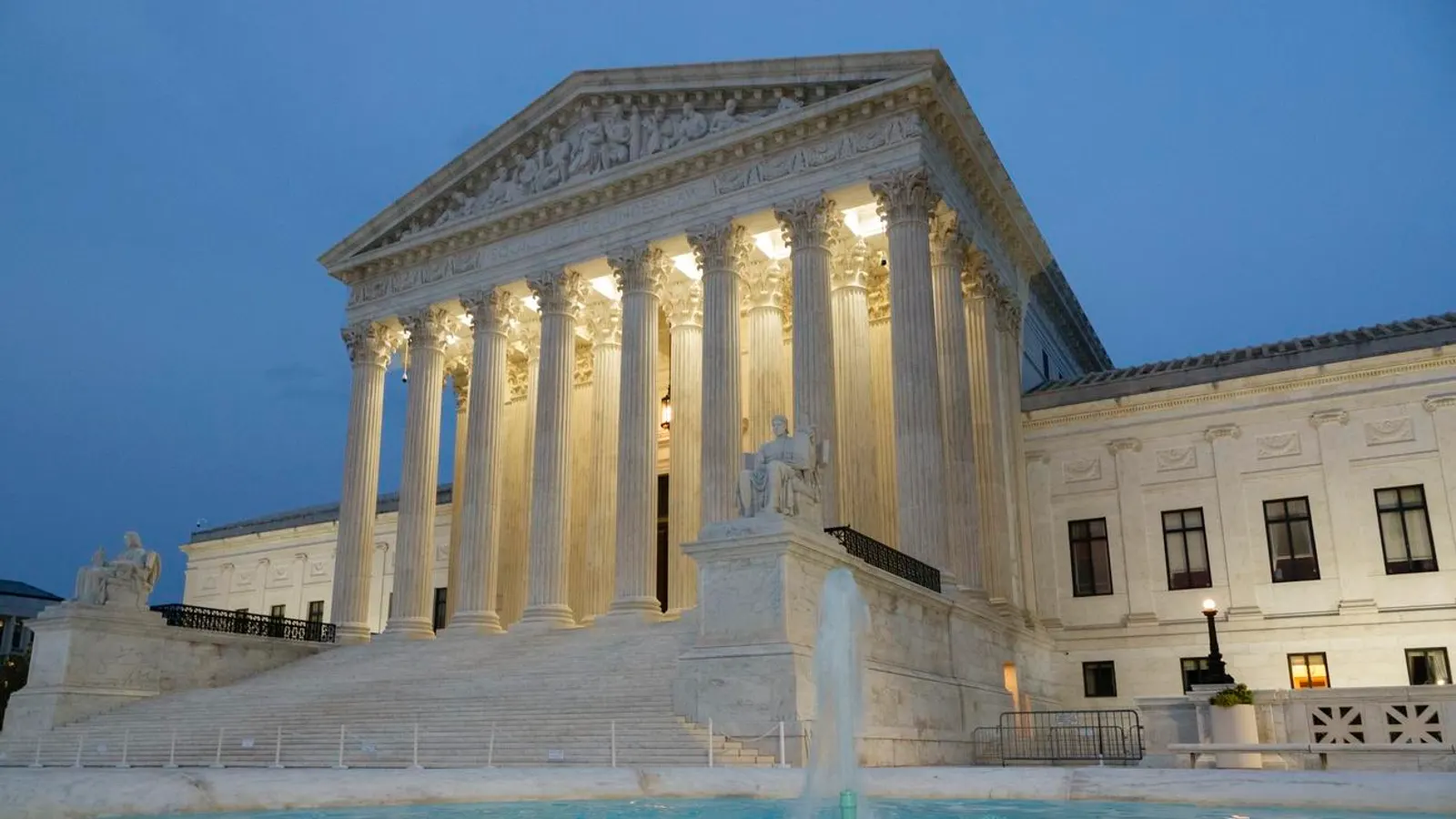
The U.S. Supreme Court is seen at dusk on August 12 in Washington, DC.
Getty Images
Key Facts
House lawmakers began debating what’s known as the “Keep Nine Amendment” Wednesday, with a vote expected later Wednesday afternoon.
The bill would add an amendment to the U.S. Constitution that reads, “The Supreme Court of the United States shall be composed of nine justices.”
The proposed amendment would mean future presidents or lawmakers would not be able to make any attempts at adding justices to the court, which is one of several proposals that have been floated as ways to fix partisan tilts on the high court.
House Speaker Mike Johnson, R-La., described the idea of adding justices as “crazy” to reporters Tuesday and said Republicans were “going to make sure that doesn’t happen.”
The proposed constitutional amendment would require a two-thirds majority of the House in order to pass—and would then still need to get a two-thirds majority in the Senate and be ratified by the states—making it a long-shot to actually be added to the Constitution.
Johnson suggested Republicans’ main aim in holding the vote was to force Democrats to publicly come out on whether they are definitively against adding justices—telling reporters Tuesday the vote would make Democrats “put their money where their mouth is.”
What To Watch For
Reforming how the Supreme Court operates is expected to be part of Congress’ agenda next term if Democrats regain control of the House, with House Minority Leader Hakeem Jeffries, D-N.Y., saying in August he believes “dramatic” reform is “necessary.” Jeffries said Rep. Jamie Raskin, D-Md., would spearhead reform efforts as head of the House Judiciary Committee if Democrats get a House majority, adding when it comes to specific proposals, “there’s a variety of different options that are on the table. And I think that we can’t foreclose any single one of them.”
How Popular Is Adding Justices To The Supreme Court?
Adding justices to the court is one of the less popular proposals for reforming the Supreme Court, with a Marquette University Law School poll finding in May that respondents were split 50-50 on whether they supported or opposed it. Having justices serve set term limits was much more popular, by contrast, with 79% saying they either somewhat or strongly approved of it and only 21% opposing. A 74% majority of respondents also told Pew Research Center in 2023 they would back a maximum age limit for Supreme Court justices, versus only 46% in that poll who supported expanding the court.
Surprising Fact
Gabe Roth, who runs judicial ethics watchdog Fix the Court, noted to Forbes on Wednesday that anything barring the Supreme Court from adding justices could also impact imposing term limits—at least based on how that proposal has so far been introduced in Congress—even though that’s a much more popular concept. Voting in favor of the amendment would be “a vote against Supreme Court term limits,” Roth told Forbes in an email. While Congress could pass a law imposing term limits for future justices, legal experts and even Justice Sonia Sotomayor have concluded that statute could not also restrict the terms of the justices who are already on the court. “Post enactment, newly appointed justices with 18-year terms would serve alongside the current nine,” Roth said, based on the logistics of term limit proposals that have already been introduced in Congress. That means the Supreme Court “may temporarily expand” until the current justices step down and the court is made up of only ones who are term-limited. While adding justices to the court more broadly isn’t overwhelmingly popular, voters are seemingly more willing to temporarily expand the court in the name of term limits, Roth noted, pointing to a 2021 poll that found pluralities of Republican, Democratic and independent respondents all favored temporarily expanding the court over sticking with the current lifetime appointment setup.
Key Background
Reforming the Supreme Court has become a growing issue in recent years, as the majority-conservative court has come out with a series of controversial rulings on major political issues, like abortion, gun control, immigration, LGBTQ rights and the limits of President Donald Trump’s power. A Pew Research Center poll conducted in July found Americans’ trust in the Supreme Court is still at near-historic lows, with a 53% majority viewing the high court unfavorably and 43% viewing the court’s ideology as being conservative. While Democrats have pushed for stricter Supreme Court reforms, little progress has been made on the issue. Former President Joe Biden commissioned a study on potential reforms during his presidency and ultimately came out in favor of term limits for justices in July 2024. No proposals have ever made it through Congress, however, as Republicans view reforms as unnecessary and an attempt by Democrats to retaliate against the court for decisions they didn’t like.
Further Reading
Biden’s Supreme Court Commission Warns Adding Justices May Not ‘Serve Democratic Values’ (Forbes)
Why does the Supreme Court have nine Justices? (National Constitution Center)
Hakeem Jeffries: “Dramatic Supreme Court Reform Is Necessary” (RealClear Politics)
















Leave a comment