


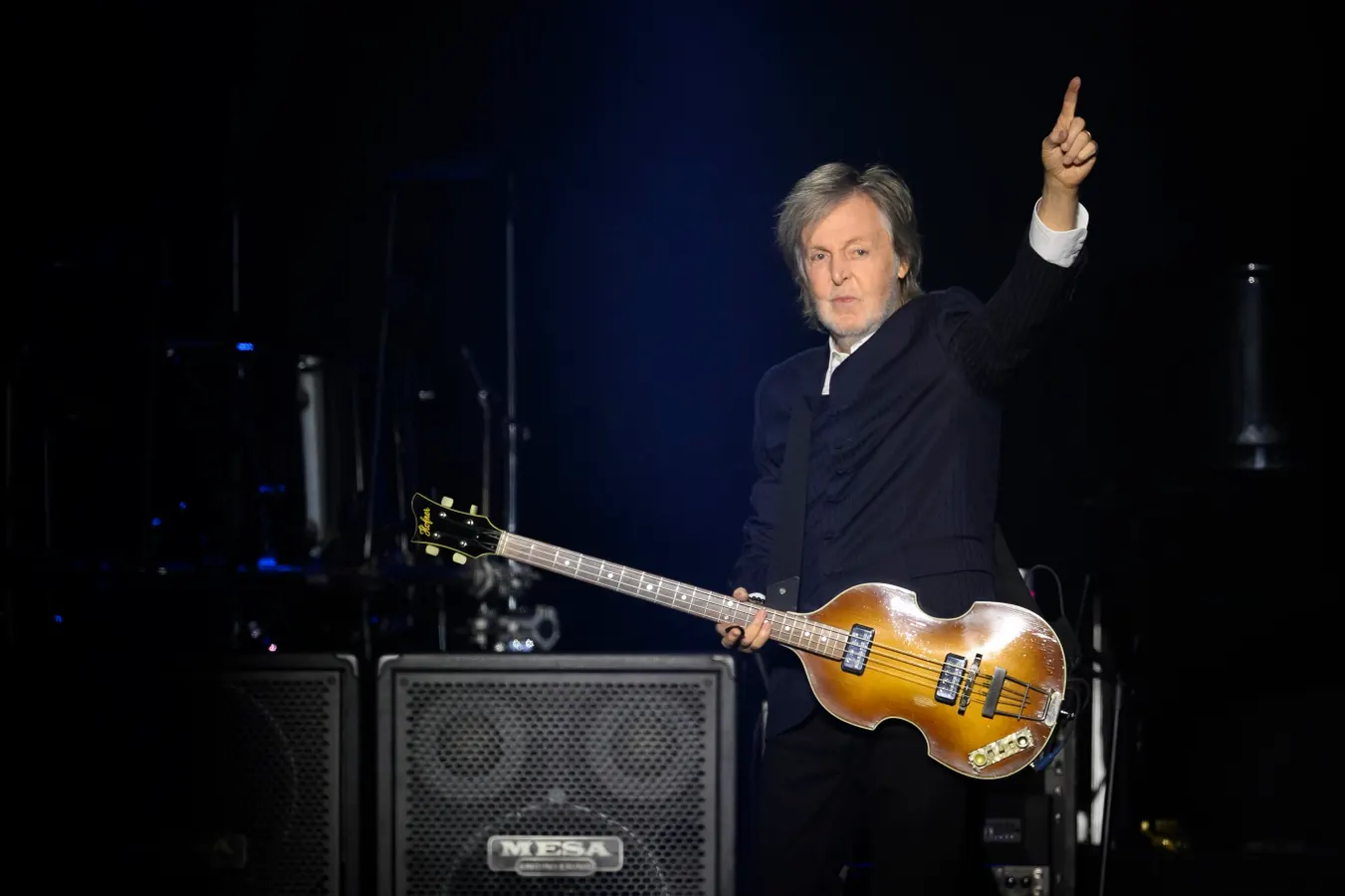

Paul McCartney performs live on stage at the Paris La Defense Arena during the ‘Got Back!’ Tour on December 04, 2024, in France.
Getty Images
It feels like Paul McCartney has been everywhere during the rollout of his latest studio album, The Boys of Dungeon Lane.
In addition to hosting his first-ever TikTok Live, the ex-Beatle also sat down with host Amelia Dimoldenberg for her YouTube series Chicken Shop Date. He revisited his favorite songs on the BBC Radio 2 show Tracks of My Years, chatted with Zane Lowe for Apple Music, filmed a short conversation with actor Paul Mescal for Amazon Music, performed on Saturday Night Live, and even turned up as Stephen Colbert’s mystery guest during the now ex-late night host’s final episode.
McCartney also appeared on The Rest Is History podcast, in a special episode with host Tom Holland where they discussed his early life and previewed a track from The Boys of Dungeon Lane.
What ‘The Boys of Dungeon Lane’ rollout says about media today
About the only media format that McCartney hasn’t seemed to prioritize is the one where musicians like him and his peers used to spend much of an album campaign’s publicity cycle: The pages of music magazines, and really the traditional press in general.
As of this writing, a cover story for Mojo magazine billed as a “world exclusive” plus interviews with The Guardian and The New York Times stand as the biggest exceptions to the updated McCartney media playbook — which is focused more than ever these days on live broadcasts, digital channels, and creators.
“There was this actor, Peter Ustinov, and he said he liked doing interviews,” McCartney said at one point during the segment with Mescal, which was filmed at the Regency Cafe in central London. Mescal, by the way, is portraying McCartney in director Sam Mendes’ upcoming Beatles film series.
Ustinov said he liked doing interviews, McCartney continued, “because it allowed him to know what he was thinking.”
That led Mescal to ask the obvious follow-up: How does one-half of one of the most successful songwriter partnerships of all time feel about being interviewed?
“It depends on if I like the person,” McCartney quipped.
That may be true, but it also apparently makes a difference whether McCartney’s interviewer is part of a traditional media operation — NBC’s Today Show dedicated a 4-minute segment to him and the new album — or if they belong to a digital venture. McCartney’s chat with Zane Lowe, for example, stretched to the hour mark and touched on everything from the 83-year-old musician’s Liverpool childhood to reflections on John Lennon and the craft of songwriting.
During his TikTok Live, McCartney fielded questions about whether he’s happy at the moment, about his favorite pair of shoes, and about how often he talks to fellow Beatle Ringo Starr.
In many respects, McCartney’s publicity strategy actually feels like a reflection of the same forces that have transformed the larger media industry itself. Artists and celebrities like McCartney are increasingly bypassing traditional media gatekeepers in favor of direct access to audiences — whether that’s by going on YouTube shows or podcasts and the like.
The shift from journalism to direct-to-audience media
I wrote just a few months ago about how a different musical act, Korea’s BTS, largely bypassed traditional media for Arirang, their first group album in nearly four years. Like McCartney, BTS’ latest album rollout reflected a de-emphasis of legacy media — a GQ cover story being the major exception on that score.
Of course, this all goes beyond music, too. Basketball superstar LeBron James, for example, doesn’t need to rely on traditional sports media anymore to tell his story. Through his Uninterrupted platform, which has more than 1 million followers on Instagram, James now produces content like documentaries that reaches audiences directly.
The newest issue of the Columbia Journalism Review, out today, takes a closer look at the increasingly fragmented media space through the lens of access — with reporting, interviews, and reflections from journalists including Margaret Brennan, Dan Rather, Christiane Amanpour, Michael Wolff, and Jemele Hill. The bottom line here is that the old publicity norms that used to emphasize formats like magazine covers and newspaper interviews have been replaced by a sprawling ecosystem of podcasts, YouTube channels, and creator-driven content.
Much like the evolution of music itself into new formats, something that McCartney briefly spoke about during his TikTok Live.
“We started off with 45 records,” he said, “and then LPs, vinyl albums. And went through cassette, CDs, and finally here we are with streaming. To me, it’s another way of getting your music out. I don’t care how people choose to access it. As long as they do access it.”
To be sure, there’s also a parallel lesson here for journalists and media outlets.
The ones that seem best-suited to build durable futures are cultivating direct relationships with audiences, rather than depending on middlemen like Google to deliver readers to their door. I’ve written about that often here, one example being my recent profile of ex-CNN commentator Chris Cillizza who, after getting laid off from the network, decided to move to Substack. And, by so taking his future into his own hands, it led him to the realization that “I never wake up with dread in my stomach anymore.”
In other words, “all you need is love,” as McCartney once sang with his old group — as long as you’ve also got a direct line to your fans and audience.







Leave a comment