


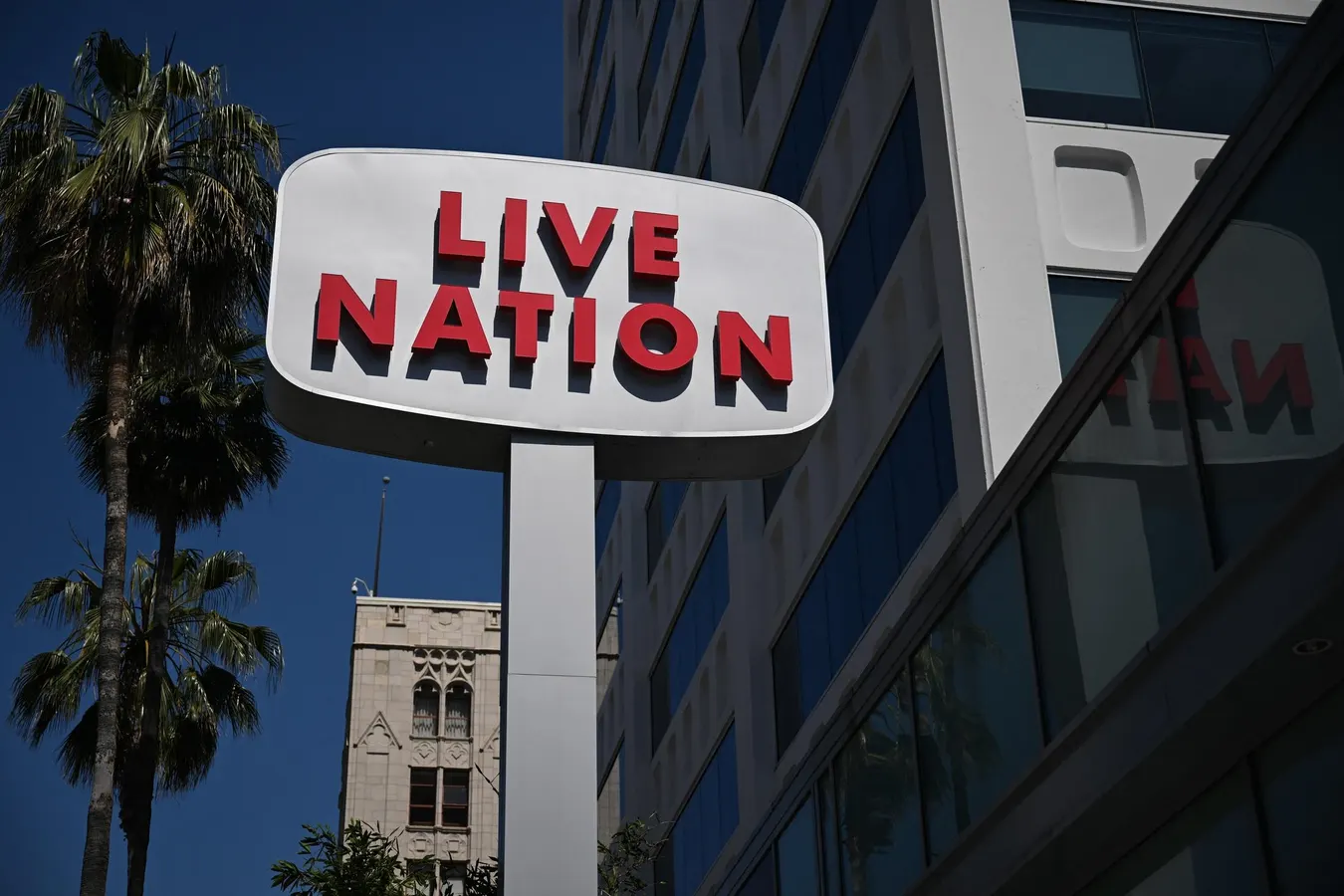

In a landmark decision for the future of the live entertainment industry, a federal jury found Live Nation and its subsidiary Ticketmaster guilty of monopolizing the U.S. concert ticketing market on April 15, 2026.
AFP via Getty Images
In a landmark decision with immediate and far-reaching implications, a federal jury in the Southern District of New York has found Live Nation Entertainment liable for illegally monopolizing the U.S. concert ticketing market through its subsidiary Ticketmaster. The verdict, delivered after weeks of testimony and years of mounting legal scrutiny, represents one of the most consequential antitrust rulings against a dominant player in the live entertainment industry.
The decision comes amid heightened regulatory attention on corporate consolidation and market power, and could reshape not only the business practices of Live Nation but also the broader structure of how concerts are promoted, venues are operated, and tickets are sold across the United States.
A Case Years in the Making
The lawsuit originated from a coalition of state attorneys general, working in parallel with the U.S. Department of Justice, who alleged that Live Nation had used its vertically integrated business model to suppress competition. The case traces its roots to the 2010 merger between Live Nation and Ticketmaster, a deal that combined the largest concert promoter in the country with the dominant ticketing platform.
At the time, federal regulators approved the merger with conditions intended to preserve competition, including restrictions on retaliation and requirements to license ticketing technology to competitors. Critics argued those safeguards were insufficient. Over the following decade and a half, Live Nation expanded its control across multiple layers of the live entertainment ecosystem—promotion, ticketing, venue ownership, and artist relationships—prompting renewed scrutiny from regulators and lawmakers.
By the time the states filed suit, they contended that Live Nation had built an ecosystem so tightly integrated that competitors were effectively locked out.
The States’ Theory: A Closed System
At trial, the states presented a comprehensive theory of market control centered on both structure and conduct. They defined the relevant market narrowly, focusing on ticketing services for large-scale concerts at major venues, along with concert promotion and amphitheater operations. Within that framework, they argued, Live Nation possessed dominant market shares across all key segments.
But the case hinged less on size than on behavior. The states alleged that Live Nation engaged in a pattern of exclusionary conduct designed to maintain and entrench its dominance. This included long-term exclusive contracts that required venues to use Ticketmaster as their primary ticketing provider, often for extended periods that left little opportunity for rivals to compete.
The lawsuit stemmed from longstanding concerns that Live Nation’s 2010 merger with Ticketmaster would allow the company to gradually lock out competitors across every level of live entertainment, which is exactly what Live Nation and Ticketmaster ended up doing.
CQ-Roll Call, Inc via Getty Images
Prosecutors also introduced evidence suggesting that venues faced retaliation if they considered switching to competing ticketing platforms. According to testimony and internal company communications, venues risked losing access to major tours or receiving less favorable promotional support if they did not remain within the Live Nation ecosystem.
Bundling practices formed another pillar of the states’ case. They argued that Live Nation leveraged its dominance in concert promotion to steer venues into using Ticketmaster, effectively tying multiple services together in a way that foreclosed competition in ticketing.
To establish consumer harm, the states pointed to service fees and other charges associated with ticket purchases. While artists often set base ticket prices, plaintiffs argued that the lack of competition allowed Ticketmaster to impose higher fees than would exist in a more competitive market. Economic experts testified that these overcharges, even if relatively modest on a per-ticket basis, accumulated into substantial consumer harm across millions of transactions.
Internal documents presented at trial appeared to reinforce the states’ narrative. In emails and strategic planning materials, executives discussed maintaining leverage over venues and responding to competitive threats, which plaintiffs characterized as evidence of intentional exclusion.
Live Nation’s Defense: Competition and Consumer Choice
Live Nation countered with a fundamentally different view of the industry. The company argued that the states had constructed an artificially narrow market definition designed to exaggerate its market share. When broader categories—such as smaller venues, independent promoters, and alternative ticketing channels—were included, Live Nation contended that the market appeared far more competitive.
The defense emphasized the overall health of the live entertainment industry. Attendance figures, they noted, had reached record highs, and the number of touring artists had expanded significantly. In their view, such growth was inconsistent with the notion of a monopolized market.
On pricing, Live Nation maintained that it did not control the most visible component of ticket costs. Artists and their management teams, the company argued, set base prices, often using dynamic pricing models that reflect demand. Service fees, while widely criticized, were described as necessary to support infrastructure, security, and distribution.
State attorneys general argued that Live Nation used exclusive contracts, retaliation threats, and bundled services to maintain dominance and drive up costs for both operators and consumers.
Getty Images
The company also pushed back against allegations of coercion. Contracts with venues, it argued, were negotiated agreements that reflected mutual economic benefit. Any exclusivity provisions were standard industry practice, not evidence of anticompetitive intent.
At the core of the defense was a fundamental legal principle: that success alone does not violate antitrust law. Live Nation argued that the plaintiffs had failed to demonstrate that its conduct went beyond vigorous competition into unlawful exclusion.
Why the Jury Ruled for the States
Despite these arguments, the jury ultimately sided with the states, concluding that Live Nation had both the power to control the market and had used that power in ways that violated antitrust law.
Several factors likely influenced the jury verdict. First was the cumulative effect of Live Nation’s vertical integration. By controlling promotion, venues, and ticketing, the company occupied multiple critical nodes in the supply chain. Jurors appear to have accepted the argument that this structure gave Live Nation unique leverage over competitors.
Second was the evidence of exclusionary conduct. Internal communications, in particular, can be highly persuasive in antitrust cases. Documents suggesting that executives were aware of their market power and actively sought to preserve it may have reinforced the states’ claims.
Third was the issue of consumer harm. Although the overcharges identified by plaintiffs were not dramatic on an individual level, they were sufficient to demonstrate that competition had been impaired. Antitrust law does not require catastrophic price increases; it requires evidence that consumers paid more than they would have in a competitive market.
Finally, the narrative coherence of the states’ case—linking structure, conduct, and harm into a single story—may have resonated more strongly with jurors than the defense’s broader, more abstract arguments about market dynamics.
What Happens Next
The verdict resolves the question of liability but leaves open the question of remedies, a phase that could have even greater consequences for Live Nation and the industry.
The court will now consider a range of potential remedies. Monetary damages are likely to be a central component. Given the volume of ticket sales involved, even small per-ticket overcharges could translate into significant financial liability, potentially subject to trebling under antitrust law.
Behavioral remedies are also under consideration. These could include restrictions on exclusivity agreements, requirements for greater transparency in ticket pricing, or limitations on bundling practices. Such measures would aim to restore competition without fundamentally altering the company’s structure.
More dramatic, however, is the possibility of structural remedies. In extreme cases, courts have ordered the breakup of companies to address antitrust violations. For Live Nation, that could mean separating Ticketmaster from its promotion and venue operations—a scenario that would represent a profound shift in the industry.
Live Nation is expected to appeal the verdict, setting the stage for a protracted legal battle that could extend for years.
Industry-Wide Implications
The implications of the verdict extend well beyond a single company. If upheld, the decision could reshape the competitive landscape of the live entertainment industry.
For venues, the ruling may create new opportunities to work with alternative ticketing providers. For artists, it could lead to changes in how tours are structured and promoted. For competitors, it may open the door to greater market access in a sector long dominated by a single player.
Jurors were persuaded by the combination of Live Nation’s far-reaching structural control, damaging internal communications and evidence that consumers were overcharged with inflated fees due to diminished competition.
Getty Images
Consumers, meanwhile, may see changes in pricing transparency and fee structures, though the ultimate impact will depend on how remedies are implemented.
More broadly, the case signals a renewed willingness by regulators and courts to challenge vertically integrated business models. Similar scrutiny could emerge in other industries where companies control multiple stages of a supply chain.
Ripple Effects on Pending Litigation
The New York verdict is likely to influence a range of ongoing and future legal actions. Other states pursuing similar claims may view the decision as validation of their legal theories, while private plaintiffs could use the findings to support class-action lawsuits seeking damages.
The case may also embolden regulators to pursue more aggressive antitrust enforcement, particularly in industries characterized by consolidation and vertical integration.
The District of Columbia Settlement
In a separate action, on April 20, 2026 Live Nation entered into a $9.9 million settlement with the District of Columbia, resolving allegations related to ticketing practices within that jurisdiction. While the settlement is legally distinct from the New York case, its timing has drawn attention.
The D.C. matter focused primarily on consumer protection issues, such as fee disclosures and ticket availability, rather than the broader antitrust questions at the heart of the New York trial. As such, there is no direct legal linkage between the two outcomes.
However, the settlement can be understood as part of a broader legal strategy. Facing mounting scrutiny on multiple fronts, Live Nation may seek to resolve smaller cases to limit cumulative risk and demonstrate responsiveness to regulatory concerns.
From the perspective of regulators, the parallel actions reflect a coordinated effort to address different aspects of the company’s conduct—structural issues in the antitrust case, and consumer-facing practices in local enforcement actions.
A Turning Point for Antitrust Enforcement
The verdict against Live Nation arrives at a moment when antitrust enforcement is undergoing a period of renewed vigor in the United States. Policymakers have increasingly questioned whether existing frameworks are sufficient to address modern market dynamics, particularly in industries shaped by scale and integration.
The case underscores the challenges of applying traditional antitrust principles to complex, multi-sided markets. It also highlights the role of state attorneys general as key actors in enforcement, particularly when federal action is limited or delayed.
Looking Ahead
As the case moves into the remedies phase and likely appeals, its ultimate impact remains uncertain. But the jury’s verdict has already altered the conversation around competition in the live entertainment industry.
The verdict’s lasting impact is still up in the air but it has already changed how the industry and regulators talk about competition in live entertainment.
Getty Images
For Live Nation, the decision represents a critical juncture. The company must now navigate not only the legal consequences of the verdict but also the broader reputational and strategic challenges it presents.
For the industry, the ruling raises fundamental questions about how concerts are produced, promoted, and sold. And for consumers, it offers the possibility—though not the guarantee—of a more competitive and transparent marketplace.
What is clear is that the era of relatively unchecked dominance in ticketing has come under judicial scrutiny. Whether that scrutiny results in lasting structural change will depend on the next phases of this case—and on how courts, regulators, and the industry respond to a verdict that may prove to be a watershed moment in American antitrust law.














Leave a comment