


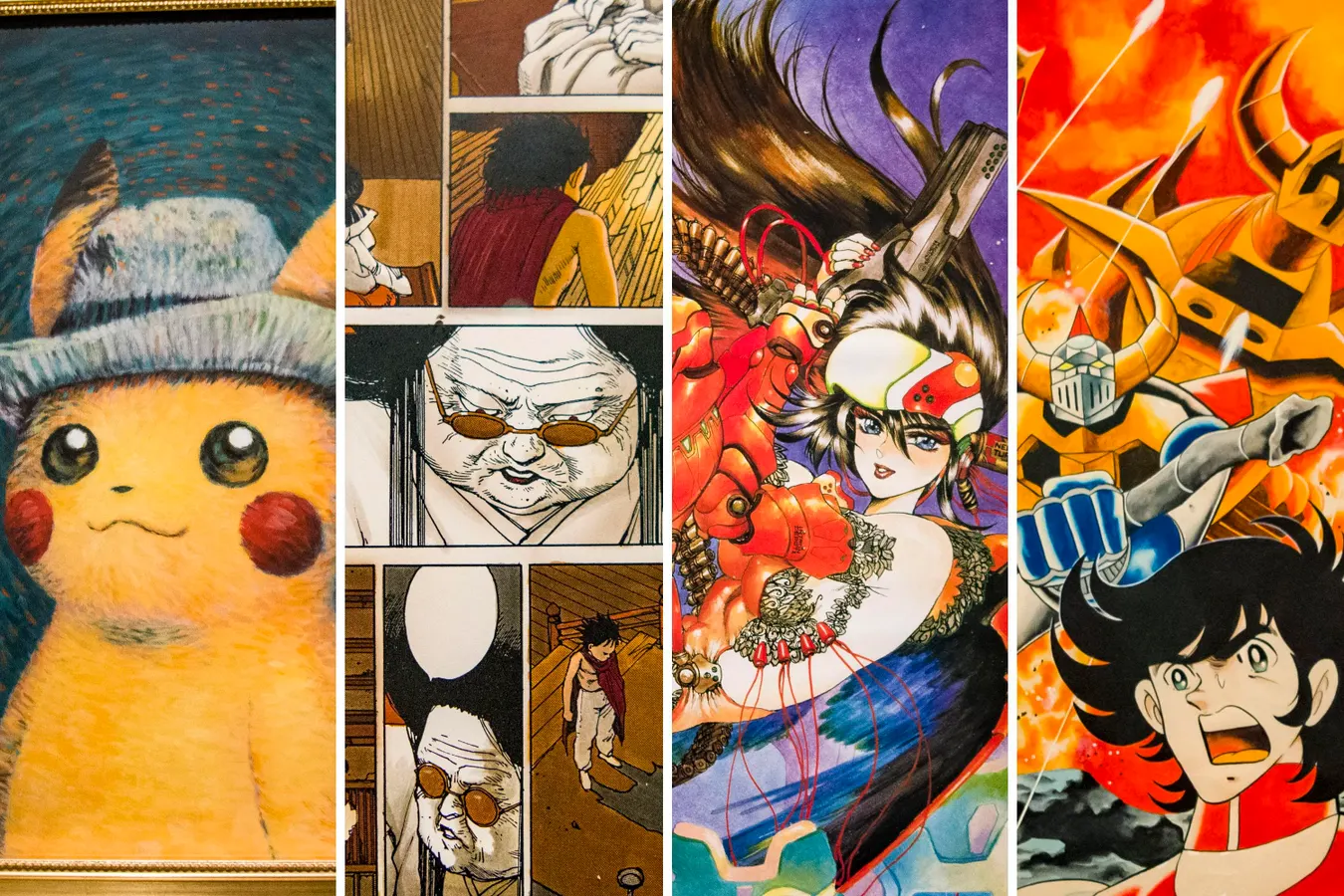

LOS ANGELES, CALIFORNIA – SEP 22: Four pieces featured in the Manga exhibit of The Lucas Museum of Narrative Art. Pikachu by Naoyo Kimura (Left), Akira by Katsuhiro Otomo and Steve Oliff (2nd to the Left), Artistic Poster Genealogy no. 4 by Masamune Shirow (2nd to the Right), Daiku-Maryu Gaikingu by Yuji Hosoi (Right)
Photo by Kalai Chik
2025 was a tough year for U.S. museums as 55% saw less visitors compared to 2019. According to a SMU DataArts study last year, museums laid off staff and even operated on a loss as they battled cancelled grants and shrinking tourism.
Though, the long lines and enthusiasm for the newly opened Lucas Museum of Narrative Art indicated an optimistic, passionate future for the world of art. Manga and anime, with its global power and influence, is included in the institution’s inaugural exhibitions.
A Museum For The People
LOS ANGELES, CALIFORNIA – SEPTEMBER 22: (L-R) Founders George Lucas and Mellody Hobson attend the Lucas Museum of Narrative Art Opening Day at Lucas Museum of Narrative Art on September 22, 2026 in Los Angeles, California. (Photo by Stefanie Keenan/Getty Images for Lucas Museum of Narrative Art)
Getty Images for Lucas Museum of Narrative Art
Funded by George Lucas and Mellody Hobson, the project is a culmination of over 17 years of persistence. In a CBS Morning interview, the Star Wars creator described the museum as an inescapable “institution,” and a completely different undertaking compared to filmmaking.
Hobson, co-founder and board chair of the museum, hopes the museum will inspire accessibility and inclusion. “As someone who always felt outside, I wanted everyone who walks in to feel like an insider.” She shared the establishment’s intention to create “a place that’s spectacularly cool, but not elite.”
Lucas describes the institution as a “temple to the people’s art,” which was reflected through the excited eyes of eager pop culture enthusiasts and film fanatics. He defines narrative art as “art that illustrates a story,” and those help shape the myths found in human life.
Manga Among Fine Art
LOS ANGELES, CALIFORNIA – SEP 13: Manga Exhibit at The Lucas Museum of Narrative Art on September 13, 2026 in Los Angeles, California.
Photo by Kalai Chik
Jedis, Siths and Straw Hat Pirates lined up early on September 22nd, 2026 for the public opening of the museum. With this open interpretation of narrative art, The Lucas Museum of Narrative Art has turned a trip to the museum into an entertainment experience itself.
At a San Diego Comic Con panel earlier in July, Bryan Linkof—senior curator and head of film programs at the Lucas Museum—explained that the work on display isn’t usually collected in other museums. “[The Lucas Museum] is a unique institution in that it platforms long and privileged commercial illustration that doesn’t have a home in most art museums.”
SAN DIEGO, CALIFORNIA – JULY 23: (L-R) Senior Curator and Head of Film Programs, Lucas Museum Ryan Linkof, co-founders of Stoopid Buddy Stoodios Matthew Senreich and Seth Green, and DC’s President, Publisher, and CCO Jim Lee attend “Inside the Lucas Museum of Narrative Art” at San Diego Comic-Con International 2026 at San Diego Convention Center on July 23, 2026 in San Diego, California. (Photo by Chelsea Guglielmino/Getty Images for Lucas Museum of Narrative Art )
Getty Images for Lucas Museum of Narrative Art
Alongside Linkof, Seth Green added to that sentiment. “We’ve lived long enough to see all the stuff we were beaten for loving become the fine art of our day,” he laughed. To his credit, Millennials can now witness the unique sight of Ultraman and ONE PIECE manga illustrations displayed nearby Norman Rockwell paintings.
LOS ANGELES, CALIFORNIA – SEP 13: Tribute to Akira by Paul Pope at The Lucas Museum of Narrative Art on September 13, 2026 in Los Angeles, California.
Photo by Kalai Chik
The Lucas Museum’s manga collection includes familiar influential names and series, bringing different eras of manga to the forefront. From Kamen Rider to Astro Boy, works from legendary authors like Shotaro Ishinomori, Osamu Tezuka and Masamune Shirow are interspersed on the gallery walls.
Curiously, some manga panels on display are from series that haven’t been licensed in English, such as Hiroshi Kaizuka’s Spirit of My Father and all 39 pages of Yoshihiro Tatsumi’s The Invisible Corpse. None of the works have translations or explanations on the placard, leaving the viewer to come to their own conclusions.
LOS ANGELES, CALIFORNIA – SEP 13: Kamen Rider X by Yuji Hosoi at The Lucas Museum of Narrative Art on September 13, 2026 in Los Angeles, California.
Photo by Kalai Chik
Younger attendees, who may not be familiar with the significance and impact of works like Akira, find themselves interacting with the Shotaro Kaneda statue as is. Although they couldn’t name the character, two boys enjoyed taking pictures while pretending to be intimidated by his gun.
Even a figure as ubiquitous as Pikachu was accused of “looking like AI” by a teenager staring blankly at the Naoya Kimura artwork. This same art piece drove massive attendance to the Van Gogh Museum in Amsterdam. The interaction between the young onlooker and Pokémon painting exemplifies the core tenant of narrative art: it’s up to interpretation.
LOS ANGELES, CALIFORNIA – SEP 13: Pikachu by Naoya Kimura for Pokémon x Van Gogh Museum at The Lucas Museum of Narrative Art on September 13, 2026 in Los Angeles, California.
Photo by Kalai Chik
Upcoming Anime Featured in the Museum’s Film Programming
Currently, the first two episodes of Star Wars: Visions and Shinichiro Watanabe’s Cowboy Bebop are scheduled daily at the Slavko Vorkapich Theater. The program runs all-day from 10:15 AM – 5:00 PM, which allows visitors to walk-in to the room at any time. These anime series will screen alongside experimental short films, such as Mary Ellen Bute’s Rhythm in Light and Walt Disney’s The Skeleton Dance.
- Star Wars: Visions Season 1, Episode 1, “The Duel” Directed by Takanobu Mizuno
- Star Wars: Visions Season 1, Episode 2, “Tatooine Rhapsody” Directed by Taku Kimura
- Cowboy Bebop Season 1, Episode 1, “Asteroid Blues” Directed by Shinichiro Watanabe
- Cowboy Bebop Season 1, Episode 2, “Stray Dog Strut” Directed by Shinichiro Watanabe
Lucas Museum of Narrative Art Research Library
LOS ANGELES, CALIFORNIA – SEP 22: The Lucas Museum Research Library September 22, 2026 in Los Angeles, California.
Photo by Kalai Chik
Even without a museum admission ticket, the building has a free library where visitors can read, borrow, and even request books. Visitors can ask for a wristband to the research library at the box office. It’s open everyday at 10AM and closes an hour before the museum.
If the library looks a bit light, it’s because the curatorial staff are still purchasing books right now. Liza Posas, Archivist and Special Collections Librarian, pointed to a limited selection of manga related books on the first floor shelf.
At the time, Nicole Coolidge Rousmaniere and Matsuba Ryoko’s Manga, Paul Gravett’s Mangasia, Cathy Sell’s What’s Manga? and John A. Lent’s Asian Comics were the only manga related books on the shelf. These were aligned with the other introductory books to global comics, such as Graphic Borders by Frederick Luis Aldama and Christopher González.
LOS ANGELES, CALIFORNIA – SEP 22: The library shelf at The Lucas Museum of Narrative Art on September 22, 2026 in Los Angeles, California.
Photo by Kalai Chik
“Manga is a new-ish edition to his collection,” mentioned Posas. “There’s some manga on the first floor and some titles in the non-accessible collection.” She specified that manga is one of the collections that the museum will take recommendations for through the catalogue website.







Leave a comment