


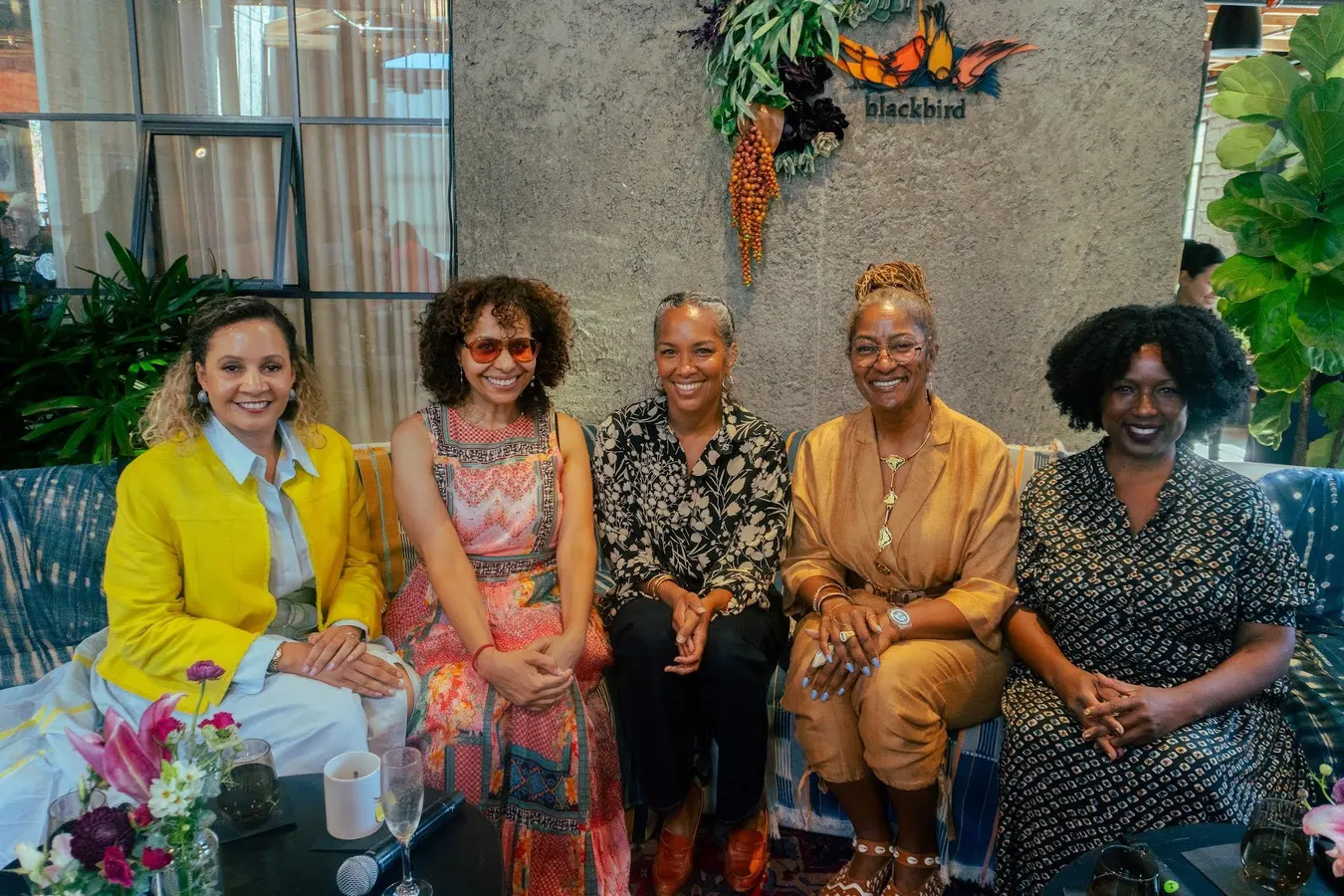

TV and film writer Mara Brock Akil Congresswoman Sydney Kamlager-Dove TV, President and CEO of In Our Own Voice Regina Davis Moss, LA County Supervisor Holly Mitchell, TV and film writer Nicole Jefferson Asher
National Black Women’s Reproductive Justice Agenda
On Saturday, April 18, In Our Own Voice: National Black Women’s Reproductive Justice Agenda brought together elected officials, television and film writers, creators, and community leaders for a powerful conversation unpacking how media narratives can impact policy. The panel, From Storyboards to Statutes: How Narrative Power Shapes Black Maternal Health, included compelling insights from an esteemed group of speakers, including: Congresswoman Sydney Kamlager-Dove (CA-37); showrunner, writer, and author Mara Brock Akil; LA County Supervisor Holly Mitchell (Second District); TV and film writer Nicole Jefferson Asher; and Dr. Regina Davis Moss, President & CEO of In Our Own Voice: National Black Women’s Reproductive Justice Agenda.
On the heels of Black Maternal Health Week (April 11-17), the conversation explored how the stories told about Black women, pregnancy, and motherhood deeply shape public understanding of maternal health and, in turn, which policy solutions become law.
“Black maternal health doesn’t exist in a vacuum—it’s shaped by the stories people see, hear, and come to believe about Black women’s lives,” said Dr. Regina Davis Moss, President and CEO of In Our Own Voice: National Black Women’s Reproductive Justice Agenda. “That’s why our Narrative Power for Justice Initiative is so critical. At a time when our bodily autonomy and access to care are under attack, it is more urgent than ever that Black women, girls, and gender-expansive people have the power to define our own narratives. When we tell fuller, more truthful stories, we don’t just transform culture—we lay the groundwork for policies that truly reflect and protect our communities.”
TV and film writer Mara Brock Akil Congresswoman Sydney Kamlager-Dove TV, President and CEO of In Our Own Voice Regina Davis Moss, LA County Supervisor Holly Mitchell, TV and film writer Nicole Jefferson Asher
National Black Women’s Reproductive Justice Agenda
“Reproductive health begins when we can make women, young girls, and boys feel safe. That’s how I build my shows, live my life, and approach motherhood,” said showrunner, writer, and author Mara Brock Akil. “From Moesha to building spaces like the Writer’s Colony, my storytelling has always been rooted in a deep love for Black women and the truth of our lives. When people feel seen and supported, they can tell the truth, grow, and make choices without shame.”
Congresswoman Sydney Kamlager-Dove (CA-37), followed, “In my line of work, Black women are too often thought of last—if we’re considered at all. That’s exactly why I came to Congress: to make sure our voices, our data, and our lived experiences are part of the policymaking process,” she said. “Storytelling isn’t extra – it is essential in helping us crystallize the problem and increase awareness so we can drive real, informed solutions.”
“We closed out Black Maternal Health Week with a powerful conversation about the urgent need for healthcare access amid the largest federal funding cuts to healthcare in U.S. history under the Trump administration. Whether you realize it or not, elected officials are making decisions that shape every aspect of our lives. Stories bring those policies to life—for both our colleagues in government and the communities we have the honor of serving. We must listen to those stories and apply them to the solutions they demand, this is how we truly improve birthing outcomes and end the disparities Black women face,” said Los Angeles County Supervisor Holly J. Mitchell.
The event was part of In Our Own Voice’s Narrative Power for Justice Initiative (NPJI), a multi-year effort that builds on the organization’s research lineage and narrative leadership of more than a decade to fundamentally shift how Black maternal health and Reproductive Justice are understood, represented, and acted on.
NPJI goes beyond identifying harmful tropes. It is designed to close the gap between dominant narratives and the lived realities that Black women demand be reflected. By working at the intersection of research, culture, and policy, the initiative is advancing a new standard for how stories shape public understanding and what becomes politically possible. The panelists drew from their direct experience shaping media narratives, navigating the ongoing attacks on DEI initiatives in Hollywood, and advancing urgent legislative action to improve reproductive and maternal outcomes. Together, the conversation made clear that cultural representation and policy change are not separate tracks. They are deeply connected forces that must move together.
Through large-scale qualitative and quantitative research, NPJI is generating new evidence-based insights on how stories resonate with Black communities and how narrative influences public attitudes, cultural understanding, and ultimately policy outcomes. It is also actively building the infrastructure to move narrative in real time. Through its Creators for Change Council, NPJI brings together an influential group of content creators who are translating research into storytelling that reaches audiences where they are. This cohort is helping to embed more complete, accurate, and expansive narratives about Black life into mainstream culture. The council includes Elizabeth Booker Houston, Jameelah Jones, Portia Burch, Preston Mitchum, A.B. Burns, Blair Imani, Brittany Packnett Cunningham, Candice Benbow, and Conscious Lee.











Leave a comment