


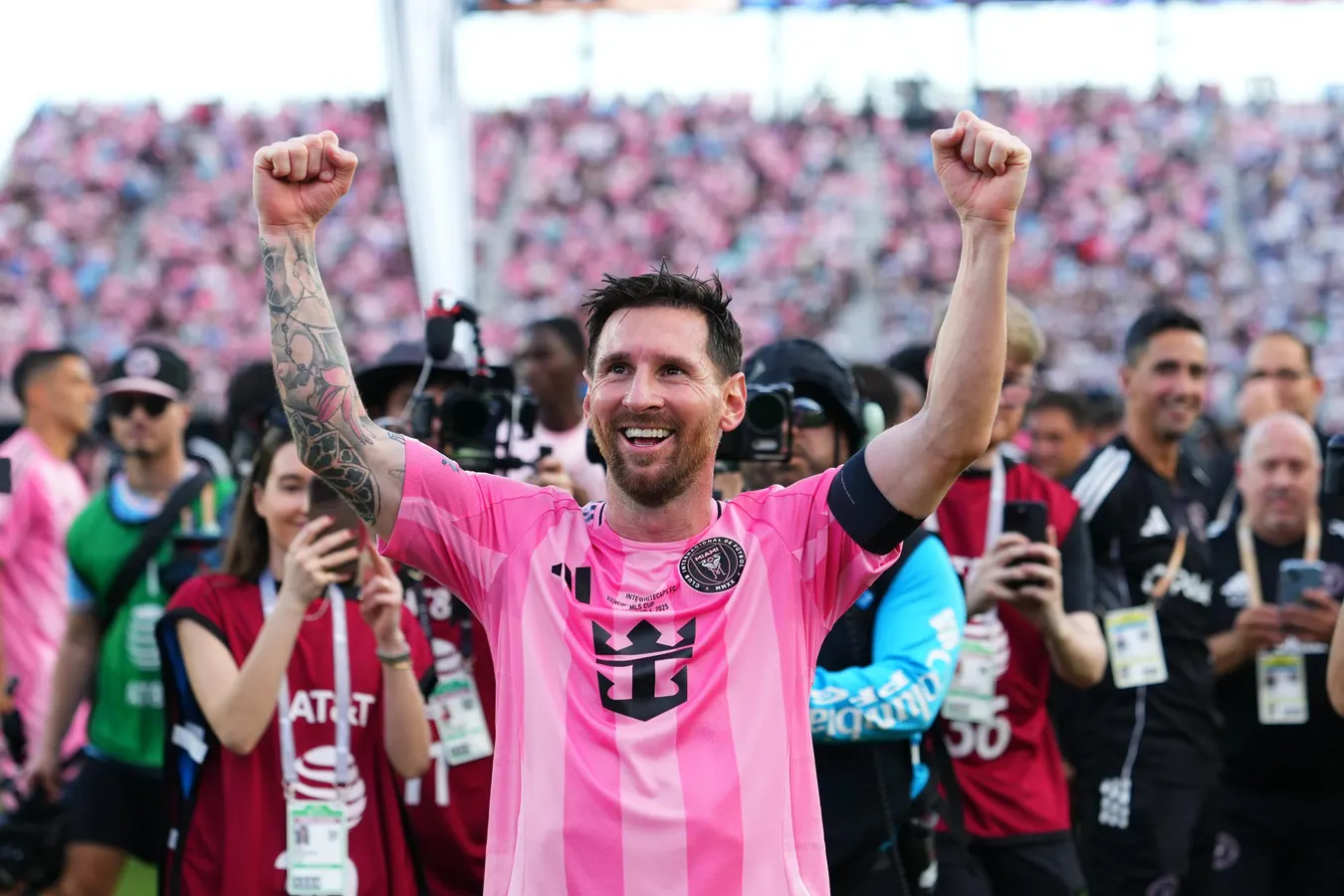

FORT LAUDERDALE, FLORIDA – DECEMBER 06: Lionel Messi #10 of Inter Miami CF celebrates after winning and becoming champion following the Audi 2025 MLS Cup Final match between Inter Miami CF and Vancouver Whitecaps FC at Chase Stadium on December 06, 2025 in Fort Lauderdale, Florida. (Photo by Rich Storry/Getty Images)
Getty Images
Lionel Messi’s move to become the majority shareholder of Eldense is, on its surface, a modest transaction. This is not a superstar buying into a Champions League club or making a splashy statement purchase.
Eldense plays in Spain’s second division, is based near a small port city and just fired its manager after a poor start to the season. But the deal is worth more scrutiny than its size suggests because of what it reveals about Messi’s evolving post-playing priorities and because of the pattern it fits into.
This is now the second Spanish club Messi has invested in, following his purchase of fifth-division Barcelona-based side UE Cornella this past April. Two acquisitions in quick succession is no longer a one-off gesture of goodwill toward the country that made him a superstar — it’s the start of a portfolio.
An athlete moving into ownership after their playing days is hardly new. What’s notable here is the timing. Messi is doing this while still an active player for Inter Miami, suggesting he’s treating club ownership not as a retirement project to fill idle time, but as a business interest he intends to build in parallel with his final playing years.
Messi has a variety of investments, including sports ownership, venture capital and luxury real estate and hospitality. He also owns a minority stake in Deportivo LSM, a soccer club in Uruguay with Inter Miami teammate Luis Suarez, and in Inter Miami, his current club. Forbes currently estimates his net worth at $1.1 billion.
The choice of Spanish clubs is interesting. Cornella and Eldense are not glamorous investments. They sit several tiers below La Liga, in markets without the commercial scale of Madrid or Barcelona. That makes them relatively inexpensive entry points — lower-division clubs typically change hands for sums that are trivial by the standards of a player who has earned hundreds of millions of dollars across his career.
For someone with Messi’s resources, buying into the second and fifth divisions isn’t really a financial risk. Lower-league clubs are cheaper to control, easier to reshape according to a single owner’s vision, and — if run well — carry significant upside if they climb the pyramid toward the more lucrative tiers of Spanish soccer, where TV revenue and sponsorship deals change the equation entirely.
There’s also a symbolic dimension that shouldn’t be discounted, even if it isn’t the whole story. Messi’s connection to Spain is deep. He arrived in the country at 13, spent two decades at Barcelona and became the best player of his generation while wearing that club’s colors.
Eldense’s own history sharpens that connection further — the club was founded in 1921 by Barcelona fans and still plays in Barcelona’s blue and red. Investing in a club with that heritage is the kind of decision that resonates on a personal level in a way that a purely financial calculation doesn’t fully explain. It’s plausible that Messi is drawn to clubs that echo the institution that shaped him, even as he builds what looks increasingly like a genuine ownership strategy rather than a sentimental one-off.
The practical challenge, though, is that owning a club is nothing like playing for one. Eldense’s on-field situation is genuinely troubled: 2 points from four league matches is relegation-threatened form and the dismissal of coach Claudio Barragan on Sunday — just days before news of Messi’s involvement became public — suggests a club already in crisis mode before a new majority owner even completes the paperwork.
Messi will inherit a rebuilding job (not a stable platform) and how the incoming ownership handles the coaching search and roster decisions will be an early test of whether this investment is being run with real operational seriousness or is more of a passive financial stake.
That distinction matters more than it might for a typical investor since Messi’s involvement — even indirect, even as a shareholder rather than a technical decision-maker — will inevitably draw outsized attention to a club that has never operated under that kind of spotlight. Every managerial appointment, transfer and defeat at Eldense will now be filtered through the lens of “Messi’s club” in a way that can create both opportunity and pressure. Sponsors and broadcasters will take a second look at a second division team they would otherwise ignore.
What happens next will say a lot about which kind of owner Messi intends to be. If Eldense stabilizes, rebuilds and climbs back toward promotion contention, it will look like the first proof point of a genuine post-playing career in club ownership.
If the team continues to struggle, the deal will be remembered as a well-intentioned but hands-off investment in a club whose problems ran deeper than a change in ownership could fix. Either way, this is no longer just a nostalgic gesture.










Leave a comment