


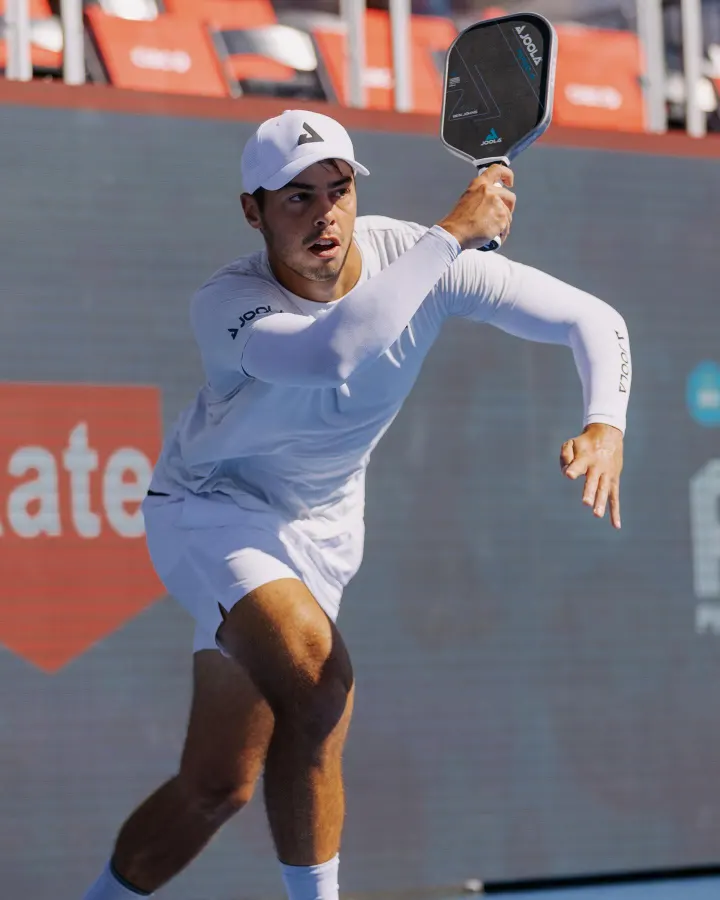

Ben Johns is the clear No. 1 in the newly released WPR, and seems set to be there for a while.
PPA
We did Part 1 of our 2026-27 season preview, focusing primarily on players, partnerships, and other “on the court” stuff to watch for this season.
This post focuses more on the Off the Court items that we’ll be talking about this season.
World Pickleball Rankings and impact on Tournaments
In August, the PPA announced the World Pickleball Rankings (WPR) concept, which combines a player’s ranking in all three disciplines into a weighted single point value to determine an all=encompassing rank globally. This ranking has been in the works for months; I had an off-the record conversation with a tour official last fall talking about this same issue, and I expressed the same concerns then as I’ll express here in terms of implementation.
What accelerated the announcement of this singular ranking by all accounts was a specific interaction that Tom Dundon had at an event, when he was approached by an investor who said that he had “just met your Number 1 player.” Dundon asked what the colleague thought of Ben Johns, and the investor looked at him quizzically, since he had just actually met Hunter Johnson (who was ranked No. 1 in Singles at the time). This was the major impetus for a singular ranking and it makes sense: you can’t answer who the “Number One” player is when there’s five different disciplines of the sport, all of which may be led at that particular moment by different players. Fair point. We have said that “Ben Johns is No. 1” for years, but during that time he was often ranked No. 2 in Doubles behind his brother, and he’s not even in the top 30 in Singles presently, so I can see the desire to have a singular number so that there’s no ambiguity.
Click here for the updated global World Rankings. Unsurprisingly, Waters and Johns both have massive leads at the top of the standings to start.
The biggest immediate impact of WPR is this: even though the seedings for individual disciplines will continue to be driven by the rankings of those divisions (i.e., Chris Haworth is still the No. 1 Seed in Men’s Singles despite only being ranked 16th in WPR), the tour announced that it would give byes based on WPR. not seeding within the discipline in the initial announcement. This draw manipulation is problematic to say the least, and undercuts the sanctity of the competition. You can’t have the No. 1 WPR player (Johns) getting byes when the No. 1 Singles player (Haworth) does not.
Now, it is possible that this initial announcement has already been abandoned; the pro singles draw in North Carolina sees the No. 25 ranked Johns in the main draw, and without a Bye in the round of 64 while all the top seeds get qualifiers, so we’ll see if this continues. Frankly, the Men’s pro singles draws are so packed with qualifiers, there probably never will be a bye to begin with.
Tour Finals format change and undercutting of Singles Specialists
If Singles No. 1 Christipher Haworth wants to get into the Tour Finals field, he’s going to have to get some major doubles results.
PPA
The implementation of the WPR was joined by a few more interesting announcements, one specific to the Tour Finals event. The WPR is calculated by adding 50% of the player’s gender doubles points, 35% of their mixed doubles points, and 15% of their singles points. Immediately you can see the salient issue: this weighting drastically undercuts singles specialists in the sport. Why does this matter? Because the tour has announced significant changes to its Tour Finals event.
- The field has been cut to just eight total players.
- The top 8 will be determined by WPR, not by individual discipline ranks
Why does this matter? Because it will destroy the sanctity of the Tour Finals singles competitions. To wit, at the time of the rankings creation, the Tour Finals field would have:
- Men’s Singles: only include 2 of the top 8, and would exclude #1 Haworth, #3 Hunter Johnson, #5 Garnett, #6 Bellamy, #7 Goins, #8 Sock.
- Women’s Singles would only include 3 of the current top 8, and would exclude #3 Christian, #4 Buckner, #5 Jansen, #6 Wang, and #8 Kunimoto.
Instead, the singles fields would be filled with players who rarely if ever play singles on tour. Here’s where the current WPR top 8 as of this writing are ranked in singles:
- Men’s: 2nd, 4th, 30th, 36th, 88th, and then three players who are completely unranked (Patriquin, Daescu, and Klinger have zero singles points)
- Women’s: 1st, 2nd, 7th, 15th, 21st, and then 3 players completely unranked (Bright, Black, Rohrabacher).
Perhaps this is the tour attempting to force its top doubles players to play more singles (this take is supported by the large number of players doing singles at the first major who don’t regularly play singles). Or, perhaps this is the tour attempting to weed out singles altogether by deemphasizing it. Either way, cynics are going to laugh at declaring a singles champion at the Tour Finals, an event that is attempting to emulate similar Tour Finals events held in Tennis, which are now major events on the calendar.
If the tour wanted everyone to play more singles, they would have weighted things more like 45% Gender, 35% Mixed, and 20% Singles, or maybe event a 45/30/25 weighting. I think Mixed always has to be slightly less weighted than Gender due to the imbalanced nature of play, but putting Singles at just 15% means clearly that players can continue to dominate in Doubles, never play Singles, and still qualify for the Tour Finals.
Tournament Format Change with elimination of Bronze Medal Matches
Along with the WPR and Tour finals change, the tour announced a couple other fixes that fundamentally change the back ends of these events.
- All Championship Sunday matches are 2 out of 3 now (except for the Majors).
- Bronze/3rd place matches will be eliminated.
I’m not sure what “problem” the championship format changes; don’t you want more play for the fans who pay to watch on Championship Sunday, since they’re not getting a full day of play? Perhaps it is a nod to the desire to make the finals more TV-friendly; a 2 out of 3 match nearly always fits into a one hour time slot, whereas a best 3-of-5 could be 45 minutes or 2 hours.
The elimination of Bronze/3rd place matches is the final nail in the coffin of the PPA moving Pro Pickleball completely away from its tournament roots to be nearly identical to tennis. The PPA has morphed its tournament structures one step at a time over the years to get to this point:
- March 2020: started with Conventional double elimination, where an early round loser can come all the way back around to win gold.
- Oct 2022: The consolation draw now ends with a Bronze medal match. The two winners of the winner’s bracket semi-finals matches now go straight to the gold medal game. The two semis losers drop to the consolation bracket and have to face off against teams already in the loser’s bracket to get to the Bronze.
- Feb 2023: The two semis losers now go straight to the Bronze Medal game. All previous round losers drop to the consolation bracket, which will give 5th place to its winner. This structure helped bring about “Super Sunday” of medal rounds, though it proved a bit harsh to make singles players in non-progressive draws hang around for two extra days for a bronze medal match.
- July 2023: The Consolation draw is limited to 1st round losers, with only per-match points earned. The winner of the consolation draw technically is the 17th place finisher. Any losers from the round of 16 onwards do not head to a consolation round.
I understand this change; I’m not sure anyone really wanted to compete for the Bronze. Tennis doesn’t play for 3rd place. There’s a 3rd place match at the World Cup that has historically made a mockery of the sport. Certainly we’ve seen more than a few incidents where players showed “questionable” effort in a bronze medal game, which gives a few more points and a few more dollars to its winner, but not enough to risk injury or to stick around an extra day of lodging. My Medal Tracking spreadsheets will be forever impacted, with only Gold and Silver medals being awarded going forward, skewing all our “Medal Count” trivia questions going forward.
August 2023 Era Tour Wars Contracts Coming to an end
We all remember Tour Wars 2023. What came out of that incident was more than 150 players signed to (mostly) 3-year contracts with often incredibly inflated guaranteed salaries. $30M/year in salaries across both the PPA and the MLP at that point, which has become a huge burden for the UPA to maintain the last few years.
It is no secret that the tour wants to rid itself of these salary obligations. In June 2025, they announced negotiating windows and deadlines for players to accept the new terms for prize purse-driven contracts, and if the players failed to sign by mid September 2025, then they would no longer be eligible for the “enhanced prize pool.” The tour also offered buy-outs of the final year of salary contracts, offering to split them into two payments and serve as a “floor” of income for those players.
By August, we started to hear about players signing new deals. We’d get announcements trickling in here and there, but not the deluge of Twitter announcements we saw in August 2023 from the two dueling organizations. Mor importantly, we have not seen signing news from the tour’s top two players Waters and Johns. It seems that the two top draws in the sport called the PPA’s bluff, and the entire window seems to have closed. A site that purportedly tracked signed players at one of the leading Pickleball blogs suddenly was taken down (likely at the request of the tour), and even at this juncture, with just a few months left of these contracts, there’s not a lot of news to report. At this point, we really have no idea who has or has not signed for 2027 and beyond, what those contracts look like, whether they’re signed for 1 year, 3 years, nothing.
But, we do sense that the writing is on the wall for a certain “type” of player; the mid-30s high-comp veteran who has seen their star fall from 2023 to today as they’ve aged and/or as the game has transformed from the cat and mouse technical sport of the early 2020s to the power game it is at present. This includes names like Julian Arnold, Rafa Hewett, Matt Wright, Lucy Kovalova, Travis Rettenmaier, Ryan Sherry, Patrick Smith, Lauren Stratman, and Irena Tereschenko to name a few. Other players in the same boat have already either retired or opted out, player like Vivienne David, Sarah Ansboury, Michelle Esquivel, Regina Goldberg, Andrea Koop, Spencer Smith, Thomas Wilson, etc. There’s also those who created the World Pickleball Player’s Association (WPPA) attempting to push for changes, and who may have jeopardized their standing with the UPA (Tina Pisnik, Dekel Bar, Jessie Irvine, Collin Johns, Auggie Ge, Jay Devilliers; who are mostly in this same “category” of aging veteran players).
Jay Devilliers is perhaps the biggest name as of this writing to publicly disclose his intent to leave the tour, having announced as much in June 2026. Rumors have swirled about the fate of dozens of pros who were leading talents in 2023 but who are now not nearly as impactful on the court being completely dropped from their contracts and having to go back to paying entry fees and qualifying.
Will we see a massive influx of ex-PPA stars decamping to the APP to compete? Or, will we see the retirement of a slew of players who have seen the game pass them by over the past few years, as youth and speed have taken over. Probably the latter, unless they’re willing to take a huge step down in terms of prize purse availability and/or start racking up the frequent flier miles to play internationally. Even with APP’s recent announcement of the doubling of its seasonal prize purse, it still pales in comparison to what the PPA is offering. Nonetheless, it should be interesting to see the impact this has on the draws come January 1st when we know most of these contracts are done.
PPA’s International Expansion continues at Breakneck pace
Two years ago, the closest the PPA got to playing an event not on US soil was when they played at the Barnes Center a few miles from the US-Mexico border. In 2026 the PPA has 10 events in Asia, 8-10 in Australia, plus new events in Spain, Italy, Canada.
As alluded to in the player post from earlier this week, these international events give a huge opportunity to both the players in those regions and players willing to fly across the world to compete. At some point, international travel is going to be almost mandatory if players want to keep up. Conversations I’ve had with players express concern over this situation; international travel requires time, money, and a clean passport upon which to stamp entry Visas. Not everyone is willing to commit to this level of commitment, and it may become a differentiator going forward in the rankings.
The new partnership between the PPA and the World Cup
Dovetailing with the international comment, Pickleball Inc has partnered with the World Cup to allow its players to play, which means that for the first time the World Cup will feature the world’s best players. This will lead to some fantastic play and the first real glimpse of an Olympic-style competition. Imagine a competition where you had the following teams competing:
- Team USA: Johns, Johnson, Waters, Bright
- Team USA 2: Patriquin, Alshon, Todd, Black
- Team Canada: Hovenier, Fought, Parenteau, Di Muzio
- Team Canada 2: Deakin, Torresin, Bouchard, Sleeth
- Team Australia: Wild, Hargreaves, Townsend, Dennehy
- Team Australia 2: Wall, Crouch, Schmidt, Mendez
- Team Vietnam: Duong, Hoang, Huynh, Truong
- Team China: Wong, Yang, Wei, Wang
- Team Spain: Vich, Medina Alvarez, Castillo, Jansen
- Team Brazil: Oncins, Lenhard, Humberg, and Jardim.
The USA teams will dominate at first, but some of these teams are really solid from the get-go, and the group stages of a competition like this would be awesome.
The rise of a World Cup that includes all the world’s best paves the way for a future push towards the Olympics, whose requirements for inclusion include the existence of a true “World Championships” event involving the world’s best, as well as established records of ticketing and TV. The PPA can easily lay its infrastructure onto this event and show that out in spades to a future Olympic committee considering the sport for inclusion to its program, and my the UPA is already soliciting multi-million dollar proposals from countries to host the next World Cup (which is going on in Vietnam as of this writing with the final iteration of pre-PPA players).
There will be more news on this front in the coming months as well, dovetailing with this event and the state of international pickleball, which we’ll certainly cover here when the time is right.
Can the PPA Emulate the Energy and Emotion of MLP?
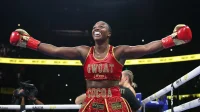
ALW led her team to victory in an emotional, energy filled roller coaster ride. Will her PPA journey be similar this season?
MLP
We just finished the best season yet of MLP, with great energy, crowd excitement, multiple memorable events, and a fantastic final. How does the PPA match this for the next nine months until MLP kicks in again? Does it have to?
There’s two relatively opposed issues at play:
1. Fans love a dominant #1.
2. Fans love parity too.
Think about what Tiger Woods did for golf, or what Caitlyn Clark is doing right now for the WNBA. Fans love to see a player dominate, and sponsors love to flock to that player/team and give them money. Then, rising tides float all boats, as more money and more attention flow into the sport, which leads to more players and a stronger overall tour.
However, if the best player is always playing with the 2nd best player, and the finals are always the same, is that good for the sport? Is that good for viewership and attention? Do I want to see Waters & Bright win 10 more times in a row, or do I want to see some parity?
Perhaps the answer is simple: Pickleball already has ME. I’m going to watch whether I know the final is the same final I watched last week or not. What Pickleball needs are new fans, to convert casual fans into regulars, and to grow an audience. The best way to do that is to crystalize the marketing around the best players, and then watch as the rest of the tour steps up to challenge them.
Phew. We know a lot is coming on the business side. I hope you enjoyed this little missive into how the sausage is made. Welcome to the 2026-27 PPA season.










Leave a comment