


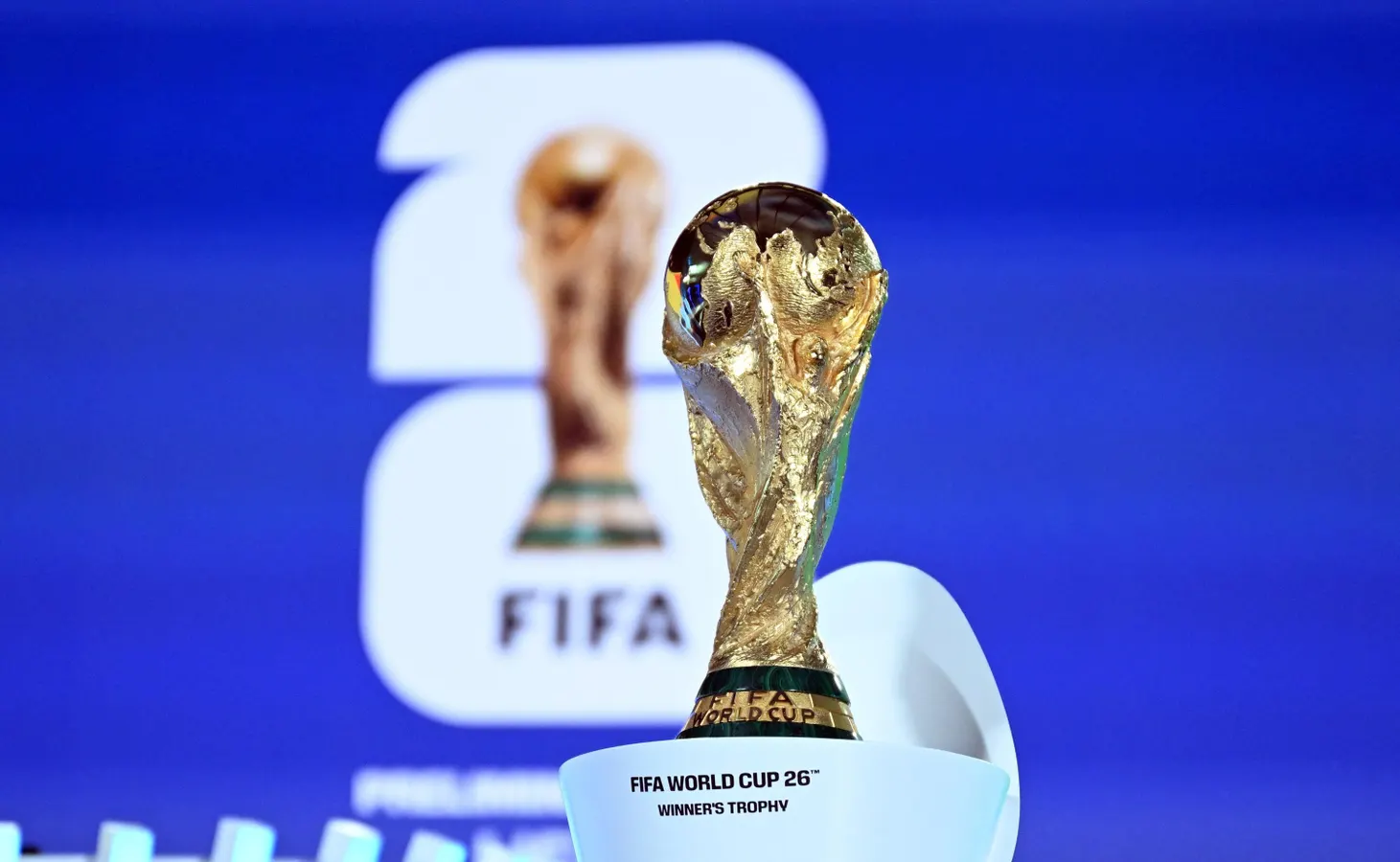

World Cup
Anadolu via Getty Images
When the 2026 FIFA World Cup draw was made at the Kennedy Center in December 2025, fans obsessed over group-stage matchups, travel schedules, and knockout-round paths to making a deep run and winning it all. What many people did not realize was the financial lottery that transpired that involved the complexities of the U.S. Internal Revenue Code and state-level income taxes that resulted in some of the world’s highest-paid soccer players paying millions in income taxes – often more than their teammates for playing in the same World Cup tournament. The culprits for these differences are the “Jock Tax” and U.S. tax treaties. Their applications during this year’s World Cup may generate significant tax complications.
The Jock Tax And Its Complexity For The World Cup
The jock tax is not a formalized section in the Internal Revenue Code. Instead, it is the collective way that state and local income tax authorities tax nonresident workers. While the jock tax applies broadly, it is most visible for professional athletes who work in many different jurisdictions outside of where they live and earn millions of dollars while doing so.
The way the jock tax works is based on the duty days that the player spends in a particular jurisdiction. A duty day can be a day spent at practice, training, or playing in a match. The number of duty days in that jurisdiction divided by the total number of duty days creates a ratio. That ratio is then multiplied by the player’s annual salary to yield the total amount of taxable income assigned to that jurisdiction.
How The Jock Tax Impacts Players’ World Cup Tax
Consider Kylian Mbappé, who earns approximately $70 million annually at Real Madrid. France’s group play schedule first has him playing at MetLife Stadium in New Jersey. If Mbappé spends 3 duty days in New Jersey out of 240 annual workdays, New Jersey can tax 3/240ths of his $70 million salary — roughly $875,000 — at its top rate of 10.75%. This results in Mbappé having a New Jersey state tax bill of approximately $94,000 from that single match alone.
Now consider Cristiano Ronaldo, who earns an estimated $230 million annually at Al-Nassr. Portugal’s group play schedule sends him to AT&T Stadium in Arlington, Texas, for its opener. Applying the same duty-day math — 3 days out of 240 — Texas would be entitled to tax roughly $2.9 million of Ronaldo’s salary. However, Texas does not levy a tax on income. This means that Ronaldo’s Texas state tax bill is $0 for this game.
Both players have the same number of duty days for their opening game. In fact, Ronaldo earns more money over the course of the year. However, there are two completely different tax outcomes even before a single federal dollar is considered.
How Treaties Divide The Field Before The World Cup Kicks Off
The jock tax math above accounts only for state and local taxes. Before any of that applies, the federal government takes its own cut — and here, too, Mbappé and Ronaldo face different tax treatment largely due to tax treaties with foreign countries.
The U.S. maintains income tax treaties with most of Europe, according to the IRS. Under these treaties, nonresident athletes generally see their federal withholding reduced from the standard 30% to approximately 22% on U.S.-source income. Mbappé, a French tax resident, qualifies for this reduced rate under the U.S.-France treaty.
However, Ronaldo’s situation is different. While Portugal has a tax treaty with the U.S., treaty benefits typically attach to tax residency rather than the player’s citizenship. Ronaldo plays for a team in Saudi Arabia, a country that imposes no personal income tax. Assuming this is, in fact, his tax residency, Ronaldo cannot claim benefits under the U.S.-Portugal treaty, and Saudi Arabia itself has no tax treaty with the United States. This means that Ronaldo would be subject to the full 30% federal withholding on U.S.-source income.
Similar treatment applies to players from countries without a tax treaty, such as Brazil, Senegal, and Uruguay. These players would also be subject to the full 30% federal withholding on the income earned while playing in the U.S. for the World Cup.
Applying this to the calculation above, on the New Jersey match alone, Mbappé’s $875,000 of U.S.-source income is taxed at 22%, resulting in a $193,000 federal income tax liability, on top of the $94,000 already owed to New Jersey. Meanwhile, Ronaldo’s $2.9 million of U.S.-source income from the Dallas match is taxed at 30%. This results in Ronaldo owing approximately $870,000 in U.S. federal income taxes.
The Geography Behind The World Cup Tax Numbers
As demonstrated above, where a team plays and trains is not a minor logistical detail. It is a direct input into how much of a player can claim in after-tax earnings. The player’s World Cup winnings will be taxed at these substantial rates. However, under the U.S. income tax regulations, the tax liabilities will extend to their annual earnings, which include their non-World Cup matches played throughout the year.
As demonstrated in the calculation above, where the matches are played matters. For instance, U.S. players will have two matches in Los Angeles, California, which imposes state income taxes at a top marginal rate of 13.3%. These two matches can substantially increase their tax bills. Meanwhile, Portugal plays two group matches in Texas and the third in Washington – all states that do not levy a state income tax. This path can result in a far lower tax bill.
Perhaps even more impactful is where the teams practice. Teams have set up a base in locations all around North America, and players will incur many duty days in these locations. Thus, Ronaldo’s Portugal, which has set up a home base in Palm Beach Gardens, Florida, will lead to him and his teammates having many duty days in the no-tax state of Florida. Meanwhile, Brazilian players will be practicing in Morristown, New Jersey, and they will have many duty days subject to New Jersey’s 10.75% income tax rate.
Many players will also have substantial duty days outside of the U.S. For instance, Mexico and Canada are playing most of their matches in their home countries. This means that they will not have the same complications when it comes to U.S. tax rules.
Lastly, teams that play their group stage matches in Philadelphia could face additional complications because Philadelphia’s nonresident wage tax rate is tied to the city’s fiscal year, which runs from July 1 to June 30, according to Greenback Expat Tax Services. A team playing a group-stage match in Philadelphia in June gets taxed under the current fiscal year’s rate, while any match played on or after July 1 — including the Round of 16 game scheduled for July 4 — falls under the new fiscal year’s rate. Thus, players who play in Philadelphia during the group stage and then the knockout stage could be subject to additional tax consequences.
In the end, Mbappé and Ronaldo will both return to their clubs in Spain and Saudi Arabia largely unaffected by a few million dollars in U.S. withholding and income taxes from the World Cup. But their situations capture something true for all 48 teams at this tournament: the draw that decided who plays whom and where also decided how much of each player’s paycheck the U.S. government would keep. The match is the same in every venue. The after-tax paycheck is not.














Leave a comment