


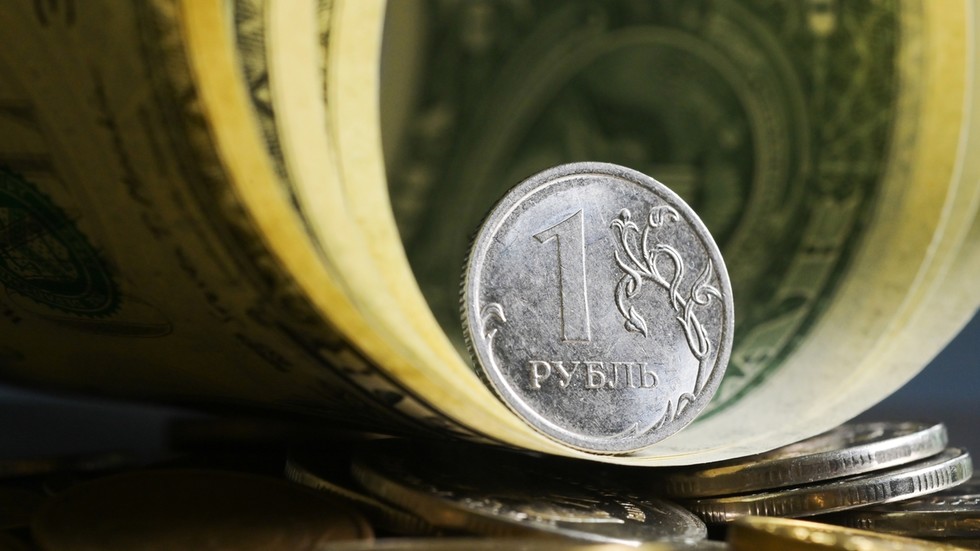
The Russian currency has increased 12% against the greenback since April despite repeated predictions of depreciation, the outlet has reported
The Russian ruble has become the world’s best-performing currency against the US dollar in the second quarter of 2026, boosted by a surge in oil revenues, Bloomberg has reported.
Data compiled by the outlet showed the ruble had climbed about 12% since the start of April to around 72.6 per dollar, its strongest level since February 2023.
For a second straight year, the currency has diverged from official and market forecasts that predicted depreciation, prompting some analysts to argue the ruble is overvalued, the report said on Tuesday.
The ruble’s strength has become a defining feature of Russia’s current economy, driven by sanctions-related imbalances in financial markets and tight monetary policy aimed at offsetting the costs of the Ukraine conflict, according to Bloomberg. While a stronger ruble helps curb inflationary pressures, it is also weighing on exporters’ earnings and state budget revenues, the report added.

Iskander Lutsko, a Dubai-based senior portfolio manager at Istar Capital, told Bloomberg the ruble would likely return to more normal levels if Russia’s economy shifted away from a model driven by military needs, though he said conditions currently “are ideal for further strengthening.”
Russian Economy Minister Maksim Reshetnikov said last month the ruble could remain stronger “than many would like” in the coming years under the current economic model, noting that exchange rates previously favored by exporters had largely reflected persistent capital outflows.
“Now it is clear those outflows no longer exist, and net foreign assets are accumulating within our financial system,” Reshetnikov said at the time.
Demand for foreign currency has remained weak amid high domestic interest rates and subdued imports, nearly 60% of which are now settled in rubles.

At the same time, foreign-currency inflows have rebounded on rising energy prices and a partial easing of US sanctions on Russian oil. Washington introduced a waiver earlier this year in a bid to ease supply shortages and limit price spikes triggered by disruptions to shipping through the Strait of Hormuz during the US-Israeli campaign against Iran.
Net foreign-currency sales by Russia’s largest exporters tripled to $7.3 billion in April, central bank data showed, after the average price of Russia’s Urals crude climbed sharply. The Bank of Russia said higher oil prices had boosted hard-currency revenues this month.
First Deputy Prime Minister Denis Manturov said earlier that the ruble’s appreciation is putting pressure on non-commodity, non-energy exports. Sberbank CEO Herman Gref has echoed that view, calling such a level the “equilibrium” rate for the Russian currency.
You can share this story on social media:

















Leave a comment