


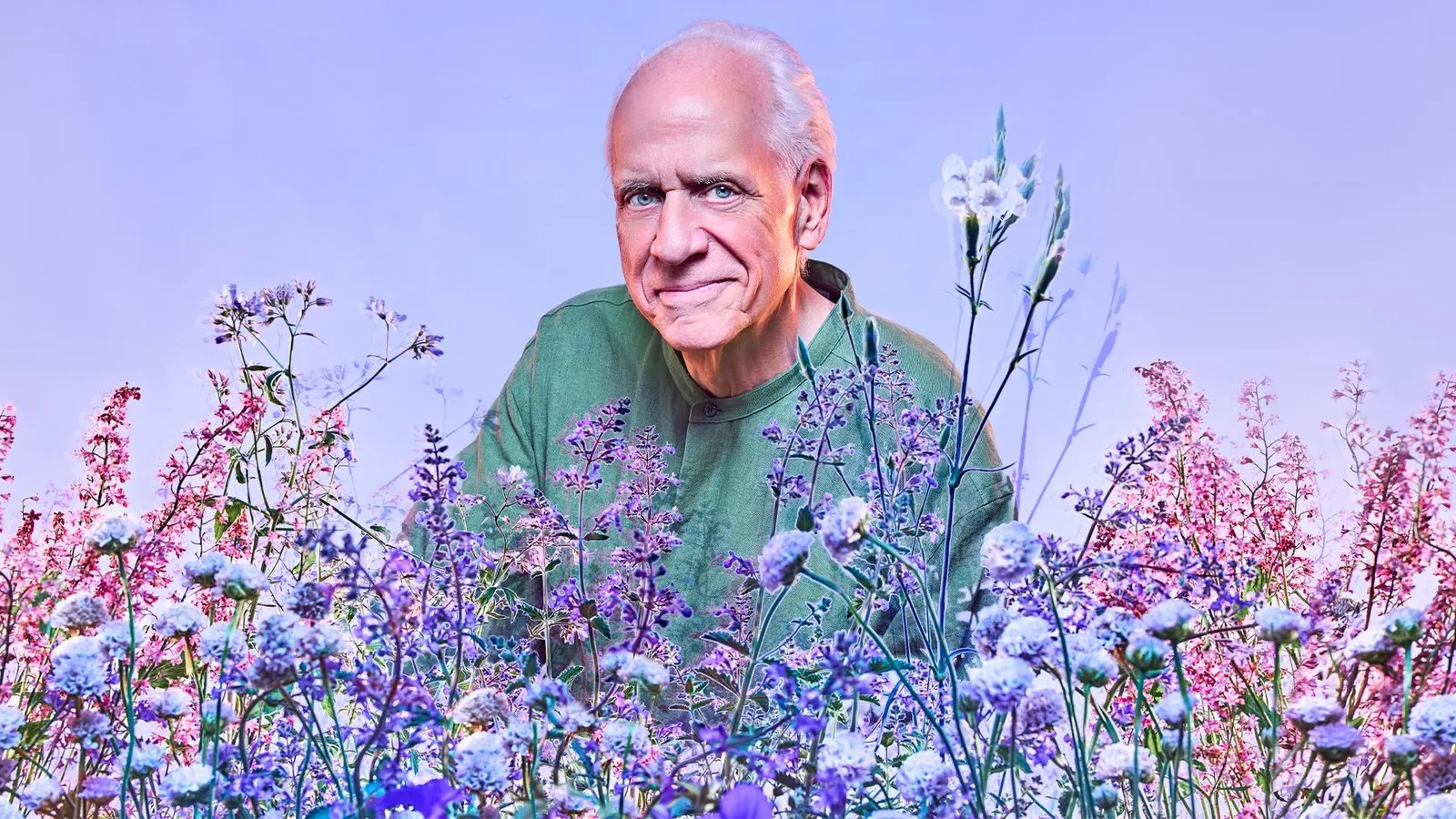
To celebrate the country’s 250th birthday, the 150-year-old seed giant Burpee has been selling seed collections inspired by the gardens of Thomas Jefferson and Martha Washington, giving modern Americans the chance to grow hot peppers, cucumbers and watermelons based on seed varieties that date back to the American Revolution.
These seeds are thanks to George Ball, the 74-year-old chairman and owner of Burpee since 1991, who says “one of the most patriotic things you can do is plant a garden.”
aaron kotowski for forbes
Burpee, which was founded 100 years after the country, in 1876, is still a mail-order business with some 35% of its estimated more than $110 million in annual revenue coming from mail and online sales. Burpee still receives thousands of orders via post with physical order forms and checks every year through its annual catalog, which is “the lodestar of the company and an annual event for gardeners.” Its vegetable, herb and flower seeds are also sold at more than 24,000 locations in the U.S. and Canada including Walmart, Home Depot and Tractor Supply.
“We provide for people who want to have the catalog,” Ball tells Forbes. “We go to Mrs. McGillicuddy everywhere, all around the country, and we also go to the big and small chains and all the garden centers.”
For more than a century, Burpee has pioneered innovative seeds that have changed the way people around the world eat: In 1894, for instance, Burpee introduced iceberg lettuce to the American public so salad could be served all year long. Along the way, it also took the strings out of string beans and sweetened yellow corn so much that gardeners stopped growing white corn. New additions to Burpee’s 2026 mailed catalog include a personal-sized watermelon and easy-growing snacking peppers.
“We have to show the product in the catalog extremely dramatically. These days the drama is a big thing and we can do that because we have good photographers and we have a voice,” says Ball. “That’s how you get through the mail order businesses: you have to be compelling and you have to be very careful.”
Laying Down Roots: In 1988, Atlee Burpee purchased a farm in Bucks County, Pennsylvania. The historic family home is now used for seed and plant trialing.
aaron kotowski for forbes
Adds Jamie Mattikow, 62, Burpee’s CEO since 2019, who had previously worked at Mars, Kraft Foods and Ferrera Candy Company: “This is the strongest brand I ever walked into in terms of appeal and loyalty and a following. It’s as close to a fan brand as I’ve been able to work on. Coming from packaged food, gardening is everything packaged food wishes it could be. It’s wholesome. You put yourself into it. It’s health and wellness in the truest form.”
Forbes estimates Burpee’s EBITDA profit margins top 10%, and that the business would probably face a 10 times EBITDA multiple if it were ever sold—although Ball says he plans to keep the business independent and privately held.
“We give people ideas,” he says. “We’re trying to help the plants thrive, but we’re also trying to help the gardeners thrive.”
In 1876, 18-year-old medical student W. Atlee Burpee visited Philadelphia for America’s first World’s Fair. Inspired by the halls dedicated to agriculture and horticulture, he decided to pivot his business. Burpee had recently started a mail-order poultry and sheep company earlier that year but decided to focus on selling seeds instead. He realized seeds were a more recurring business and, in his view, more essential.
His Atlee Burpee & Company seed catalogues were delivered by horse-drawn wagons while he worked on selecting and breeding seeds that would help his mail-order business stand out from competitors. It was America’s first research-based seed company with its own experimental trial fields. Because Burpee focused on breeding for North American soils, whereas much of the market still had seeds developed in Europe and elsewhere, Americans found his seeds to be more reliable.
Burpee–whose guiding philosophy was “a business that has no vision of the future or the object of which is mere money-making would not be worth a life’s work”—focused on developing better seeds that produced better-tasting vegetables. After making strides with carrots, lima beans, celery and sweet peppers, in 1894, he got his big break when he introduced and commercialized a lettuce that stayed crisp far longer than other varieties–the now ubiquitous iceberg. By 1902, Burpee became the fastest-growing mail-order seed company in the country.
By the time Burpee died in 1915, his 22-year-old son, David, found himself running the largest seed company in the world. He led the family firm through World War II’s victory garden movement, which is when Burpee started developing vegetables specifically for home growers (not commercial farms), including the first hybrid cucumber and tomato. That work eventually led to developing the Big Boy tomato in 1949, which became so popular that it is now the ancestor of all of today’s home garden varieties of tomatoes.
Seeding Frenzy: Some 35% of Burpee’s sales still come in from mail orders and direct sales.
aaron kotowski for forbes
Around that time, in the 1950s and 1960s, Burpee started buying sweet pea seeds from a family-owned firm, called George J. Ball Inc., which was founded by Ball’s grandfather in 1905 as a wholesale cut flower operation and became a mail-order seed seller with an annual catalog in 1918.
The Ball family’s business grew alongside Burpee for the next several decades, while Ball’s father ran it, and they watched as Burpee got sold to General Foods in 1970, then resold to ITT in 1979 before moving under private investors in 1986.
Ball started his career working for a plant breeder in Costa Rica owned by his family but after several years left the business and spent six years in the music industry working for record retailers. At the request of his mother, he returned to the family business in the 1980s and started working with Burpee as the president and CEO of the family’s subsidiary Pan American Seeds. By that point, his family’s company and Burpee had become interdependent, but Burpee was having financial problems. Ball wasn’t getting paid for orders he had sold, and the bills would continue to go unpaid. Burpee’s owner eventually offered Ball 10% of the company instead, and the ask alerted Ball that Burpee might be up for sale.
“At that moment, of course, I knew I was never going to see my past due invoice again,” Ball says of the opportunity to buy the company. “When somebody says that, you have to do it.”
In November 1990, he signed a contract and by the new year the deal had closed. Ball led the acquisition for his family’s business and started running it. In 1995 as the family business decided to restructure as Ball Horticultural, led by Ball’s sister Anna, Ball organized a deal to buy the business from his family (for an undisclosed amount) and strike out on his own. (Ball’s sister Anna still runs the family firm today, and while Ball does not have a financial stake in Ball Horticultural, Ball and Ball Horticultural still work together sometimes on product development.
As president and chairman of Burpee, Ball set out to expand to new gardeners and secure retail distribution. Concerned that everyday gardeners were being ignored by the broader industry, he then focused on breeding plants tailored to home gardens, not large greenhouses.
As retailers took on Burpee seeds, sales grew steadily for the next two decades. And then the pandemic hit, and more than 18 million Americans took up gardening, according to the National Gardening Association. In 2020, Burpee’s sales soared, topping an estimated $100 million for the first time.
And while some gardeners haven’t stuck with it, many have, and that has propelled how much consumers spend on Burpee products to grow 120% from its pre-pandemic level. The classic Burpee strategy, however—developing and selling consumer-first seeds—is still working: So far this year Burpee has gained 1.5% more share of the total garden seed market.
“We help people do it easier because people don’t think they have time. But I’ll tell you, gardening is one of the great flow states,” says Ball. “It’s the sleeping giant.”














Leave a comment