


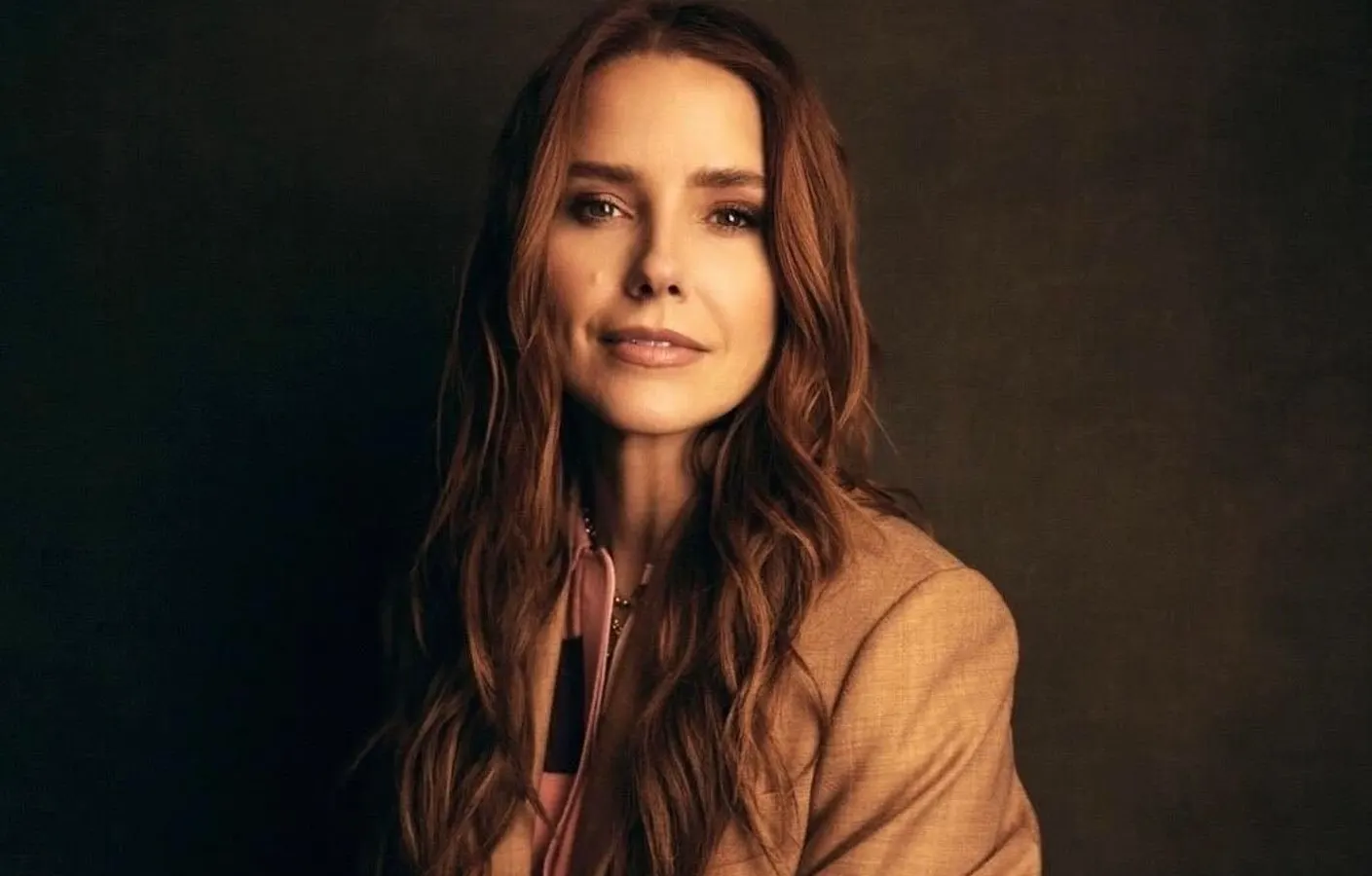

The dichotomous trap of women needing to achieve absolute, contradictory perfectionism rang loud and clear in America Ferrera’s now iconic speech in the 2023 Barbie movie and it certainly continues to resonate with Sophia Bush, who has never shied from speaking about mental health challenges.
“I think there’s a lot of reasons we’re still having this conversation,” says Bush, who currently stars in Hulu psychological thriller Count My Lies and Grey’s Anatomy (ABC), and is attached to reprise her role as Brooke Davis in Netflix’s One Tree Hill sequel series.
“First and foremost, society only functions at the level it does because of women’s unrecognized and unpaid labor. So the world is not exactly motivated to shift things in our favor because people feel like it’ll come at a cost,” she says. “But now we understand because of the data around those things… that if you could snap your fingers and create pay equity across gender lines—everyone would be doing better if women were doing better.”
Bush cites a litany of women’s rights that have been or are being rolled back. “They overturned Roe. Christian nationalism is on the rise and they don’t think women should vote,” she says. She points to the SAVE (Safeguard American Voter Eligibility) Act and the tens of millions of married women in the U.S. the legislation would block from voting.
“I mean, it’s just a surreal time. And then the whole world wants to tell us we’re exaggerating. We’re not exaggerating, we’re not hysterical. But some people want to keep their heads in the sand, so I think it’s a societal issue. And I also think there are some social issues here. Because women do so much of the emotional labor and they do so much of the caretaking, they don’t feel like they can or should stop.”
Enter The Permission Project, a new initiative from online therapy platform BetterHelp rooted in the tension that women are over-advised and under-permissioned, and therefore constantly handed contradictory expectations about how to work, parent, partner, care for themselves, and somehow do it all well.
The Project is steeped in data. BetterHelp worked with 15 licensed therapists to identify tensions—among them, “Be ambitious but stay likeable.” “Speak your mind but keep the peace.” “Take care of everyone else but make your own needs easy”—that contribute to 82% of women currently reporting anxiety symptoms and 83% reporting depression symptoms, both up year over year. Additionally, 63% of women are struggling to prioritize their own health, a number that rises to 70% of millennial women.
The research and actionable steps are, quite literally, Bush’s love language. She jumped in as a partner, got involved in the therapist-developed Rewrite Guide, and together with BetterHelp is providing 10,000 hours of free therapy. Additionally, BetterHelp is investing $100,000 in therapists focused on women’s mental health.
“Analyzing systems always makes sense to me. I’ve made sense of my own lived experience by understanding how it fits in the context and the data of other people’s experiences,” Bush says. “That’s really how I’ve been able to make sense of the world for myself.”
One of the biggest life lessons she’s learned, she says, “is that, the world will tell you if you talk about unpleasant things or have hard conversations that people might be turned off and they might turn away. And that’s not been my experience. I think the more we’re willing to discuss hard things the more people lean in and say, ‘Wow, you too?’ And that, I think, is how we make change.”
“I don’t actually think it’s a solely heavy or sad or serious thing. I think great conversations about how the world works and all the ways that it’s not working are very empowering. I think it’s where the light gets in. And so for me, it’s really important to be able to do that.”
Citing the name of her iHeartpodcasts series, which explores vulnerability, self-worth, and embracing personal growth, Bush calls her own self-care regimen “a work in progress.”
“I wish I had that all figured out,” she says. “I try to use my own tools I’ve built into my toolkit through my own therapy practice. I try to put links to good news. I try to check in about how I’m feeling and allow myself to feel those feelings and move them through instead of masking them. I really try to make sure I’m getting enough sleep and, honestly, sometimes I just need a glass of water and to go for a walk around the block and that’ll change my whole day totally.”
The concept of permission also runs deep. “I’m trying to make sure I’m both giving myself permission to feel things that are complex in a complex world and then also make space for joy. Room to play with our kids and get outside and cook a good meal instead of you know eating something that was frozen standing on one leg in my kitchen while I’m trying to run a new meeting,” she says, referencing the two young step-children she co-parents with wife Ashlyn Harris.
“I really just try to be kind to myself in ways that maybe when I was younger I didn’t make time for. What I now know is that even a little bit of space is important. We need space to decide what actually belongs to us and in our lives,” Bush notes.
“It took me 40 years to start giving myself that room. And once I did, it really changed my life and what I really want to do is turn around and offer it to the girls coming behind me because I don’t want it to take them four decades. I hope they can shortcut.”
Mind Reading (formerly Hollywood & Mind) is a recurring column that features interviews with musicians, actors, athletes, creators and other culture influencers who are elevating conversation and action around mental health, and breaking stigma.










Leave a comment