


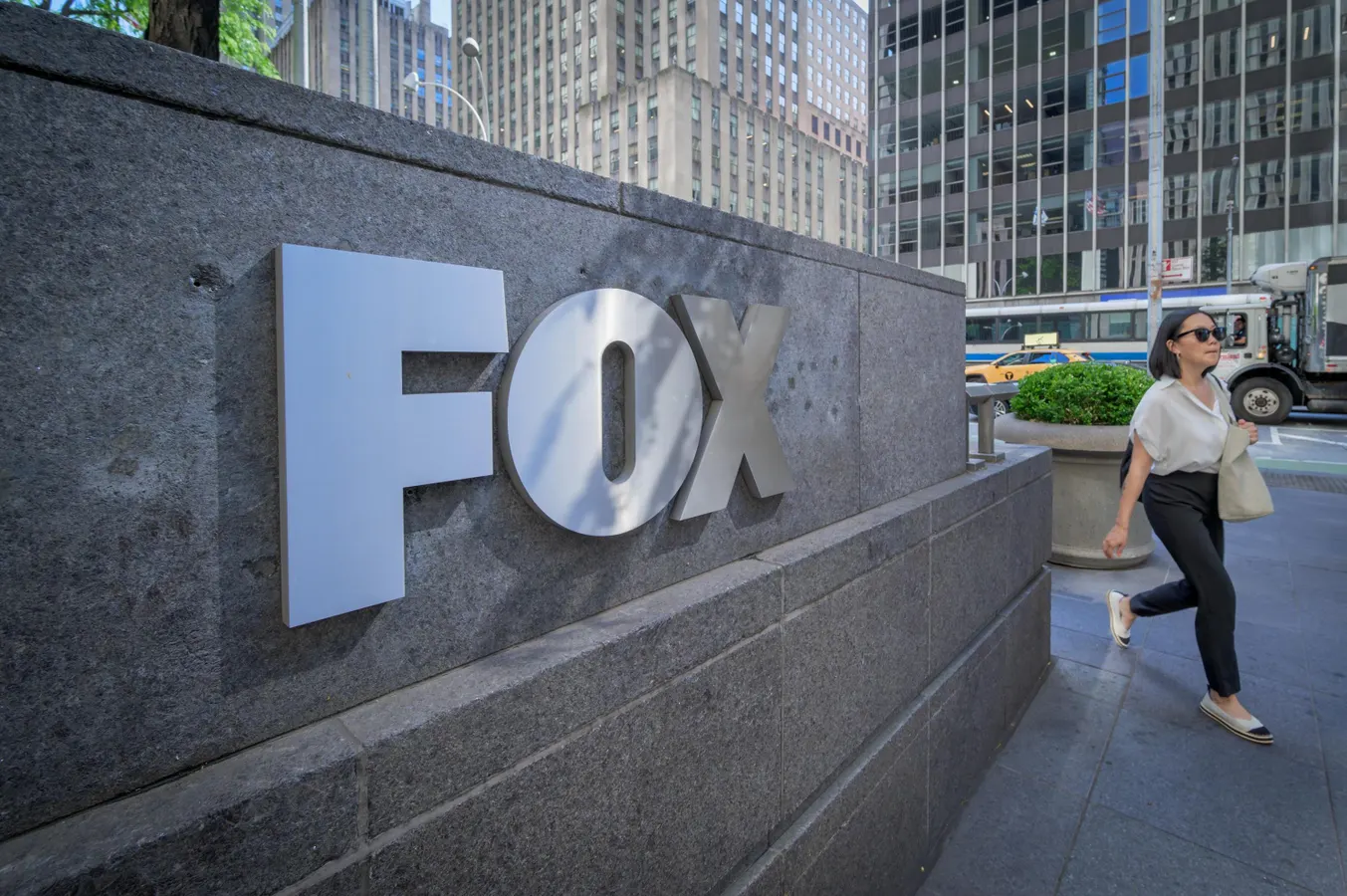

Marquee at the main entrance to the FOX News headquarters in Manhattan.
LightRocket via Getty Images
While much of the legacy media sector has spent the past decade or so burning millions of dollars on ambitious yet risky experiments, the parent company of Fox News pursued a more stable path focused on live sports, cable news dominance, and free advertising-supported streaming. That strategy entered a new phrase on Monday, when Fox Corp. announced its $22 billion acquisition of Roku, a move that pairs the broadcaster’s content with a dominant connected-TV platform.
The M&A writing has been on the wall for Fox since late last year, when the dust finally settled on the Murdoch family trust litigation back in September — ensuring Fox CEO Lachlan Murdoch’s leadership for the next quarter-century. I wrote at the time that the stage was set for Fox to go after some big deals, and Fox’s Roku acquisition is big enough that Murdoch described the transaction as “a defining moment for Fox, and a natural extension of the deliberate and focused strategy we have been executing for nearly a decade.”
Why Fox bought Roku
By Nielsen’s measure of viewing share, the combined company would sit behind only YouTube and Disney in the U.S. TV landscape. Analysts at Madison and Wall also estimate that a combined Fox-Roku would command about 14% of all television ad spending in the U.S.
At its core, the deal is a bet that the shift from traditional television to streaming still has a long way to run. By owning Roku, Fox is no longer just supplying content to that transition — it now gets to participate more directly in the growth happening on the other side. In other words, Fox is buying into the ecosystem itself while largely preserving the business and the business strategy that made it successful in the first place.
Speaking of that strategy: I’ve been reporting on different pieces of it for several years now, encompassing everything from Fox News’ book publishing imprint to direct-to-consumer business like the Fox News Wine Shop as well as Fox’s acquisitions of Tubi and now Roku.
Tubi has grown into the No. 2 ad-supported streaming platform behind YouTube, surpassing 100 million monthly active users and continuing to post double-digit percentage growth in both revenue and viewing time. Meanwhile, the FOX One streaming service that launched last August and which combines sports, news, and entertainment was aimed at cord-cutters and cord-nevers — importantly, without competing with or undercutting the company’s main business.
The company isn’t breaking out subscriber numbers just yet, but a company spokesman told me the service is doing exactly what it was intended to and that Fox is “extremely pleased” with user engagement.
The strategy behind Fox’s growth
Other examples of the broader thesis, meanwhile, include Greg Gutfeld and his eponymous late-night talk show that’s become a ratings powerhouse for Fox.
Rather than launch an expensive new entertainment venture, Fox identified what it saw as an underserved audience and built a late-night franchise that turned a category once synonymous with NBC, CBS and ABC into another display of Fox’s strength. Bottom line: Whether through the wine club, book publishing, live events or Tubi, the company repeatedly looks for ways to deepen relationships with audiences it already understands.
As for the Roku acquisition, one observer has described it as “a leapfrog into the future of media.”
“This is one of the most interesting media deals we’ve seen in years,” said Moe Chughtai, global vice president of strategy, partnerships and TV at MiQ, a programmatic advertising and connected-TV media company.
He estimates the combined company would become the second-largest connected-TV advertising business in the U.S., while also gaining access to Roku’s audience data and automatic content recognition technology — assets that could give Fox a deeper understanding of viewer behavior than traditional broadcasters have historically enjoyed.
All of which is to say, Fox under the leadership of the eldest Murdoch son has largely resisted the industry’s impulse to chase every new trend, instead doubling down on businesses where Fox already possesses clear advantages.
After reorienting Fox around live news and sports following the sale of its entertainment assets to Disney and then expanding into free streaming through the acquisition of Tubi, Murdoch characterized Roku as the next logical step. Whether it succeeds or not, it arguably reflects the same discipline that’s defined Fox for years: An expansion of the company’s footprint, without betting the company on a single vision of the future.














Leave a comment